


We remain, as I've been reminding you throughout this series, at a historic crossroads. The Democrat Party, here in the United States, has been co-opted by the far Left, including the so-called "Democratic Socialists," who even have their own organization within and without the Democrat Party — the Democratic Socialists of America, or DSA. Young people here in the United States are seeing socialism in a more favorable light than they have in decades past, and this 2026 midterm election and the 2028 election to come, where we will choose the next president, will set the course for American politics for a generation or more.
The Left will keep pushing for socialism and communism. Socialism has, however, borne bitter fruit throughout history, everywhere it has been attempted. The results are all too similar: Mass arrests, work camps, "re-education," mass executions, starvation, and economic collapse. On the other hand, capitalism, while it isn't perfect — no system created by humans is — has lifted more people out of poverty and into prosperity, has created more wealth, and has resulted in more technological advance than any other system of economics and government.
In this series, we'll take a look at some of the more notorious events to rise out of socialist and communist systems, as a warning for this election season: It could happen here. It very well could happen here. In this installment, we'll have a look at North Korea's March of Suffering.
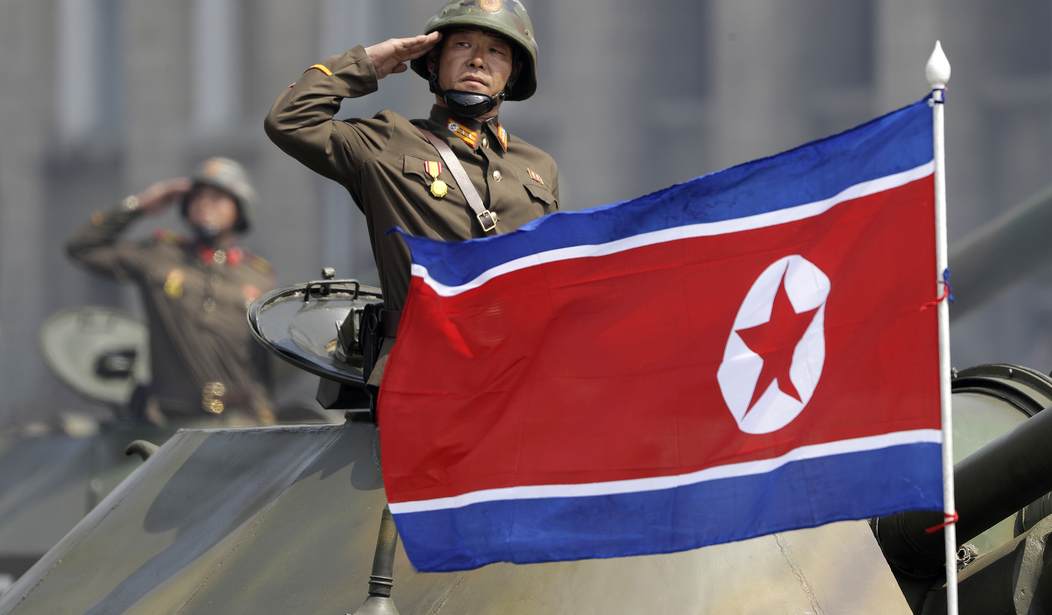
North Korea is something of an oddity in communist states: A brutal, repressive, insular Stalinist regime that is inexplicably ruled by a hereditary dictatorship. This country is technically called the Democratic People's Republic of Korea, which is three lies for the price of one: It's not democratic, it's not there for the people, and it's not a republic. The current dictator, Kim Jong Un, is the third stunted little gargoyle with bad hair in his line of stunted little gargoyles with bad hair to have ruled North Korea, and his rule has been disastrous. The low spot of his father's regime was the disastrous event of the early- to mid-1990s, euphemistically known as the "Arduous March," or, more aptly, the March of Suffering. This was called a march only euphemistically; what it was, was a famine of the worst sort, wherein the North Korean people starved while their "Dear Leader" fattened himself on imported delicacies.
It all began in the early 1990s, when the collapse of the Soviet Union and the turmoil in the reforming Russia resulted in a dramatic reduction of aid to North Korea. Also in the 1990s, the American government began to squeeze North Korea with economic sanctions. Floods and droughts made things worse. North Korea's centrally planned and inflexible systems of agriculture were unable to cope with this progression of black swan events, and gradually, then suddenly, people began to starve. It doesn't help that this northern part of the Korean Peninsula is largely mountainous, without as much arable land as the south; only about 20 percent of North Korean lands may be farmed.
That's how the famine began, but it's the North Korean government's reaction to it that was stunning.
By 1996, the government instituted a propaganda campaign, dubbing the growing famine as the "Arduous March," the "March of Hardship," or the "March of Suffering." The first of these terms derived from a World War II campaign in which a small group of guerrilla fighters fought the Japanese invaders, in brutal winter weather. That, though, was a war against an invader; this new march was a war waged by the North Korean government against its own people.
Granted, not all of the disaster was due to the repressive government. In these years, North Korea was beset by flooding, which destroyed infrastructure and ruined crops. Electricity went down over much of the country due to flooding and storms wrecking power plants and the coal mines they depended on. Finally, the communist government's distribution system collapsed, in large part due to a lack of fuel and repair parts.
As things grew worse, the government responded by banning the use of the words famine and hunger, as they saw these terms as blaming the government for the catastrophe — which was correct, not that it mattered to the starving people. People who talked out of turn were purged, either sent to labor camps or simply executed. The North Korean government, on the other hand, was still spending money on military hardware and nuclear weapons development.
The World Food Program considers 600 grams of cereal grains per day to be less than a survival ration. Under the official rationing system, North Koreans deemed "privileged industrial workers" were allotted a ration of 900 grams per day. Ordinary workers received 700 grams per day; retirees, 300 grams per day, and children, 200 grams per day. Widespread malnutrition set in. The population grew weaker. Defections, even facing the penalty of execution, increased.
At the peak of the famine, thousands were dying. Estimates of the total numbers of deaths vary, but the most reliable estimates from this secretive state put the numbers at from 600,000 to two million people, out of a population of 21 million people.
These are the fruits of socialism and communism. This is the precipice we may be on the edge of. This is history. This is what we may be facing. And this is what we must, at all cost, vote to prevent happening here. We go to the polls in just a few more days. We have to vote, all of us, every one. Vote for liberty, for property, for free trade, for free people, for honest elections, for prosperity — all of which we would lose, under socialism. Vote!
See also the previous installments in this series: Part 1, Part 2, Part 3, Part 4, Part 5 and Part 6.
Editor's Note: This article was updated post-publication for clarity.