
We remain, as I've been reminding you, at a historic crossroads. The Democrat Party, here in the United States, has been co-opted by the far left, including the so-called "Democratic Socialists," who even have their own organization within and without the Democrat Party — the Democrat Socialists of America, or DSA. Young people here in the United States are seeing socialism in a more favorable light than they have in decades past, and this 2026 midterm election and the 2028 election to come, where we will choose the next president, will set the course for American politics for a generation or more.
The left will keep pushing for socialism and communism. Socialism has, however, borne bitter fruit throughout history, everywhere it has been attempted. The results are all too similar: Mass arrests, work camps, "re-education," mass executions, starvation, and economic collapse. On the other hand, capitalism, while it isn't perfect — no system created by humans is — has lifted more people out of poverty and into prosperity, has created more wealth, and has resulted in more technological advance than any other system of economics and government.
In this series, we'll take a look at some of the more notorious events to rise out of socialist and communist systems, as a warning for this election season: It could happen here. It very well could happen here. In this installment, we'll have a look at the Cuban Revolution.
Cuba, in 1959, wasn't perfect; no society consisting of imperfect people ever is. The dictator Fulgencio Batista had been in control of this popular tourist destination for Americans and Europeans since 1952, after Batista overthrew Cuba's elected democratic government and seized the reins of power. But things for Cuba were about to go from bad to worse.
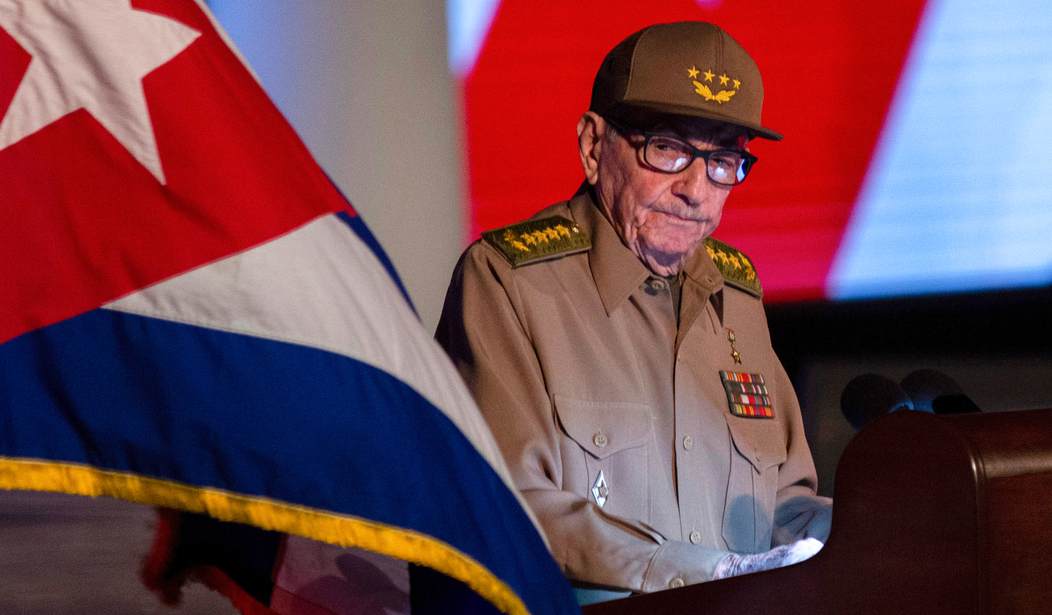
Enter a young lawyer, one Fidel Castro. Castro tried challenging Batista in the courts, to no success. After that, Fidel and his brother, Raúl Castro, also made a failed attempt at an armed attack on a Cuban military installation, the Moncada Barracks, in 1953. This also failed, and the Castro brothers along with their supporters were arrested. But Fidel, at his trial, turned things on their heads with a two-hour rant against the Batista regime, which launched Fidel's rise to be a nationally known revolutionary figure.
The Castros along with the vicious little killer Che Guevara, fled Cuba for Mexico for a time. When they returned in 1956, they consolidated their fellow travelers and useful idiots into what they called the Popular Socialist Party. Side note: To this day, one of the most reliable ways to spot an idiot is to look for anyone wearing a Che Guevara t-shirt.
Batista was toppled on New Year's Eve, 1958. Fidel Castro was soon in place as the unquestioned dictator of Cuba, which makes one wonder just exactly what the Cuban people had gained. The Castros kicked things off with the execution of at least 500 people — mostly Batista regime officials and supporters.
For decades after that, Cuba only survived as a Soviet puppet state. In the beginning, there were those in the Soviet Union who saw the Castro brothers and their flunky Guevara for what they were, vicious little troublemakers, but the notion of having a client state 90 miles off the coast of the United States was too good to pass up.
Then, came the collapse of the Soviet Union. Suddenly Cuba, once a prosperous nation, had to go it alone. It didn't go well.
When the Soviet Union and its allies collapsed, Cuba lost the economic system that had sustained it. Between 1989 and 1993 Cuba’s GDP fell by nearly 35 percent and its imports by 75 percent (Rodríguez García). The average Cuban’s daily food energy fell from 2,899 to 1,863 calories, a drop sustained for almost five years (Franco et al.). The government called the crisis the “Special Period in Time of Peace”. It revealed how completely Castro’s planned economy had depended on Soviet support — and it eased only when the state allowed some of the market activity it had spent thirty years suppressing.
Cuba hasn't racked up the body count to the extent that the Soviet Union and other communist states have done, but that doesn't mean that being opposed to the Castro regime was an easy row to hoe. Many left Cuba in the wake of the revolution, at first the upper- and middle-class, the so-called "Golden Exiles," who had the most to lose. They were followed by thousands more, who were worried about the Castro regime's callous disregard of even the most basic human rights. Many went to other places in Central and South America. Many came to the United States, giving rise to Florida's expansive Cuban ex-pat community.
Like most socialist and communist dictators, the Castros didn't tolerate any disagreement. Dissenters were often jailed without trial. The Castros kept order in Cuba through a climate of fear and intimidation.
Meanwhile, the Cuban economy, without heavy Soviet support, was in free-fall. The communist system, as has every communist regime everywhere, failed. Cuba's economy was marked by low productivity, no incentives for innovation or private enterprise, a failing agricultural system, and more, spurred on by economic pressure from the United States. The Cuban healthcare system lauded by American liberals who have no clue how things actually work for the Cuban people, began to collapse. This is where Cuba stands today: A failed state, which only maintained as long as it did through the support of the Soviet Union, and that is now in free fall.
And bear this in mind: As communist dictatorships go, Cuba actually had one of the lower body counts among communist regimes. But they have proven, again, the one great constant: Communism and socialism fail, every time they are tried, everywhere they are tried. See also my previous columns on the Holodomor, and on the Khmer Rouge.
It could happen here. It could very well happen here. And if we aren't diligent, it will happen here. Many on the left would like nothing more, and we should believe them when they say so.
These are the fruits of socialism and communism. This is the precipice we may be on the edge of. This is history. And this is what we must, at all cost, vote to prevent happening here. We go to the polls in just a few more days. Vote! Vote for liberty, for property, for free trade, for free people, for honest elections, for prosperity — all of which we would lose, under socialism. Vote!