
We stand, now, today, at a historic crossroads. The Democrat Party, here in the United States, is being co-opted (honestly, has been co-opted) by the far left, including the so-called "Democratic Socialists," who even have their own organization within and without the Democrat Party — the Democratic Socialists of America (DSA). Young skulls full of mush here in the United States are seeing socialism in a more favorable light than they have in decades past, and this 2026 midterm election and the 2028 election to come, where we will choose the next president, will set the course for American politics for a generation or more.
The Left will keep pushing for socialism. Socialism and communism have, however, borne bitter fruit throughout history, everywhere it has been attempted. The results are all too similar: Mass arrests, work camps, "re-education," mass executions, starvation, and economic collapse. On the other hand, capitalism, while it isn't perfect — no system created by humans is — has lifted more people out of poverty and into prosperity, has created more wealth, and has resulted in more technological advance than any other system of economics and government.
In this series, we'll take a look at some of the more notorious events to rise out of socialist and communist systems, as a warning for this election season: It could happen here. It very well could happen here. In this installment, we'll have a look at China, and Chairman Mao's horribly misnamed "Great Leap Forward."
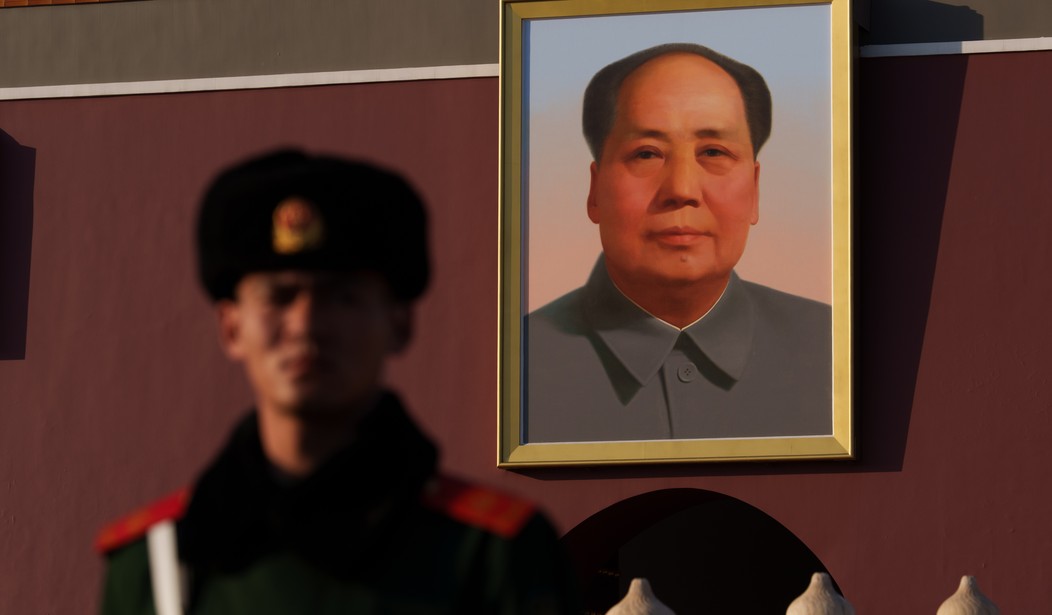
In 1958, not long after the Chinese Communist Party (CCP) under Mao Zedong took over the Middle Kingdom, was a largely agricultural society, as it had been for thousands of years. Chairman Mao had other ideas. He intended to transition China's economy from a largely agrarian one to an industrialized economy, by force. He called this, in one of history's most horribly misnamed campaigns, the Great Leap Forward. This ended up being a great leap into ruin, causing what is generally accepted as the worst famine in human history.
In 1958, the campaign began with mobilizing the agricultural regions of China. Millions of peasants were relocated, and what agriculture remained was collectivized. Private ownership of farmland and private farming was outlawed. With the profit incentive erased, agricultural output crashed. But the Chinese Communist Party demanded a quota of agricultural outputs based on not only pre-collectivized data, but on falsified reports from local CCP officials. The result? Food and supplies flowed the cities, leaving little for the countryside. Millions died of starvation and disease; records are far from complete, but reports indicate from 15 million to 55 million deaths in what was later called the Great Chinese Famine.
In Anhui Province, 18 percent of the population died. In Chongqing, 15 percent. In Sichuan, 13 percent. In Guizhou, 11 percent died, and in Hunan, 8 percent. Many more suffered from malnutrition, exhaustion, and disease.
Like the Soviet Union, China's ruling communists based their policy not on sound economics, nor on scientific systems of agriculture. Instead, communist ideologues dictated outcomes that the Chinese peasants, under the strictures placed on them, could not achieve. The CCP poured money into collectivization and industrialization to no avail, in large part because they failed to take advantage of the one thing that may have helped: The experiences and knowledge of the people who had farmed Chinese lands for generations.
The Great Leap Forward also instituted great projects like the construction of dozens of reservoirs, which would normally seem a good thing, water storage for lands often plagued with drought. But the dams were not well-engineered, their construction overseen by Party ideologues, not engineers, and this also came with disastrous results.
In 1962, in a meeting called the Seven Thousand Cadres Conference, a typically bombastic communist name, the CCP examined the after-effects of the Great Leap Forward and its disastrous effects on China's agriculture. As a result, Mao did turn over aspects of China's day-to-day leadership over to lower-level officials who were perceived as more moderate, but the Chinese people suffered from the after-effects for generations.
Why did Mao do all this? It's a primary tenet of Marxist theory that the worldwide revolution posited by Marx would come to the most industrialized and developed nations first. Mao's goal was to force China into the forefront, even though the communists had already seized control. In other words, the entire Great Leap Forward and all its disastrous effects were literally Marxist policy.
Amazingly, the CCP remains in power in China even today — and China is making moves on the world stage, making this not just a domestic concern, but an international one.
These are the fruits of socialism and communism. This is the precipice we may be on the edge of. This is history. And this is what we must, at all cost, vote to prevent happening here. We go to the polls in just a few more days. Vote! Vote for liberty, for property, for free trade, for free people, for honest elections, for prosperity — all of which we would lose, under socialism. Vote!
See also the previous installments in this series: Part 1, Part 2, and Part 3.
Editor's Note: This article was updated post-publication for clarity.