
Every living thing on this planet depends on photosynthesis. There are a couple of different pathways photosynthesis can take, but the end results are the same in all plants: CO2 in, O2, or breathable oxygen, out. Complex life on Earth, aside from plants, depends on oxygen.
This is why plants are called producers, and other life, consumers. These are facts.
The climate scolds are right about one thing, if wrong about the reasons. That one thing would be that the climate is warming, and CO2 levels are rising. Humans do have some influence on this, but not to the extent that the scolds claim, and it's not the catastrophe the scolds claim it is. There are good effects, including the greening of the planet.
I've written on this before:
Read More: Climate Change: Is CO2 Changing the Sahara Desert to a Sahara Savannah?
Rising CO2 Doesn’t Starve Crops of Nutrients: Now Here’s the Real Science
Now, new data shows that last year, 2025, was a near-record year for global greening. Some key points from a study published in Nature:
2025 set a record for global vegetation greenness, steepening the global average greening trend from 8.1 × 10⁻⁴ yr–1 (2000–2024) to 8.5 × 10⁻⁴ yr–1 (2000–2025).
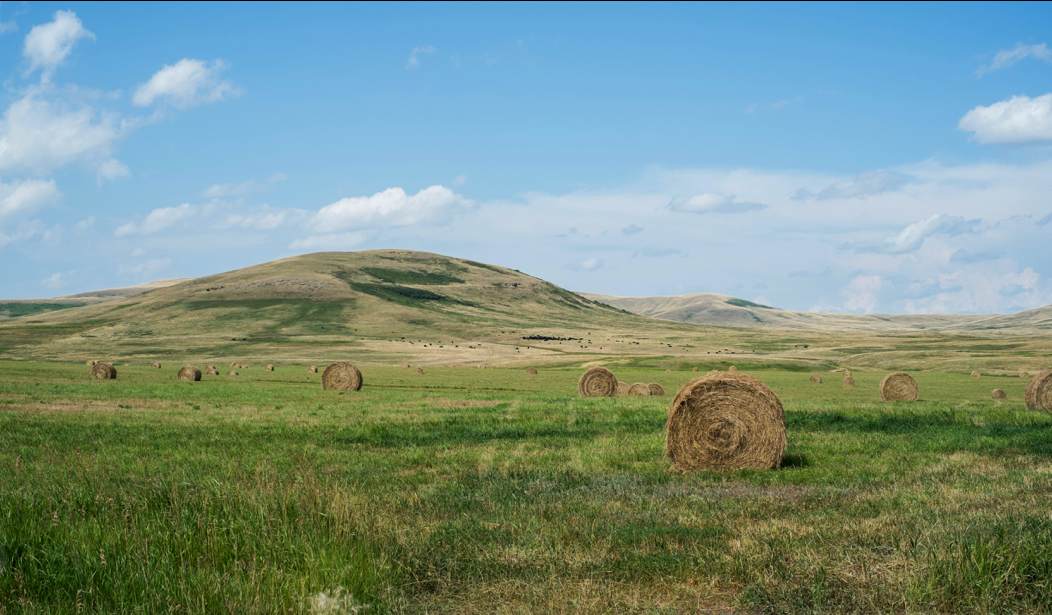
Herbaceous ecosystems dominated the 2025 greening signal, with 72.1% of grasslands and 77.6% of croplands exhibiting greening. Greening hotspots observed in southern Africa, southern South America, northern Australia, Europe, central North America and northern China align with precipitation increases.
60.0% of forests exhibited greening, and this percentage is lower than what was reported in 2024. Notable browning occurred in eastern Siberia, driven by anomalously cold growing season temperatures. In tropical rainforests, conflicting signals from MODIS (browning) and VIIRS (greening) highlight uncertainties in monitoring canopy recovery following the 2023–2024 El Niño event.
Note that some of the most significant increases are in grassland and cropland. That's where our food comes from. Want to know when crops have failed? During cold snaps, like the Little Ice Age.
Chris Morrison, the Daily Sceptic’s Environment Editor, has some thoughts.
Current levels of CO2 in the atmosphere are very low compared with amounts seen in the past going back 600 million years. In fact, the recent increases in plant growth are unsurprising as the planet moves away from the dangerous and near denuded CO2 levels of the recent past. Plants have evolved to thrive at levels of atmospheric CO2 about three times higher than the current 420 parts per million, and scientific evidence is clearly showing rising levels are leading to faster growth in flora that is both healthier and more resistant to nature’s hazards such as droughts.
Faster plant growth means a greener planet. It means more food. The same people who are yelping about our trucks and air conditioners claim to also be concerned about world hunger. But the greening of the planet, not outlawing air conditioners, actually will help crop yields.
Meanwhile, the legacy media in the UK and the USA are ignoring these findings.
As noted, mainstream media is largely absent from covering the sensational greening of the Earth – for obvious reasons, of course, since it detracts from the hard Left political message hammered home daily to promote the Net Zero fantasy. Sandwich-board Stanley is just one of countless useful idiots who comment on complex atmospheric science by suggesting that people look out of a window when any extreme weather event occurs. So far as one can see, the BBC has written nothing about the Earth greening in the last few years. The Guardian meanwhile takes a different tack and has written about growing vegetation in Greenland and Antarctica as what it describes as global ‘heating’ takes hold.
The Daily Sceptic is primarily a British site, but the same applies here in the United States; the legacy media declares a crisis when we have a few hot days, never mind that we've had hot summers before and will have them again. But when something like this happens, a note that our slightly warming climate and the rise in CO2 levels are good for plant life, including crop yields... crickets.
Here's the thing that climate scolds never look at: Deep history. If you look at the history of life on land on this planet, which reaches back about 600 million years, throughout almost all that time CO2 levels have been higher, and mean temperatures have been higher than now. In a lot of that time, the world was a very verdant place indeed. During the Eocene Thermal Maximum, there were tropical forests in Germany. As recently as the Miocene, there were no polar icecaps.
That, not this, is the norm. We are now slowly warming out of the last major glaciation. That's a good thing. The planet's CO2 levels are not rising to dangerous levels, but are rising out of a near-historic low. That, too, is a good thing.
The legacy media will never admit that. But the facts are coming out. The facts always, sooner or later, come out.