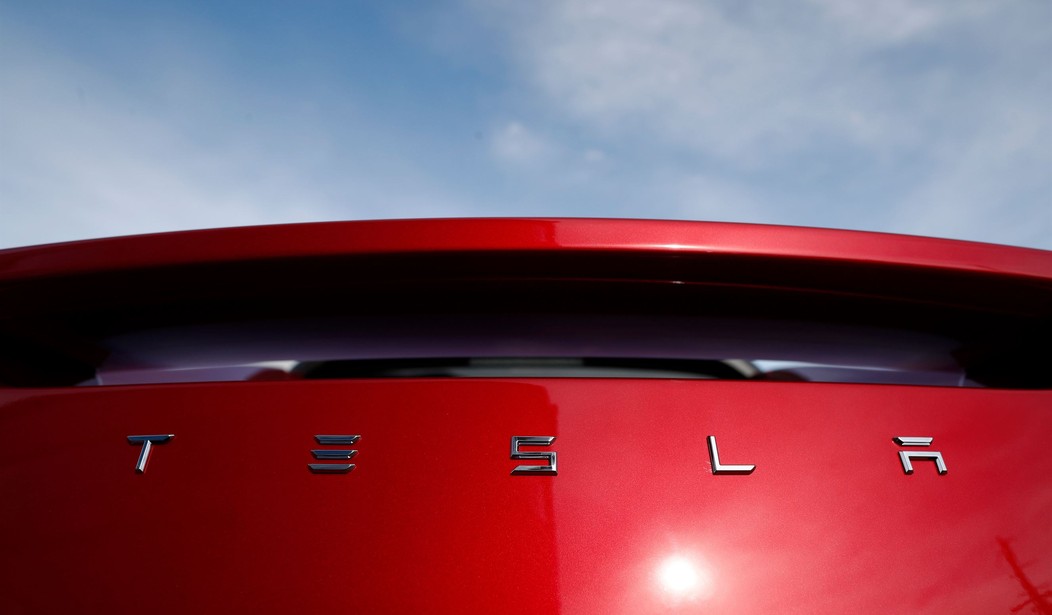

Like everyone else, I was wowed by Elon Musk's gravity-defying roadster. Climbing up a wall only to barrel roll into a perfect landing is something that I would've put all my money on being an AI creation, but this is Musk we're talking about, so expect the unexpected.
The reaction was overwhelmingly positive. Despite this being something of a beta design that will likely go through many revisions before it's rolled out to the masses, it's exciting enough that this car exists at all. Who knows where it can take us.
Of course, there were the naysayers because there are always naysayers.
My colleague Bob Hoge wrote about the response from people — most of whom came from the Left — trying to find a way to rain on everyone's parade. Hoge brilliantly and beautifully responded to these people in his own piece as well:
Do you remember your first personal computer? If you could get it up and running today, you would find it utterly useless. The beginnings of the internet were similarly unimpressive — you could send a few lines of green text to someone; that was about it. No videos, no social media, no pictures; in fact, there was very little of use except for the fact that it seemed kind of cool.
Who knew that it would eventually alter our life experience, and that the technology would morph into iPhones and Facebook and high-speed internet that would come to dominate the planet.
Love him or hate him, Elon Musk continues to be perhaps the biggest innovator on the globe, and he keeps pushing us forward into the future. Are these new Roadsters “practical” for everyday Americans? Am I going to run buy one the second it comes out?
No, and no. What they represent, however, is progress. Without that, what you get is stagnation.
I made the same case when Musk and other billionaires began launching rockets into space. At that time, dirt worshippers, as I've come to call them, were railing against billionaires for spending money on rockets instead of feeding the poor. It's something that sounds noble and virtuous to say on the surface, but dig a little deeper, and you'll find it's shortsighted and ridiculous.
These are the same people who, eons ago, were screaming at the first farmers for planting seeds in the ground and tending to what was growing instead of going out and hunting and gathering like everyone else. The focus is on the immediate need. There's no thought to what this new advancement could bring.
Spoiler Alert: It brought us civilization.
Someone on X did exactly this but posed it as a more general question: "Ask yourself what problem it actually solves."
Before praising the flying Tesla, ask yourself what problem it actually solves.
— Raven (@ravenunreal) October 16, 2026
That's the wrong question to ask.
The right question to ask is: What opportunities does this open up for us?
We saw a car course-correct mid-air and slow itself so precisely that it landed gently on the ground from an extremely hazardous position. Clearly, the car's AI executed this maneuver, as human hands aren't so accurate in their execution. Even the best astronaut pilots don't operate with that much precision, at least not without incredible amounts of practice time.
Musk installed a flight computer into an unmanned car and demonstrated the accuracy with which it can operate while airborne. What happens when that kind of computing and movement power is given to other cars and the AI can, to the best of its ability, course-correct a car mid-crash, saving the lives of its occupants? Could this kind of tech be installed on emergency vehicles that can, in dire need, use this kind of technology to navigate to places faster?
What kind of stability systems can come from the fan-suctioned tires?
I'm going to be honest with you, I'm not smart enough to see the branches of technology coming from this car. What I can tell you is that various things NASA developed to help us travel through space became a myriad of things we now use in everyday life that you never think about. In fact, as you read this, you're probably surrounded by tech that started at NASA or even the JPL that has nothing to do with jet propulsion.
And I also know that a lot of that technology has been used to help people who really need it. It's saved lives, put food in bellies, and generally upped the quality of life for almost everyone.
The technology tree isn't linear. Almost everything humanity creates results in a branching technology, and that technology can create other technologies that solve problems we've had since we were hurling rocks at each other. Anyone as concerned with the plight of the poor and unfortunate as they claim would be cheering and celebrating this new development because of its potential.
But they aren't. If they had their way, we'd still be sharpening rocks, tying them to sticks, and hoping we bring down something that can feed the entire tribe.