








Old soldiers will tell you of an old U.S. Army saying, which goes, "There are three ways to do anything: the right way, the wrong way, and the Army way." There's a lot of good history behind that remark. This week, we got a demonstration on how the Army's solution to a potentially unstable explosive was to... blow it up.
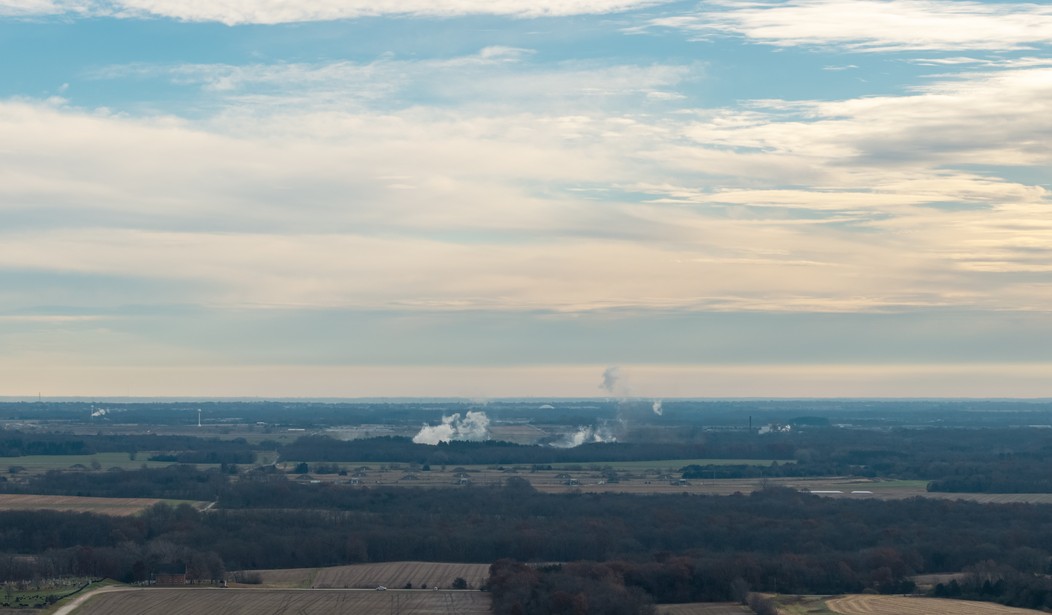
In Iowa, at the Iowa Army Ammunition Plant near Middletown, all the legal matters having been settled and presidential approval obtained, the Army successfully detonated an aging stockpile of lead azide, a chemical used to make explosives. There had been serious concerns about the spread of toxic lead, but initial indications suggest the Army's mitigation efforts were successful.
BREAKING: Explosions heard at Army ammunition plant in Iowa. https://t.co/k8sKRt7mhp
— World Source News (@Worldsource24) November 25, 2026
🚨 NOW: The exact moment of PLUMES FORMING as the US Army detonates unstable lead azide in Iowa They had INTENSE safeguards to block as much lead dust as possible from flying up and impacting nearby areas The Army said it could have exploded on its own at any time. This was the option against an unplanned, uncontrolled detonation
— Eric Daugherty (@EricLDaugh) November 25, 2026
The post states:
NOW: The exact moment of PLUMES FORMING as the US Army detonates unstable lead azide in Iowa They had INTENSE safeguards to block as much lead dust as possible from flying up and impacting nearby areas The Army said it could have exploded on its own at any time. This was the option against an unplanned, uncontrolled detonation.
The release of toxins from the detonation of the 68 barrels of lead azide, which may well have exploded on its own in any case, appears to have been contained.
FEMA Administrator Cameron Hamilton told Fox News there was a "sigh of relief" at the Army's command center following the explosion, which he said was likely successful at containing lead particles.
"From what we see now, it doesn't appear that there's a big lead plume that was in the projection models, because we think the mitigation to tamponade off that explosion were very, very successful," Hamilton said.
He said that in the coming days and weeks, various federal agencies will be taking air and soil samples, while officials with the Department of Agriculture will visit nearby farms to carry out impact assessments.
EPA Administrator Lee Zeldin explained how the material could have gone off on its own:
Lee Zeldin: "With the crystallization of the lead azide, it became an increasing risk of a spontaneous detonation that could take place, by the way, on a least optimal day." https://t.co/avmFp4wIB1
— The Post Millennial (@TPostMillennial) November 25, 2026
He notes that the lead azide was there since 2009, and had been degrading and crystallizing since, becoming an increasing risk for a spontaneous explosion, with material spread over populated areas. That possibility has now been eliminated.
Monitoring can (and should) continue, but for the moment, things seem to be well in hand. And that really shouldn't be too surprising; after all, if one has something one needs blown up, who better to turn to than the United States Army?
The final detonation comes after a round of legal wrangling, of cautions from the Army Ammunition Plant that the material was unstable and likely to explode on its own as temperatures drop, and even involvement from the commander-in-chief, who deferred the question back to the courts with a nod to the incoming (Democrat) Iowa governor to make the final call. All that worked out, and now the hazard has been removed, and initial indications are that it was done as safely as could be.
And, finally, President Trump weighed in with a satisfied tone.
https://t.co/JFTIIuBj53
— Rapid Response 47 (@RapidResponse47) November 25, 2026
So, at least one problem has been solved — decisively and, may we say, explosively.
Editor's Note: Do you enjoy RedState's conservative reporting exposing the radical left and woke media? Support our work so we can keep bringing you the truth.
Join RedState VIP and use promo code FIGHT to receive 60% off your membership.



Join the Conversation
VIP members get the ability to comment on articles.