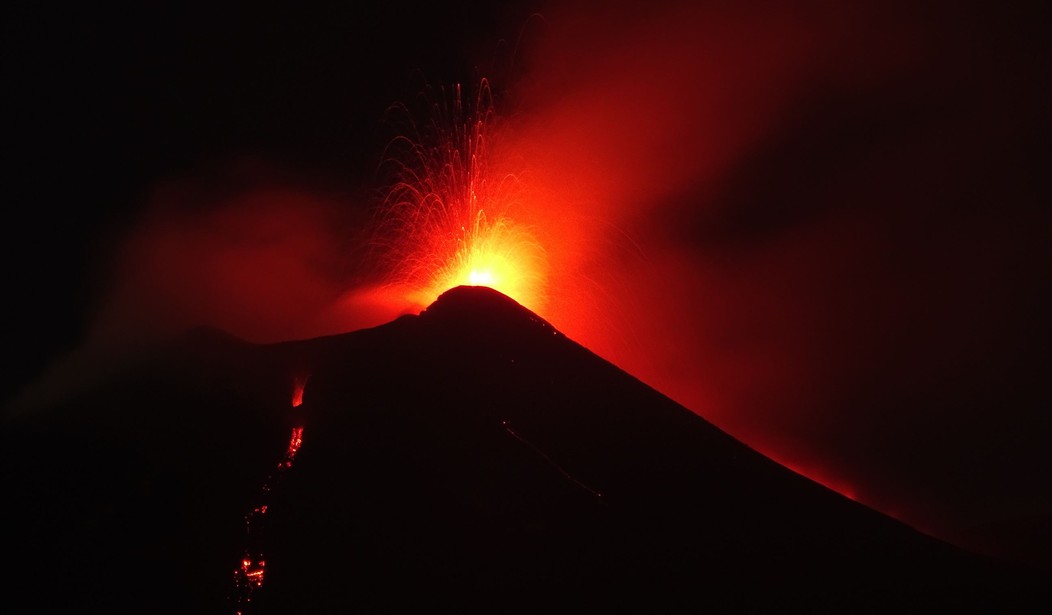

There's a near-endless supply of energy, in the form of heat, right beneath our feet. The Earth's interior is hot, and it gets hotter the deeper you go. That heat can be used to generate electricity; this is called geothermal energy. Geothermal energy, like nuclear power, is everything climate scolds claim to want: Reliable, clean, low emissions. But there are some technical problems, mostly having to do with the fact that, as a practical matter, geothermal power isn't practical everywhere.
But near the tectonic plate boundaries, places where earthquakes and volcanoes happen, it can be a viable source of heat with which to generate power. This brings us to an interesting outfit called Quaise Energy, which is pioneering some new drilling techniques that may expand the viability of geothermal power.
Here's their purpose statement.
Our work is a necessity, not an option.
Deep geothermal energy is at the core of an energy-independent world. Our mission is to bring this inexhaustible, renewable, clean energy source to future generations. This is the profound power of deep geothermal. We are unlocking energy for all.
So, what is "deep geothermal energy?" The problem with geothermal power is that we're limited by how deep we can literally drill holes in the ground. Quaise claims to be pioneering a new way of doing that.
Geothermal startup Quaise Energy wants to use futuristic technology to vaporize stone, drill at superhot depths and produce clean power around the clock. Now, it has Google on board.
The tech company has signed a deal valued at more than $500 million to secure 50 megawatts of power from a geothermal project that Houston-based Quaise is developing in central Oregon. The electricity produced at the site will support Google’s existing data-center operations in the state.
Geothermal energy, the heat from beneath the ground, isn't a new thing. The ancient Romans knew and made use of hot springs, believing them to have therapeutic benefits. Geothermal energy, in the form of the raw heat, was employed as early as 1892 in the U.S. first district heating system in Boise, Idaho; that system was later copied in other places where the earth's heat could be productively tapped. The first use of geothermal energy to produce electricity happened in 1904, when the first geothermal power generator went live at the Larderello steam field in Italy; it only produced enough power to light four light bulbs, but it was the first. It's been an interesting niche technology ever since.
And, still, the practicality of this interesting tech is limited by our reach: How deep we can drill. Quaise claims to have a new solution, one that would appear to have come right out of science fiction: A sort of energy drill.
In an interview with GeoVanguard Intelligence, Harry Kelso, Senior Communications Manager, and Ryan Dean, Sr. Director, Strategic Communications and Public Affairs, of Quaise Energy outlined a deliberately staged strategy for commercializing superhot rock geothermal: prove the value of high-temperature engineered systems at a comparatively accessible U.S. site, validate millimeter-wave drilling under field conditions, and then combine the two capabilities as the company expands into deeper and more geographically diverse resources.
The proposition is ambitious. Quaise Energy aims to reach rock above 300°C—and ultimately beyond 400°C—at depths where drilling using conventional technology become progressively slower and more expensive. If the approach succeeds, the company argues that geothermal could move beyond its traditional dependence on rare, naturally permeable reservoirs and become a widely deployable source of clean, continuous electricity.
This technology proposes to carry out deep drilling with tech developed initially at the Massachusetts Institute of Technology (MIT) Plasma Science and Fusion Center, which uses millimetric (meaning the wavelength of the beam is in the millimeter range) electromagnetic waves to literally vaporize rock. Quaise claims that they will eventually reach six to 12 miles in depth, which would supposedly increase the number of areas viable for geothermal power.
Now, to be fair, there are murmurings in the climate scold community about geothermal power. That's an uncharacteristic acknowledgement of reality, which is more than we can say for their insistence on low-density, intermittent sources like wind and solar power. It is, after all, everything they claim to want: Low-emissions, at least at the point of extraction; reliable, and at least acceptable energy density, although nuclear power still wins that title. But even if the claims made by Quaise are correct, making this technology commercially viable on a broad scale is another matter. For now, it's a niche application, not a grid-wide solution. That's fine; solar power and wind power can be useful in niche applications, as well. They just don't scale up, and we should be a little skeptical about geothermal scaling up to grid-level, either, although admittedly the tech has come a long way since it was lighting up four light bulbs in Italy.
Now, one tech giant, Google, seems to think Quaise is on to something.
Geothermal power has possibilities, more so, very likely, than wind and solar. The climate change activist community seems to be tentatively approving of geothermal power, that is, until someone proposes to start drilling within a 100-mile radius of wherever said climate scold lives; then it will, no doubt, be opposed as destructive to the environment. While what energy companies like Quaise are doing is interesting, it still seems unlikely that geothermal will be viable at grid-scale any time soon. No, for now, we're best off relying on the traditional sources, coal, oil, and natural gas. As for the future, the energy sources of the future have been and will be nuclear.