






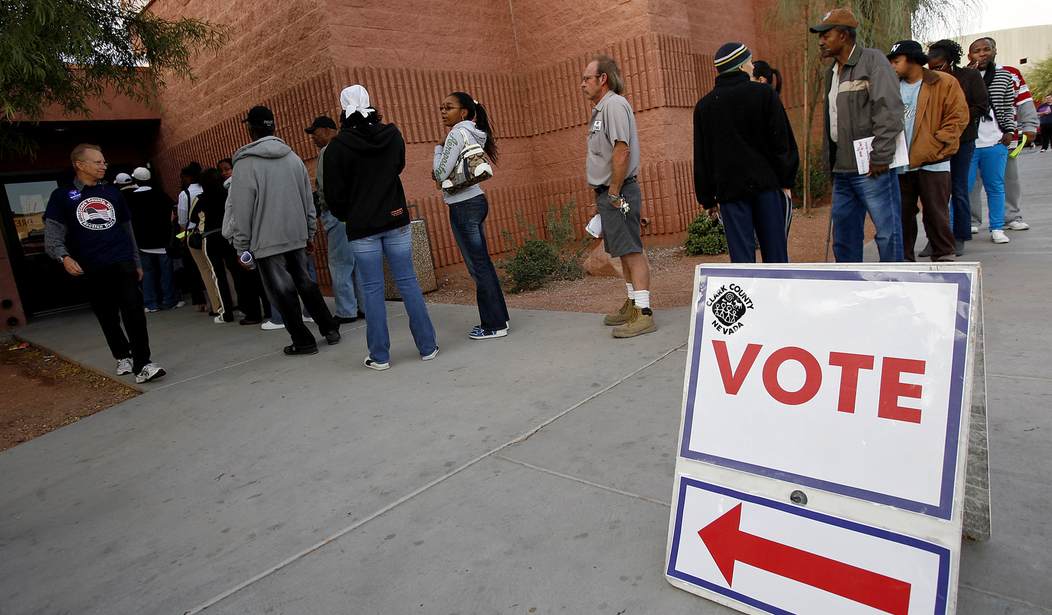
Polling isn't always accurate, as we have learned with some clarity in the last few election cycles. But they can be interesting, especially if you take an aggregate of several recent polls; they are also useful in determining trends.
Interactive Polls has been gathering some such data on the 2026 Senate elections. On Friday afternoon, they released some individual polling on several key Senate races that may have some Republican candidates wearing some cautious smiles.
Senate Polling — Co/Efficient (R) 🔴 Kansas - Marshall +5 🔴 Nebraska - Ricketts +5 🔴 Iowa - Hinson +4 🔴 Alaska - Sullivan +2 🔴 Maine - Collins +2 🔴 Ohio - Husted +1 🟡 New Hampshire - Tied 🟡 Michigan - Tied 🔵 Minnesota - Flanagan +1
— InteractivePolls (@IAPolls2022) October 8, 2026
These are some interesting results, but let's be cautious. First, let's compare these to the RealClear Polling aggregates, as they stand as of this writing.
- Kansas — Marshall, Republican, +5, RCP average, +.02
- Nebraska — Ricketts, Republican, +5, RCP average, RCP +5
- Iowa — Hinson, Republican, +4, RCP average, Turek, +0.5
- Alaska — Sullivan, Republican, +2, RCP average, Peltola, Democrat, +1.2
- Maine — Collins, Republican, +2, RCP average Jackson, Democrat, +1.0
- Ohio — Husted, Republican, +1, Brown, Democrat, +3.1
The remaining three results from Interactive Polling show the New Hampshire and Michigan races in a tie, with Democrat Peggy Flanagan only leading by one point. So what can we derive from this?
Kansas and Nebraska aren't a particular surprise. Both polling aggregator sites have the Republican candidates with a narrow lead. Iowa has been a reliably red state, so it's a little concerning that the RCP averages have the Democrat with a narrow lead, although I'm a little skeptical about the RCP average. Alaska's ranked-choice voting system makes polling here a bit suspect, although as a resident of the Great Land, I'd dearly love for this to be correct.
If we take these numbers at their word, the worst-case scenario, assuming Democrats win all the other races, leaves the Senate in a dead tie in January when the new Congress is seated. This, though, assumed Dem wins in Texas, Ohio, and North Carolina. That's unlikely. Even a GOP win in Texas gives the Republicans with an outright, though narrow, majority at 51-49. My personal guess is that "Abdual" El-Sayed will prove unelectable in Michigan; it's looking more and more like Minnesota may be in play.
Conclusions? I'm cautiously optimistic, but only cautiously. Polls are all too often something glimpsed "so as through a glass, and darkly." Pollsters are adjusting their models to changing conditions, and too many polls have badly underestimated the Republican response. But there's another factor: All of the Republican candidates who are shown as ahead in the Interactive Polls average are incumbents, except in the case of Iowa.
Sure, these polls may elicit a grin or two from Republican Senate candidates. But polls are just polls. This isn't the year to get complacent. This isn't the year to be caught leaning too far ahead in the foxholes. President Trump, sure, isn't on the ticket, but his name is at the front of every Democrat's mind, and that's going to drive turnout; that's something polls have a hard time predicting.
We're in the endgame now. The sides have been drawn, and while the data right now seems to point to some drift towards Republicans, this is going to be a turnout election — and the Democrats are motivated.
Remember that in November. Remember that, and vote.
Editor’s Note: The 2026 Midterms will determine the fate of President Trump’s America First agenda. Republicans must maintain control of both chambers of Congress.
Help RedState continue to report on the Democrats’ radicalism and inform voters as our nation faces a crossroads. Join RedState VIP and use promo code FIGHT to receive 60% off your membership.

Join the Conversation
VIP members get the ability to comment on articles.