



A senior State Department official floated the idea that the South American nation of Guyana should hand over an area where oil was recently discovered to Venezuela to settle a boundary dispute that exists only in the minds of a nearly unbroken series of Venezuelan rulers. The suggestion reportedly shocked the Guyanese officials in the meeting.
According to reports, Director of Policy Planning Jeremy Lewin suggested to Guyanese Foreign Secretary Robert Persaud during a September meeting in Washington that Guyana cede the western two-thirds, called Essequibo after the river that defines the area, of Guyana to Venezuela, despite an international agreement mediated by the U.S. and signed in 1895 that establishes the border.
It's insane even for the Trump Administration that it's reportedly suggested that Guyana should surrender two-thirds (!) of its territory to Venezuela. Vladimir Putin would be envious. https://t.co/33i3wyFRUF
— ChrisO_wiki (@ChrisO_wiki) November 19, 2026
In 1962, Venezuela took the matter to the UN, which, in the best fashion of the UN, produced an agreement in which Venezuela and Guyana agreed to try to find a way to agree on a solution.
Guyana took the matter to the International Court of Justice in 2018 after the 1966 plan-to-make-a-plan agreement broke down. The ICJ got around to hearing the case in May 2026.
In 2023, war loomed (see Venezuela Signals It May Invade Guyana to Enforce Annexation Referendum – RedState) as former dictator and current Cell Block 6 love slave Nicolas Maduro moved troops in the direction of the border. He held a referendum (see Venezuelan Dictator Gets Less Than 18% Voter Turnout, Even With Food Bribes – RedState) in which Venezuela awarded itself the custody of most of Guyana and, in best Russian tradition (see Putin’s Ukraine Annexation Speech Told Us What to Expect From Russia and It Is up to Us to Pay Attention – RedState), annexed it.
A decision from the ICJ, which seems likely to uphold Guyana's title to Essequibo because Venezuela's argument boils down to "I want it," is expected in the next few months.
This is how we got here.
In an interview with Reuters, Lewin said he held "preliminary" talks with the Guyanese and Venezuelans regarding the nations' territorial dispute. He said those talks came after Rodriguez wrote a letter to US President Donald Trump in May seeking US mediation to facilitate direct talks with Guyana on the status of the territory.
In that interview, Lewin, who left the administration at the end of October, makes it clear that his "conversations were fully directed and authorized by the White House." So this is not the case of someone making an offhand suggestion that a nation give up two-thirds of its territory.
Once the incident hit the wires, the White House issued the sort of non-denial that every White House tosses out when it gets caught doing something untoward.
The policy on the land boundary between the two countries has not changed. The United States reaffirms its support for the 1899 Arbitral Award that determined the land boundary between Venezuela and Guyana, which should be respected unless or until a new boundary is set by a competent legal body or with the consent of both parties.
— U.S. Embassy Guyana (@EmbassyGuyana) November 19, 2026
The policy on the land boundary between the two countries has not changed. The United States reaffirms its support for the 1899 Arbitral Award that determined the land boundary between Venezuela and Guyana, which should be respected unless or until a new boundary is set by a competent legal body or with the consent of both parties.
Notably missing is any denial that the administration tried to get Guyana to give up territory and wealth to Venezuela in lieu of a imminent ruling by the ICJ.
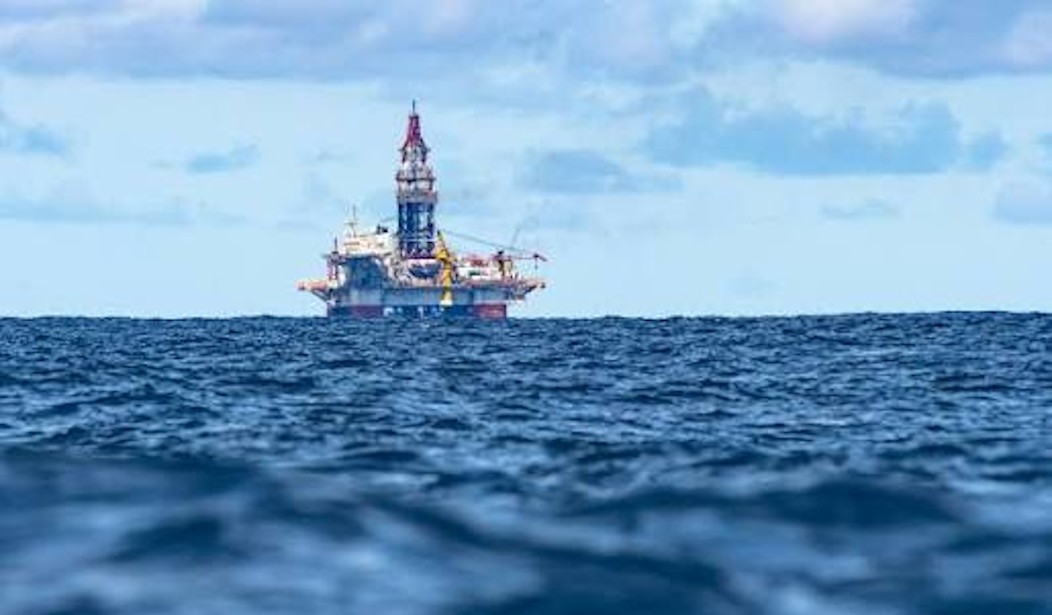
I have my theories on how this came to be. They involve Trump's efforts to cement relations with Venezuela's Delcy Rodríguez, in a non-Biblical way, and the world's 17th-largest proven oil reserve in Guyana's Exclusive Economic Zone, which would belong to Venezuela if the border changed. In fairness, China has strong influence in Guyana, as it did in Venezuela (see Trump's Campaign Against Venezuela Is Jumpstarting the Monroe Doctrine – RedState), and transferring Guyana's mineral wealth in gold, bauxite, and oil to what has become a U.S. ally might be easier than developing a relationship with Guyana.
Philosophically, what I find more troubling is the way Trump and his foreign policy advisers have taken a page from Thucydides's The Peloponnesian War and made it national policy. The city-state of Melos had remained neutral in the great power struggle between Athens and Sparta. The Athenians sent a delegation to Melos to demand that it capitulate and become an Athenian client because leaving Melos free would signal weakness and encourage others to resist. This resulted in the famous Melian Dialogue. The Melians appealed to justice, and the Athenians responded with realpolitik. Because of the power imbalance, Athens reminded them that right and justice meant little: "while the strong do what they can and the weak suffer what they must."
This is very applicable to what we are told about the ongoing talks about Ukraine's fate that, oddly, often include the aggressor in the war and exclude the victim. The power difference between the U.S. and Ukraine means U.S. priorities take precedence over the justice of Ukraine's fight to remain independent. If giving that country to Russia in exchange for some future benefit is the desired course of action, then that is what we will do, and the Ukrainians will just have to suck it up and accept slavery.
The strong do what they wish; the weak suffer what they must.
Thus it was, thus it is, thus it ever shall be.
Editor’s Note: Thanks to President Trump and his administration’s bold leadership, we are once again respected on the world stage, and our enemies are being put on notice.
Help us continue to report on the administration’s peace through strength foreign policy and its successes. Join RedState VIP and use promo code FIGHT to receive 60% off your membership.
Join the Conversation
VIP members get the ability to comment on articles.