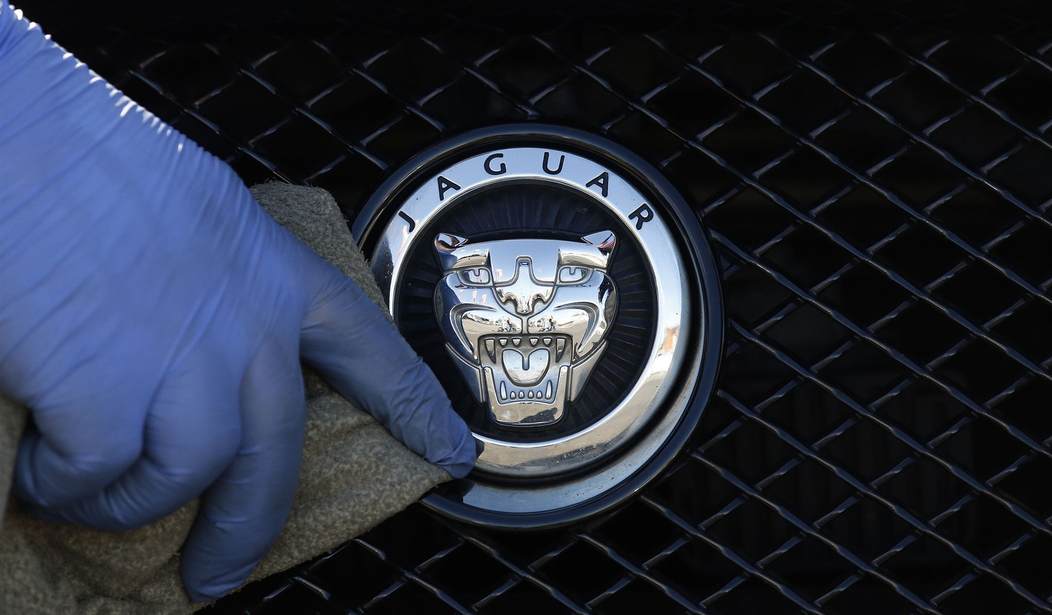

Birmingham, in the United Kingdom, was once known as Britain's motor city. It was never quite the industrial powerhouse that, say, Detroit was, but a fair number of British motors were developed and made there. And the United Kingdom used to be well-known for great cars with poor electrical systems, but names like Jaguar, Bentley, Rolls-Royce and Rover still stir up lovers of fine autos.
But the Brits don't see speed limits the way Americans do. To a degree that's understandable; they don't have the open spaces America does, especially in the American West, where some places are just miles and miles of miles and miles. If you've ever driven across Wyoming on Interstate 80, you'll know that one could almost fall asleep in Rawlins and wake up in Fort Bridger without wandering off the road. We have speed limits to match, too; 80 and 85 miles per hour (mph) on that road, the last time I drove across it.
But now, the city of Birmingham is taking the plodding British drivers down even more, with a proposal to lower the speed limits on all the city's roads to 20 mph.
Birmingham is to become England’s first 20mph city by lowering speed limits on the majority of its roads.
In plans updated last week, the Liberal Democrat, Green Party and independent-led council said it wanted all routes except A-roads to become 20mph zones.
An A-road in the United Kingdom isn't a controlled-access road as such, but is considered a primary road, like a state or county road here. Most of our speed limits on those roads are 45 to 55 mph in urban areas.
Here's why:
The council said it wanted to ensure that cars “no longer dominate street life” by promoting walking and cycling as the best ways to travel. However, opponents have claimed the “anti-motorist policy” will make travelling around the city harder.
The move comes amid Andy Burnham’s push for devolution, which could give local authorities greater power to impose similar controversial policies on their areas.
Birmingham, once regarded as the motor capital of Britain because of its vast car production and trailblazing road designs, adopted a plan in 2021 to expand the rollout of 20mph zones.
The new council coalition has gone further and committed to lowering speed limits across the city.
There's no mention of emissions or climate panicking in this, but it's heavily supported by Britain's left-wing Green Party; you can do the math there.
Read More: UK Publishers Hit Out at Burnham’s Hasty Subscription Clampdown
The Reasons for Europe's Devastating Self-Destruction
Nigel Farage's ReformUK Party, which may well represent Britain's last hope for a return to sanity, is opposing the move.
Reform UK’s Jex Parkin, the leader of Birmingham’s opposition, said: “This is another anti-motorist policy from a council that seems determined to make getting around Birmingham harder.
“People already have enough congestion, restrictions and disruption to deal with without another blanket measure being imposed on them.”
There are a few problems with this notion.
First: Why 20mph? If safety is the concern, why not 10mph? Why not three? Why 20? If a car, any car, hits a pedestrian or a cyclist at 20mph, the odds of that pedestrian or cyclist surviving aren't good. If two cars collide at 20mph, that may be marginally better than colliding at 30mph, but only just. Furthermore, the lower they push down the speed limit, the more people will exceed it. And then, the more speeding tickets the city can hand out. Feature, or bug?
Second: If you've ever driven, and I mean at all, you'll know that idling along at a lower speed will cause your vehicle to stay in a lower gear. Standard transmissions are still more common in Europe than here, and in every manual-transmission vehicle I've ever owned and driven, if I were in heavy traffic, I kept in a lower gear to make the vehicle more responsive. That increases wear and tear on the engine and transmission.
Third: The emissions angle. You know the Greens are pushing this, in part, for this reason: Carbon emissions and climate scoldery. But dropping a speed limit by a third means a third more time spent in the vehicle, spreading more exhaust fumes while going from hither to yon. Of course, the Greens and their climate change fellow travelers will use that as an argument for electric vehicles, which just move the emissions elsewhere.
We all remember the disastrous episode that was the American nationwide 55mph speed limit. Thanks to the Carter presidency and their inept handling of OPEC, we were stuck with a 55mph speed limit on highways, big, beautiful, wide-open, straight and clean highways where cars could travel in triple-digit speeds. Compared to what American cars in those years were capable of, and on those highways, it felt as though we were crawling; and we were. Now Birmingham intends to take this all to a completely ridiculous level.
Not that the Democrats, given the opportunity, won't try again. As I'm fond of saying: Watch Europe's left. Keep a clear eye on them. Because what they do today, the American left will try to do tomorrow.
This seems appropriate.