



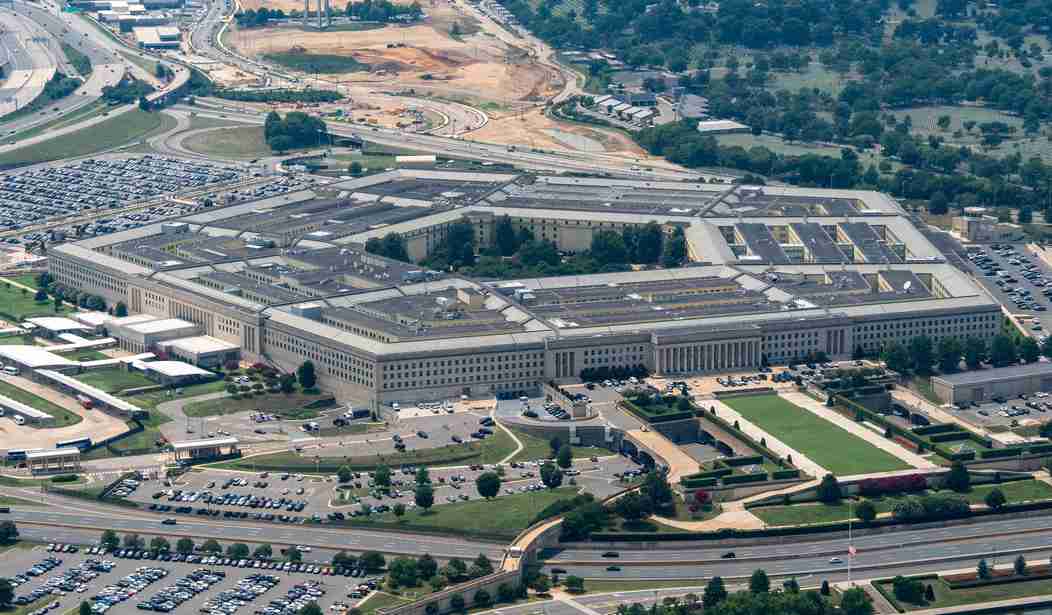
As the old joke goes, I have some good news and some bad news. The bad news is that the Pentagon failed its ninth straight audit. The good news is that for the first time, over half of the 25 standalone reporting entities covered in the Department of War budget achieved a passing score. The components that passed their audit comprise more than 56 percent of DoW assets and over 90 percent of its liabilities.
This year, DoW received 12 passing grades, adding the Medicare-Eligible Retiree Health Care Fund to the 11 cleared last year. Four additional entities — the Navy Working Capital Fund, Defense Information Systems Agency General Fund, Defense Intelligence Agency (classified AFR) and National Geospatial Intelligence Agency (classified AFR) — will be cleared by the time the final report is published in February 2027.
The Pentagon was first required to pass an audit in Fiscal Year 2019. That would mark the first time since the Department of Defense was established in 1947 that the single largest federal department would have to account for where it spent its money. Needless to say, the early audits were comically horrendous or horrendously comical. The FY2019 audit gave a "clean" rating to five reporting entities. The next ratings were FY5 in 2020, 7 in FY 2021, 8 in FY2022, 9 in FY2023, 10 in FY2024, and 11 last year. Adding five clean ratings for FY 2026 marks a quantum leap in improvement, though much work remains. See: Pentagon Would Hit Panic Button As It Fails 6th Audit in a Row If Anyone Cared – RedState and Pentagon Flunks Seventh Straight Audit, Can't Fully Account for $824 Billion Budget – RedState.
The problem is daunting. The Pentagon employs 149 financial management systems, many of which are inadequate and outdated. They include technology built on computer code a half-century old. If we are still running our national air traffic control system on 5 ¼-inch disks and Windows 95, you can bet people who don't have a vested interest in outsiders seeing their books are using even more obscure and unreliable systems. In November, the Pentagon had to admit that 26 million parts for the F-35 worth around $31 billion could not be accounted for. This was on top of the $85 million in parts identified as missing in 2023 that still haven't been located. During the 2018 audit, auditors found a warehouse at Naval Air Station Jacksonville containing $126 million in unrecorded spare parts in a warehouse no one knew existed. Auditors also found another $26 million in parts at Naval Base San Diego. And it gets worse: the Pentagon was funding Chinese biological research labs, and no one knows how much was given to our erstwhile enemies; see DOD Inspector General Not Sure If We Spent $50 Million in Chinese Labs for Gain-of-Function Research – RedState.
The big difference is that Secretary of War Pete Hegseth is treating the audit as something important, which none of his predecessors did. Shortly after being confirmed, he committed to getting a clean audit within four years; see Accountability at the Pentagon: SecDef Hegseth Commits to Passing Clean Audit in Four Years – RedState. The National Defense Authorization Act (NDAA) for Fiscal Year 1990 required DOD to undergo financial audits. The specific provision is the Chief Financial Officers (CFO) Act of 1990. This legislation required DOD and all other federal departments and agencies to produce audited financial statements. The Pentagon got around to complying in 2018, probably about the time the staffers who drafted the FY90 legislation were preparing for retirement.
The Vice Chairman of the Joint Chiefs of Staff leads the audit process. That visibility alone ensures a lot more people inside the Pentagon take the exercise seriously. Outside auditors have been brought in to add depth, transparency, and credibility that were previously lacking. More importantly, the DoW is consolidating the current 25 audit entities into 8 and has begun using artificial intelligence tools from Palantir and xAI, as well as in-house applications, to automate financial reconciliations and documentation.
While more than half of the Pentagon's accounting for taxpayer money is a huge improvement over the past mode of operation, it still isn't good enough. Pete Hegseth is taking the problem seriously and applying resources and command emphasis to a process that was seemingly treated as a joke. The Congress-mandated deadline for getting a clean bill of health across the department is next year. Let's see how that turns out.
Editor's Note: Thanks to President Trump and War Secretary Pete Hegseth's leadership, the warrior ethos is coming back to America's military.
Help us continue to report on Trump and Hegseth's successes as they make our military great again. Join RedState VIP and use promo code FIGHT to receive 60% off your membership.



Join the Conversation
VIP members get the ability to comment on articles.