






By Amelia Hamilton
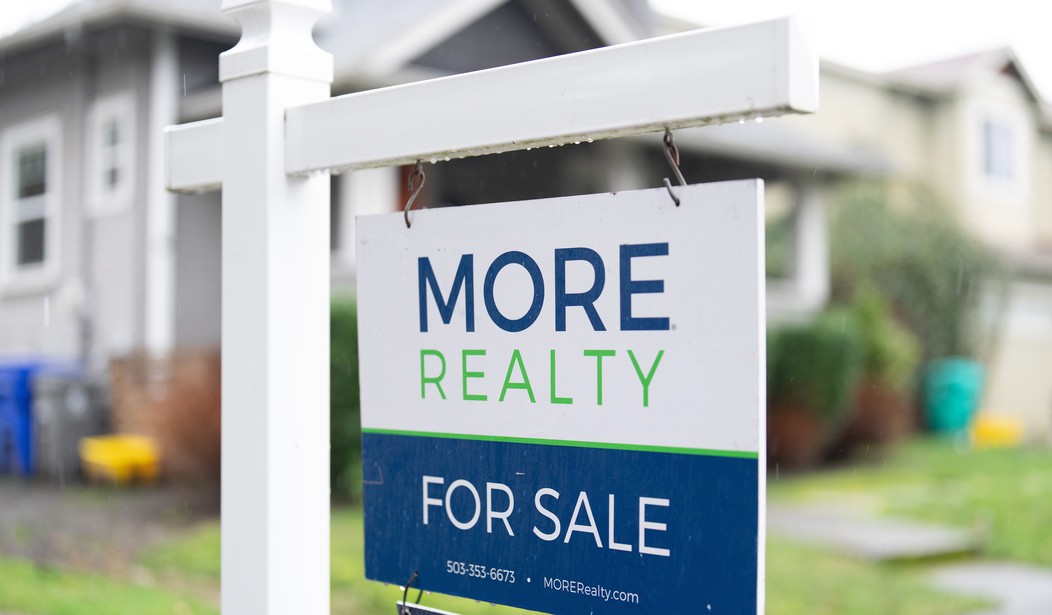
If you’ve been following the housing market, you know both home prices and interest rates are high. That combination is keeping many people from purchasing homes. But there are also unseen factors fuelling the issue.
When looking for a home, or even having a look to see what’s available, many turn to Zillow. As it happens, this popular online marketplace has found itself in hot water multiple times over business practices that are alleged to inflate costs. It starts with the “Zestimate” (a portmanteau of Zillow and estimate), which Zillow’s website describes as an “estimate of a home’s value based almost entirely on publicly available information.” The problem is in the next phrase, “but you can influence it.” The website goes on to tell readers how to do so. Zestimates have begun to influence price expectations, contributing to higher prices, and Business Insider even says Americans are “obsessed” with the metric — a metric Zillow admits can be manipulated.
Academic research on machine-learning feedback loops has found that displayed algorithmic prices can anchor realized sales prices, which then become training data for future algorithmic prices. The algorithmic pricing feedback loops can cause sellers to over-rely on erroneous algorithmic prices and make sale prices become erratic relative to underlying consumer preferences.
It’s an ouroboros that continually drives up home prices.
And that’s just the Zestimate. What happens when one happens upon an attractive property and wants to see it? A 2025 class-action lawsuit, which is still being litigated, accused Zillow of misleading homebuyers by directing them to affiliated agents rather than listing agents. The lawsuit alleges Zillow takes up to 40 percent of affiliated agents’ commissions without disclosure. “Zillow’s scheme has the intent and the effect of unlawfully maintaining high and inflexible commissions that drive up the prices that buyers must pay,” the lawsuit claims. An amended complaint also alleges undisclosed Zillow fees, inflated commissions, and transaction costs.
Zillow’s business model likely depends on preserving these commission structures as their revenue from successful referrals rises with the size of the commission. Law firm Hagens Berman, handling the Zillow class action suit, says real estate broker commissions in affected markets averaged five to six percent, which is substantially higher than those in countries with more competitive brokerage markets.
ALSO SEE: Zillow Faces Buyer Lawsuit, As Wall Street Climate Scores Reportedly Crush Home Values
Bipartisan Housing Bill Becomes Law Without Trump's Signature
Once an artificially-priced home has been sourced and a realtor with an outsized commission has been placed into the mix, it is time for a mortgage to enter the equation.
Research has found that nearly 90 percent of homeowners are overpaying for their mortgages, costing American households $65 billion annually. “The dream of homeownership feels increasingly out of reach for millions of Americans, so it’s worth asking whether the problem is the market or the process,” Bankrate CEO Matt Fellowes, the primary author of the study, told Business Insider. “Our research suggests that for most borrowers, competitive rates exist; borrowers just never see them. When lenders compete for a borrower’s business, the savings are meaningful and immediate: $279 a month on average, an amount that puts homeownership out of reach for many borrowers.”
This is clearly a broken system that needs to be fixed. The 21st Century Road to Housing Act was the first major piece of legislation regarding affordable housing to make it through Congress in decades — and it did so with overwhelming support. It encourages smaller-dollar mortgages, alleviates bottlenecks in manufactured housing due to compliance burdens tied to Dodd-Frank and the SAFE Mortgage Licensing Act, promotes the formation of new community banks, and sets limits on large institutional investors purchasing single-family homes to promote homeownership opportunities for families rather than corporations.
It could go further to create more homes – like providing more regulatory relief; developers who specialize in affordable homes routinely cite tougher lending standards introduced in the wake of the 2000s financial crisis and excess CFPB regulation as hurdles to allowing more working-class Americans to get on the homeownership ladder, where multifamily buildings are concerned. But it helps. The questions are when will the full effects be felt and how much? With “affordability” top of mind, an even broader look at factors driving housing prices higher and resulting in too little inventory may be needed.
Amelia Hamilton is a writer and communications professional from Michigan with more than a decade of experience in messaging to promote liberty. Through her work with different organizations and publications, she knows how to craft the right message for each audience to help them connect with policy issues. Amelia has undergraduate and master’s degrees in both English and 18th-century history from the University of St. Andrews in Scotland.
Editor's Note: Do you enjoy RedState's conservative reporting that takes on the radical Left and woke media? Support our work so that we can continue to bring you the truth.
Join RedState VIP and use promo code FIGHT to receive 60% off your membership.


Join the Conversation
VIP members get the ability to comment on articles.