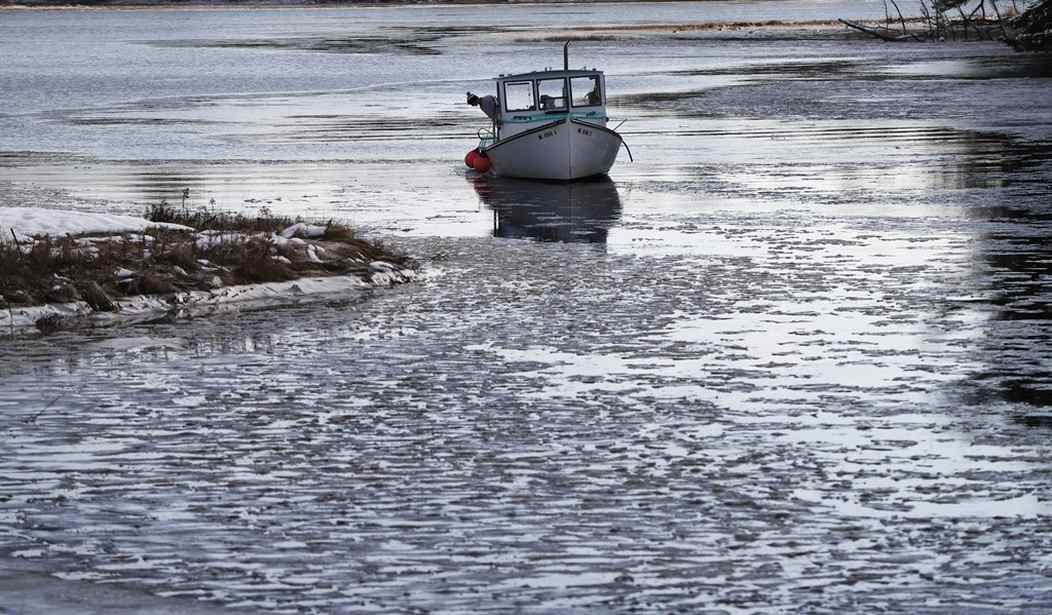

One of the great things about being a lobsterman in the past has been the freedom — the ability to go out on the water, not be shut up in an office, and pull in your catch. To have a day well done.
However, modern lobstermen have been facing a ton of regulations that are stifling their ability to make a living. I reported before on some of those regulations that they were trying to impose under the Biden administration.
Now there's another concern with more creeping government encroachment, this time from the state.
The Maine Department of Marine Resources (Maine DMR) implemented a rule in 2023 at the direction of the Atlantic States Marine Fisheries Commission that required a GPS tracker to be installed on federally licensed lobster boats.
But a lobsterman has been fighting the rule, concerned that it is threatening the lobstermen's freedom and could potentially be imposed on other industries.
For decades, fifth-generation lobsterman Frank Thompson has driven his boat from Vinalhaven, a small island off the Maine coast, into deeper waters to set traps and haul in lobsters. Now, he says a GPS tracking mandate has turned his boat into a government-issued 24/7 "ankle bracelet," sparking a years-long legal battle over constant surveillance and Fourth Amendment rights.
"This is totally against the Fourth Amendment, and somebody's got to hear it one way or another," Thompson told Fox News Digital. "This black box that they're putting aboard the boat is not legal, in my mind, and I'm not a criminal."
Thompson, who also owns Fox Island Lobster Company with his wife and two sons, was out fishing earlier this month when one of his sons texted him, letting him know the Supreme Court had declined his petition to hear the case and left in place a First Circuit ruling that said the GPS tracking requirement did not violate the Fourth Amendment because lobstering is a closely regulated industry.
"I just told myself, I said, ‘Well, it ain't over yet,’" he said.
The device collects the boat's location once a minute while the boat is moving. It even collects the location every six hours while the boat is docked.
The tracking doesn’t stop there, Thompson said, with the device collecting data even during personal trips, a key concern in his case.
Whether Thompson is traveling back to the mainland or having a family picnic, he said the device gives him "a creepy feeling" about who has his information and who is possibly watching.
"Freedom is gone. What else can they do to us?" he said.
"Fishing's been in my blood and I always want to be on the water and it's something that I couldn't explain to you the feeling that you get out fishing and stuff," he said. "It's just a way of life."
Thompson's attorney at Pacific Legal Foundation, Matthew Gilliam, argued the requirement infringed on the Fourth Amendment "because it was warrantless." He said, "That forced trespass was a violation of the Fourth Amendment because it's an unreasonable search and seizure."
The rationale is to protect the North Atlantic right whales, monitor lobster populations, and sustain the industry. But there are few people more concerned about sustainability than lobstermen; they have to be concerned about it for the survivability of their own industry. You don't have to put a leash on them or their rights to ensure it. If someone has violated the law, that's one thing, but this is a general imposition on all of them.
Thompson said the privacy concerns extend beyond fisheries, with the American Farm Bureau Federation (AFBF), which represents farmers and ranchers, standing behind his Supreme Court appeal. The group filed an amicus brief arguing the lower court’s reasoning could weaken Fourth Amendment protections for farmers, ranchers and others in regulated industries.
"Everybody's got cell phones, they can track us if they want to," Thompson said. "But put a black box on a tractor, seeing how many days that he's out in the field or whatever, it's just, the independence is gone."
That's a big thing. I find tracking by the government concerning to begin with. But even when a boat isn't fishing, it seems like an overreach and is intrusive. Once regulation and government imposition start, it tends not to stop, and it's easy to see how they might increase things even beyond this to other areas if they think they can do this.
"I'm fighting for everybody, not just myself," Thompson said. "I'm just fighting for freedom for everybody."