






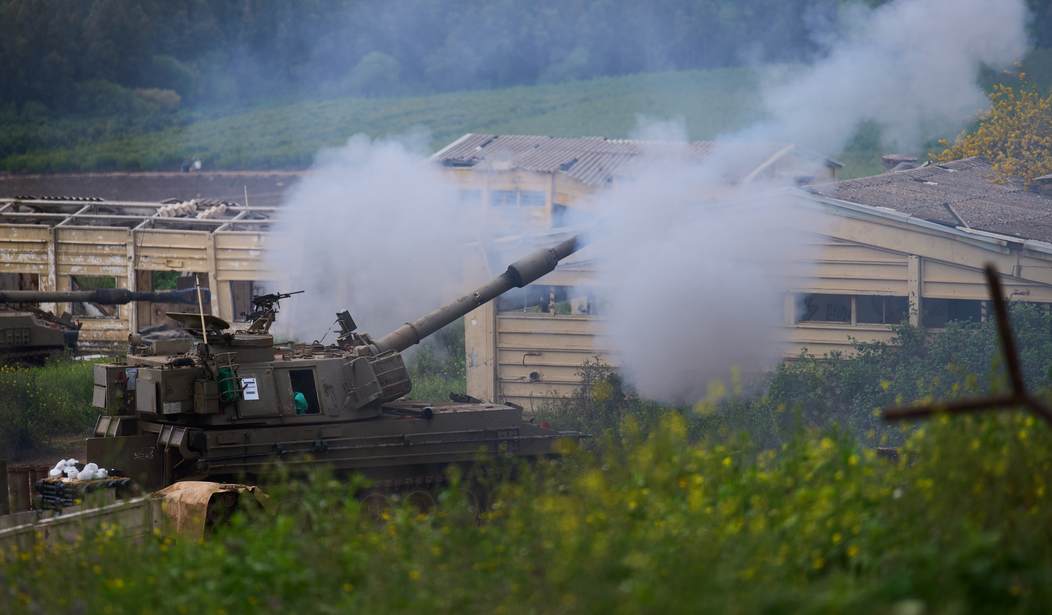
Israel conducted strikes on military targets in western and central Iran early Monday local time, the Israeli military announced, escalating a conflict that had already broken through the ceasefire just hours earlier when Iran fired multiple waves of missiles at Israel on Sunday.
The strikes came despite a direct phone call from President Trump to Israeli Prime Minister Benjamin Netanyahu, urging him not to retaliate immediately for the Iranian missile attack. A senior U.S. official told the Associated Press, on condition of anonymity to describe a private call, that Trump believed he had convinced Netanyahu to wait.
Israel struck anyway.
Trump’s public message to Iran on Sunday was to stand down. “What I would suggest to Iran: You’ve shot your missiles, that’s enough,” he said in a Fox News interview. “Get back to the table and make a deal.” The U.S. Embassy in Israel directed employees and their families to shelter in place shortly before the missile launches. U.S. Central Command posted on X that American forces across the Middle East were “vigilant and ready.”
Sunday's Collapse, a Ceasefire on Life Support
Sunday's collapse began with a Hezbollah drone attack on Dovev Barracks in northern Israel. Israel responded with airstrikes on Beirut's southern suburbs, hitting a residential building in the Mreijeh area that killed two people and wounded 20, according to Lebanon's health ministry. Washington had asked Israel not to strike Beirut. Israel did it anyway.
Iran's response came in two waves. The IDF reported sirens going off across northern Israel as four missiles were launched in the first wave. Iranian state media then reported a second wave, which Israeli officials confirmed. The IDF said all missiles were intercepted. No injuries were reported.
READ MORE: Iran Fires Missiles at Israel for First Time Since April Ceasefire
Iran's military said Israel had "crossed all red lines" and warned that "if it expands its attacks in that area, or responds to Iran's action, it will face more forceful blows, and devastating attacks will be launched" against Israel and its supporters. The IDF, for its part, said it was already preparing for "a variety of defensive and offensive scenarios" before the Iranian launch.
By early Monday, Israel had answered that warning with strikes inside Iran.
Where the Broader Deal Stands
A preliminary memorandum of understanding had reportedly been reached in late May to extend the ceasefire 60 days and open formal permanent peace negotiations, covering the Strait of Hormuz, sanctions relief, enriched uranium limits, and a long-term framework. It still required Trump's final approval and had not been signed.
Iran's Deputy Foreign Minister Kazem Gharibabadi said Sunday that any agreement with the U.S. must "fully safeguard" Iran's national interests and that Tehran "does not wait for the green light of any country." Hezbollah rejected the renewed Lebanon-Israel truce reached on June 4 in U.S.-hosted talks, with its leader saying the group had "given no commitment to anyone."
Iran had warned before Sunday that an Israeli attack on Beirut would renew full-scale war across the Middle East, even as Pakistan and other mediators were trying to restart talks between Tehran and Washington. Israel struck Beirut. Iran fired on Israel. Israel struck Iran.
Trump had previously said that if Iran kills American troops, that would be "a good reason" to restart the war. No American casualties have been reported. But with Israel now having struck inside Iran over a direct presidential request to stand down, the distance between this moment and an open resumption of the war has narrowed considerably.
Editor’s Note: Thanks to President Trump and his administration’s bold leadership, we are respected on the world stage, and our enemies are being put on notice.
Help us continue to report on the administration’s peace through strength foreign policy and its successes. Join RedState VIP and use promo code FIGHT to receive 60% off your membership.
Join the Conversation
VIP members get the ability to comment on articles.