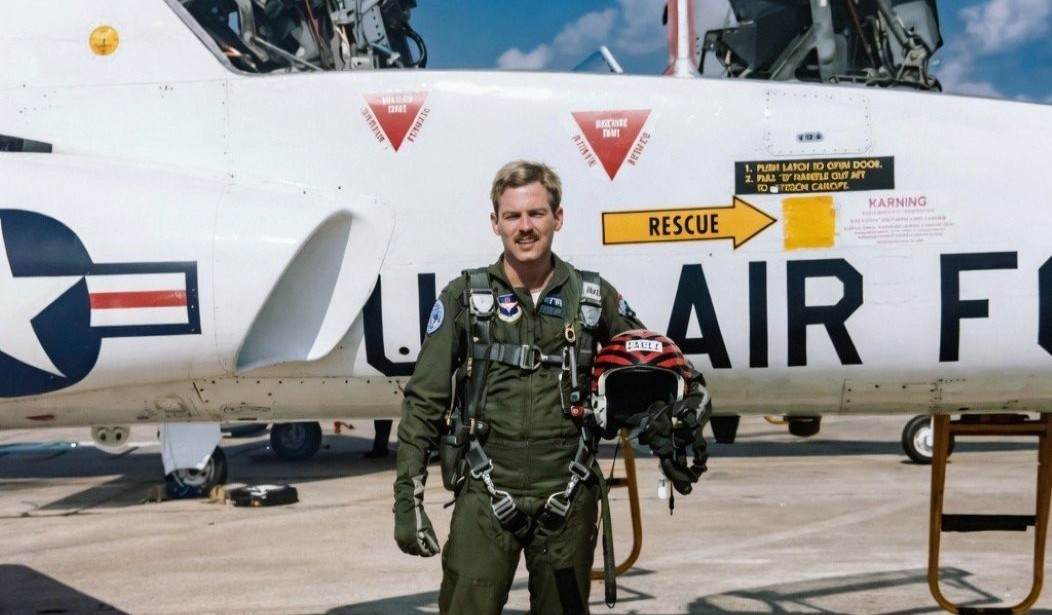

 In the Cold War skies of 1983, it was the crucible every Air Force aircrew dreaded, yet needed. Survival School. Me? A cocky twenty-something pilot fresh from a year of USAF pilot training and three months of initial C-141 qualification.
I made the drive from Altus AFB [Air Force Base], Oklahoma, to Fairchild AFB, Washington, with my training buddy and new best friend. My baby-blue Mazda RX-7, tunes blaring, drove through the beauty of Idaho and into Spokane under the gray Pacific Northwest drizzle.
We’d had fun on the drive. We stopped in Las Vegas for a few nights, living the dream of having survived two training gauntlets in which we lost 50 percent of our class. Chatting up girls, rolling some dice, eating like kings. But when we pulled onto Fairchild, the pines loomed like silent sentinels around the base, and the chill in the air whispered that comfort was now a distant memory.
Game on.
The instructors—lean, hard-eyed survival sergeants with smiles that never reached their eyes—gathered us in a large briefing room that smelled of pine and old sweat. “Gentlemen,” one growled, “this is SERE [Survival, Evasion, Resistance, and Escape]. We teach you to come home when everything goes to hell.” He was right.
For two weeks, we lived in what combat might throw at us: a downed aircraft behind enemy lines, whether Soviet tundra or some jungle proxy war. Your mighty C-141, that four-engine beast you loved hauling troops and cargo across the globe, was now just a memory on the blackboard.
Phase One: Survival.
They dropped us in the Colville National Forest with nothing but a flight suit, a flight jacket, a knife, a canteen, one MRE (one!), and a rabbit. For when we really got hungry. Our one instructor made one of the girls kill the rabbit, and we had stew one night. We were given a map, a “mission,” and told to march and live for days in the mountains. It was February in the Canadian Rockies. Snow was about two feet high, and it was cold. Very cold. And I grew up in Norway.
We initially started in a group of 14 or so with an instructor. We built shelters from pine boughs, foraged bitter roots and grubs that crunched like regret between your teeth, and learned to snare rabbits and squirrels under starless skies.
One night while we were sleeping (or trying to), I snagged a squirrel. Check this out, by his little squirrel nuts. Poor guy. He tasted horribly as well!
If you got wet, you were screwed. Wet snow and rain soaked our flight suits until it felt like a second, freezing skin. One night, huddled by a pitiful fire we coaxed from damp twigs, you laughed at yourself—the hotshot pilot who only a week ago was chatting up girls in Vegas, was reduced to eating pine-needle tea. And enjoying it!
After a week of that, we’re thinking we’re home free, then:
Phase Two: Evasion.
The “Soviets” were chasing us. We split into teams of two to minimize our presence. We are given a “pickup point” and a time we have to meet, and a map. My escape buddy was a Russian linguist who worked in the back of an AWACS [Airborne Warning and Control System] aircraft. Great dude.
We streaked our faces with camo-like war stripes. We moved by night, evading “enemy” patrols and helicopters searching for us. Sometimes we walked, sometimes we belly-crawled, sometimes we hid. Every snapped twig was a potential capture. At one point, I figured we were way ahead of schedule. My partner was good. We found a hollowed-out tree trunk big enough for both of us. We crawled in there and napped for a bit. Tired, cold, dirty, hungry, and wet. It was glorious.
SEE ALSO: Buzz's Bedtime Stories: Growing Up an American Kid in Oslo
Buzz Cut: Memorial Day Thoughts From One Who Lived
Then came the hard part—Resistance and Escape. Once we’d successfully navigated and evaded capture, the unfun part was next. Instead of a shower and a warm meal, we were rounded up and captured in a mock raid. We’d been trained on interrogation techniques; now was the time to practice them.
The Soviets hooded us in burlap bags, stripped our dignity immediately, and tossed us into freezing, concrete bunker cells in a POW camp simulation. Interrogators screamed questions under blinding lights. “Name, rank, serial number,” you repeated through chattering teeth, clinging to the Code of Conduct like a rosary. The captors played really loud, dark music and babies crying in the cells, 24/7. I still clearly remember a scratchy recording of some guy reciting “Boots,” by Rudyard Kipling, over and over and over.
The cold cells, the stress positions, the interrogations, the “good cop/bad cop” approach they used, the psychological games—they tested your soul. After a few days of solitary confinement in concrete cells you couldn’t stand up in, and eating some sort of gruel (which I couldn’t stomach), they moved us into a “camp” to organically create camp leadership in a hostile situation. In the cell, we were punished if we didn’t finish whatever it was that they were trying to serve us, so I stuffed mine into the many pockets of my dirty flight suit.
In the camp, after a couple of grueling weeks, we were all tired and ready for a shower. The entire experience comes to a fitting patriotic ending! We raised the American flag over the camp, and helicopters with American flags adorning them swooped in for the rescue! We all faced the flag and sang the National Anthem as the sun set. More than a tear was shed…by men who would one day fight our wars.
In the darkness, I found steel I didn’t know I carried. That was the idea.
When the ordeal ended, I stood taller on that Washington field, mud-caked and exhausted, the young C-141 pilot forged into something unbreakable. The war might never come (it did, frequently), but if it did, I knew I’d bring myself home. SERE wasn’t just training—it was manhood under the Washington pines.