



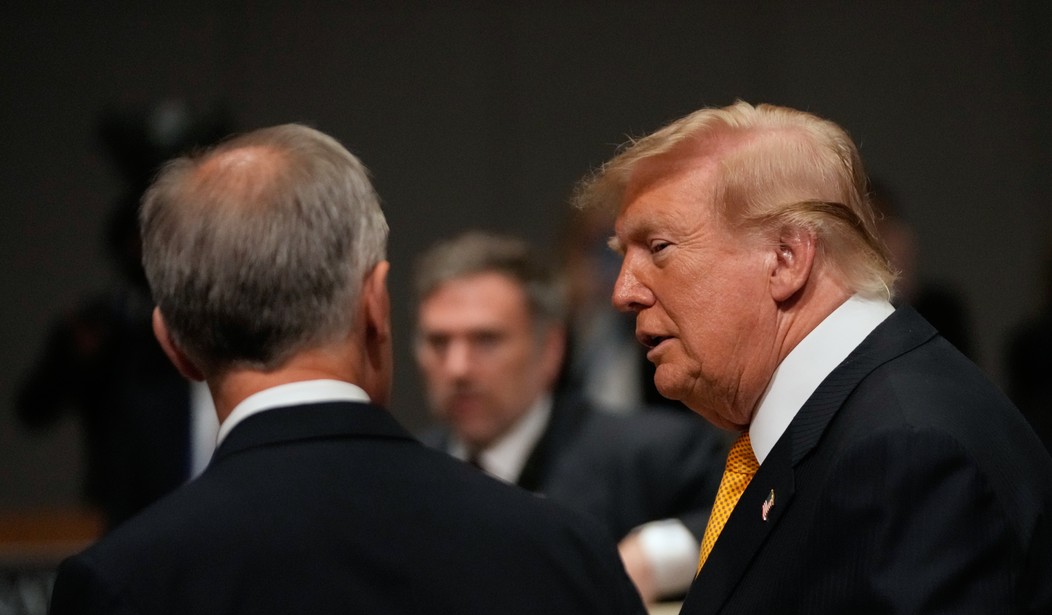
President Donald Trump left Washington this week for Manila and Shenzhen with a packed agenda of trade agreements and summit sessions. The stops include talks with Southeast Asian leaders and a planned trade deal with Thailand.
The real substance lies in the first trilateral meeting with Chinese President Xi Jinping and Russian President Vladimir Putin on nuclear stockpiles, plus related discussions on the war with Iran.
Speaking to the press Monday morning before departing for the trip, President Trump said:
"We're going to the Philippines, a big meeting on mostly economics, but a lot of other things will be discussed...And then we go to China, and we'll be with President Xi. He was here a month ago. And we're also going to meet with President Putin. And we may meet with Kim Jong Un also. So that'll be good. We have a chance to accomplish a lot!"
The Manila portion of the trip allows the United States to engage partners who face direct pressure from Chinese military activity in the South China Sea. A concrete trade agreement with Thailand fits the pattern of using commercial ties to reinforce security relationships rather than relying solely on formal alliances. These steps matter for American interests because an open Indo-Pacific keeps shipping lanes secure and limits Beijing’s ability to set regional rules alone.
President Trump is leaving for Asia with a full agenda: denuclearization, Iran, Ukraine, and trade. https://t.co/1oQoHpS23B
— Trump War Room (@TrumpWarRoom) November 16, 2026
The Shenzhen meetings carry higher stakes. The three leaders will address nuclear arsenals after the expiration of the last major U.S.-Russia arms control treaty earlier this year. Trump has repeatedly called proliferation dangerous and indicated he wants reductions. China maintains a smaller stockpile than the United States or Russia, but its expansion continues.
Any serious discussion among the three largest nuclear powers tests whether limits can be restored without unilateral concessions that weaken American deterrence. Officials have cautioned that this first session is unlikely to produce a finished agreement. That does not make the conversation pointless. Direct talks establish positions and identify where interests overlap before further expansion occurs.
@EricLDaugh Never stops working! While the feckless Senators never start working. God Bless President Trump.
— LexPoetRomantic (@PoetLex5298) November 16, 2026
North Korea’s program sits in the background of any nuclear conversation involving China and Russia. Pyongyang already possesses weapons and continues testing. Beijing and Moscow have historically shielded it from full isolation. A trilateral setting gives Washington a chance to press for limits on further transfers or support that could accelerate North Korean capabilities.
No summit will erase existing warheads, yet coordinated pressure from the three capitals remains one of the few practical levers short of military action. Trump has left open the possibility of separate contact with North Korean leadership during the trip. Even if that does not materialize, the nuclear agenda itself keeps the issue on the table rather than allowing it to drift.
@EricLDaugh I’d love to see a Four-Way Summit between President Trump, President Xi, President Putin, and Chairman Kim. Would be such a cool visual!!!
— Cillian (@CilComLFC) November 16, 2026
The Iran conflict receives similar attention. Trump has stated he intends to raise the war with both Xi and Putin. He has also said further major U.S. strikes do not appear necessary at present while noting that forces remain ready. Iran’s alignment with Russia and China makes their involvement relevant to any durable pause.
Ending the fighting on terms that protect U.S. allies in the region and prevent Iranian nuclear reconstitution serves American security without open-ended commitments. Trump also said Monday that he intends to raise Russia's war in Ukraine with Xi and Putin, despite earlier indications from administration officials that the conflict would remain off the trilateral agenda.
None of this guarantees outcomes. China and Russia will protect their own priorities, and domestic political shifts in Washington will shape what the administration can deliver. Still, the trip places American leverage on concrete problems: nuclear stockpile growth, North Korean advancement, and two active conflicts that consume resources and attention.
Trade deals and regional meetings supply the supporting structure. The core task is whether direct engagement produces measurable restraint rather than photo opportunities. American interests are advanced when threats are constrained, and wars are brought to conclusion on terms that preserve U.S. strength. That standard, not the itinerary itself, will determine whether the meetings succeed.
Editor's Note: The Democrat Party has been infected by socialism, and it's spreading FAST. Democrats are claiming there's nothing to worry about, but we know the truth.
Help us continue to shine a light on the socialist takeover by joining RedState VIP. Use promo code FIGHT to get 60% off your VIP membership.


Join the Conversation
VIP members get the ability to comment on articles.