






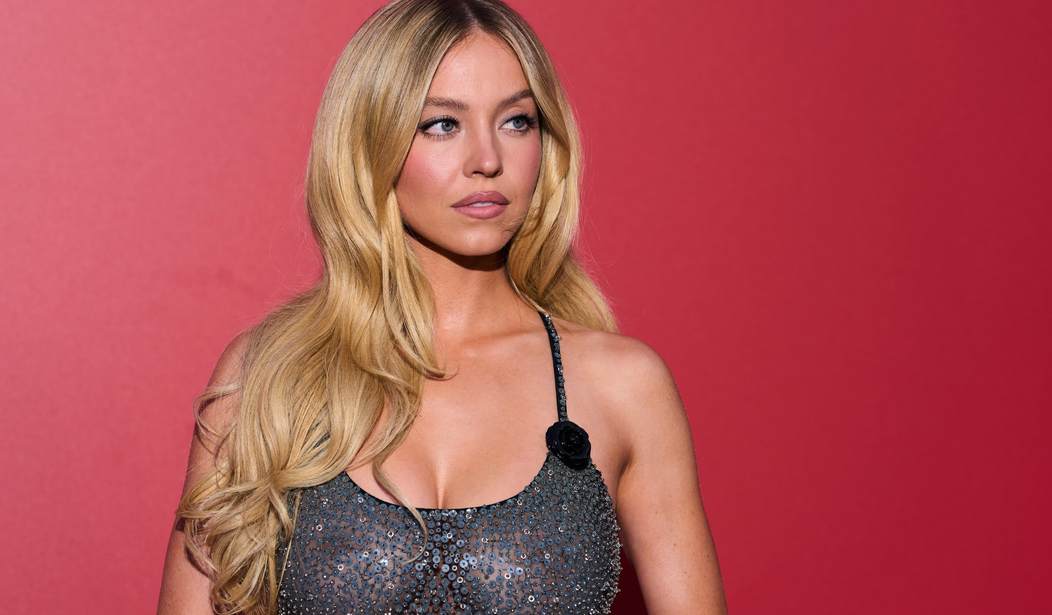
Sydney Sweeney, the breakout star of "Euphoria," does not need a permission slip from cultural critics to decide how she appears in an advertisement. Neither does every provocative campaign deserve applause. Those two propositions should coexist in a country that values individual freedom.
Her latest Novig commercial has reopened a dispute over sexuality, sports and who gets to define empowerment. Fox News reports that Sweeney appears topless, covering herself with footballs, after an earlier campaign drew objections from prominent female athletes.
The criticism deserves a hearing. Olympic swimmer Ariarne Titmus called the original advertisement a “kick in the face” to women who have devoted their lives to sports. Gymnast Gracie Kramer objected to marketing through the male gaze. Their concern is understandable: athletic achievement should not become an afterthought beside a celebrity selling a betting platform.
This whole stupid Sydney Sweeney Novig controversy happened because Australian and British athletes misunderstood an American commercial https://t.co/0MsilAs3uC
— Ethan Strauss (@SherwoodStrauss) September 16, 2026
But an advertisement featuring an actress is not a census of female athletes. Sweeney is selling a product, not submitting a thesis about what every woman should look like. Treating her appearance as an indictment of women’s sports gives a commercial more authority than it deserves.
The more interesting question is whether our cultural standards are consistent. Public conversations often celebrate transgender visibility and women with larger, fatter bodies as expressions of confidence and inclusion. Those principles should not suddenly narrow when a conventionally attractive down-to-earth woman chooses to emphasize her sexuality.
@USATODAY I came into this “controversy” with an open mind, so I decided to watch Sydney Sweeney’s commercial myself. I watched it dozens of times to make sure I understood it, and can now confidently say I hardly endorse it! Well done, Ms. Sweeney!
— A Ration Of Rational (@ARatOfRat) September 16, 2026
That comparison does not prove that Sweeney’s particular critics are hypocrites. The reporting establishes their objections, not their positions on every other representation of gender or beauty. Still, the principle matters: Inclusion cannot mean welcoming every image except the one fashionable opinion finds insufficiently progressive.
Sweeney also pointed to athletes who posed nude for ESPN’s Body Issue, including Serena Williams and Megan Rapinoe. Artistic portraits and gambling advertisements are different products. But the distinction requires an argument, not an automatic assumption that one woman’s exposure expresses strength while another’s diminishes everyone else.
The Sydney Sweeney controversy exposes a very specific kind of hypocrisy. The criticism isn’t simply that the ad is sexual. The criticism is that a woman being presented as sexually attractive in a commercial supposedly “sets women back.” But many of the same people defending women’s right to deliberately present themselves as sexy on Instagram have no problem with sexualization when the woman controls the image, the context, and the message. So which is it? Is sexualized presentation inherently degrading to women—or is a woman capable of choosing to participate in it without being degraded? If the answer is the latter, then that principle has to apply to Sydney Sweeney too. A woman doesn’t become empowered simply because she sexualizes herself on her own platform, nor does she become disempowered because a company incorporates her sex appeal into an advertisement. You can criticize the ad’s messaging if you want. But saying that a beautiful woman being portrayed as beautiful is inherently “regressive” while celebrating other women for deliberately leveraging their own sex appeal is a contradictory standard. The real issue should be agency and context, not pretending that female sexuality is empowering in one setting and oppressive in another.
— Final Boss Jay (@FinalBossJay) September 14, 2026
Strong women are needed in sports, business, and public life. Strength includes the ability to make choices that other people dislike. It also includes the right to criticize those choices without demanding that everyone adopt the same taste.
That freedom applies to clothing, too. A Muslim woman who voluntarily covers herself exercises the same liberty as a woman who does not. Compelling women to cover through law, intimidation, or religious coercion violates the American principle of individual freedom. The objection is to compulsion, not to Muslims or modesty.
Nor should we enlist Sweeney as a political spokeswoman without evidence. This advertisement establishes nothing about her private convictions. The American value worth defending here is her freedom to choose, not an ideology assigned to her appearance.
I would rather see less cultural policing and more consistent judgment. Question the gambling promotion. Debate the imagery. Respect the athletes’ accomplishments. But leave room for a woman to be attractive, commercially ambitious, and unapologetic without turning her into a public emergency crisis. Freedom means tolerating choices we would not make ourselves, not merely celebrating those that already fit our preferences. Consistency matters.
Editor's Note: Do you enjoy RedState's conservative reporting exposing the radical left and woke media? Support our work so we can keep bringing you the truth.
Join RedState VIP and use promo code FIGHT to receive 60% off your membership.
Join the Conversation
VIP members get the ability to comment on articles.