
One of the most fascinating and certainly serious national stories of recent years has been the decline into political senility of the Democrat Party, the nation’s oldest.
In a starkly disturbing way, the party’s mistakes, nonsensical acts, goofy policies, stumbles, and downright dishonesty mirrored the identical decline of its most recent president, Joe Biden.
Ever since, the party of Andrew Jackson has proven incapable of recovering from the years-long fraud of the Biden campaign, the president and administration in a coma, and their pathetic, thankfully unsuccessful attempt to perpetrate four more years of the same with his empty, handpicked heir, Kamala Harris.
National election losses are always disappointing. Until 2024, both parties bounced back rather quickly with new ideas and personalities. Not Democrats this time after their own self-made disaster.
Fresh new ideas? Nope. Interesting fresh faces? Uh, no again. Not yet anyway.
Like Donald Trump, the nation dodged a lethal bullet in the 2024 election. Harris was a vacuum-packed, DEI vice president possessing dubious qualifications as a library story-lady, let alone someone just an aged-presidential heartbeat from becoming commander in chief in a dangerous world.
Inept party leadership, amateur members of Congress reciting TDS memes in marathon speeches, and a couple of ambitious governors tanking their states have left a political vacuum for a pack of socialist extremists to fill the void, at least for a while.
Don’t forget, the humid doldrums of August are tough times for desperate media that need new news to sell when there isn’t much, and when reasonable people are paying more attention to family, the backyard, and vacations. At times, that desperation can produce unwarranted hype.
Remember when a new thing called the Tea Party erupted in 2010 and was going to turn the GOP libertarian? Of course, it got absorbed, which is how America’s two major parties have morphed and survived to rule the country’s party roost since the early 1800s.
The Founding Fathers actually distrusted political parties. They feared parties would end up looking out more for themselves than for the nation's common good. Uh-huh. Those men were surprisingly savvy for wig-wearers.
The open question now: Are socialists merely a passing party phase fueled by the absence of any real Democrat leadership to crawl away from the smoldering Biden wreckage? Or is this a lasting leftist takeover auguring a fundamental change of direction for the country’s politics?
Most everyone knows about the draconian regimes that come after socialism’s inevitable failures.
The truth is Democrats have been drifting left for some time — anything to oppose Donald Trump. Recall progressives’ $5 trillion spending orgy signed by Biden that ignited the inflated prices we seem stuck with.
This is the party that welcomes to its Senate caucus “independent” Bernie Sanders, the millionaire with three homes who frets about income inequality and the “oligarchy.”
Americans are frustrated by the stagnant ineptitude of both parties in Washington. But more – 75 percent – are frustrated by the Democrat Party. Which is understandable given its feckless leadership’s nearly solitary, ongoing reflexive grasp of anything anti-Trump.
I have never understood the fascination of some with the utterings of lifelong liberal Bill Maher. He's a contrarian TV host; that's his schtick. Now, he's sounding fed up with Democrats.
The Democrat Party's spinning wheels in the Swamp make that crowd, especially its younger, urban members, vulnerable to alternatives that sound good today. Never mind the failed history of socialism and the succeeding mayhem.
A recent Ipsos Poll found nearly 40 percent of Democrats now say they would prefer a Democratic Socialist over a Democrat. And, without evidence, they express greater confidence in democratic socialists’ ability to address the economy, cost-of-living issues, and immigration.
This would help explain the recent spate of primary election successes for professed Democratic Socialists and far-left candidates in places like New York and Colorado.
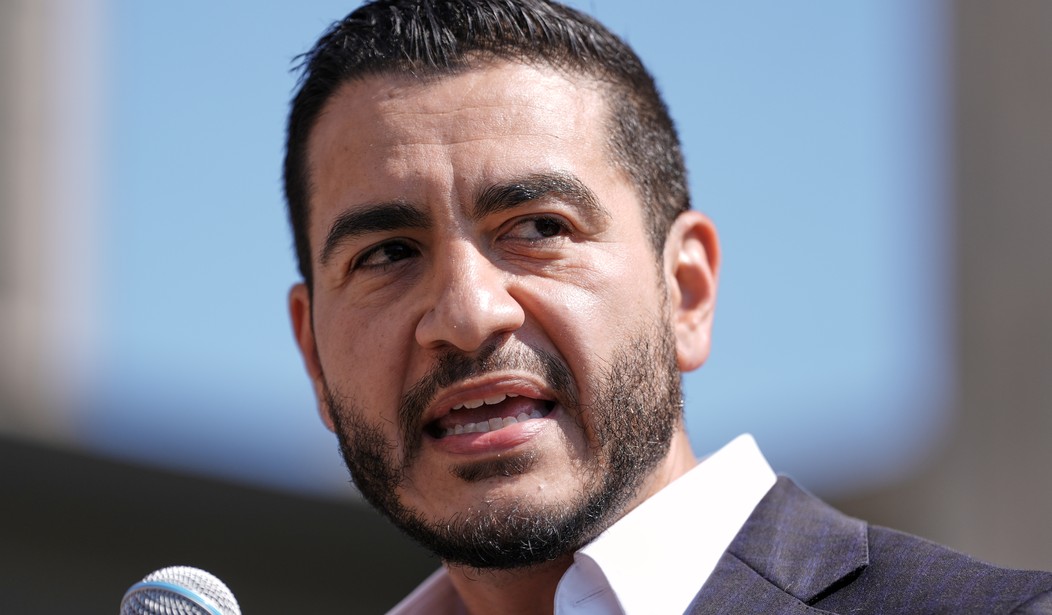
Most notably, last week in Michigan, where Abdulrahman Mohamed El-Sayed (he understandably prefers Abdul El-Sayed) narrowly defeated a moderate Rep. Haley Stevens (MI-11) in the Senate Democrat primary.
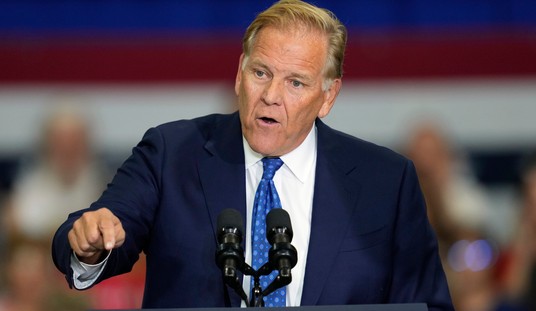
El-Sayed, who would be the first Senate Muslim in 250 years, will now face former Rep. Mike Rogers in the November race for the open seat of retiring Democrat Gary Peters.
The race is widely considered the best GOP chance for a seat pickup to bolster the party’s current slim majority and a must-win for Democrats to hold if they are to capture a Senate majority in November to stall Trump’s remaining tenure and wreak their announced revenge.
The GOP has not won a Michigan Senate seat since Spencer Abraham in 1994, which was the first since 1972. But Trump carried Michigan and all the swing states in 2024.
Erroneously, polls had indicated a lopsided win for El-Sayed, the 41-year-old son of Egyptian immigrants. He was outspent nearly 10:1 by Stevens, who had all the establishment backing, including Gov. Gretchen Whitmer and Senate Minority Leader Chuck Schumer (D-NY).
El-Sayed maintains he is a progressive, not a Democratic Socialist.
However, that appears a distinction without a difference. The policies he advocates are very similar to the DSA: universal single-payer healthcare, drastically increased taxes on the wealthy and large corporations, regulating capitalism, bringing utilities under government control, and halting unconditional military aid to Israel.
El-Sayed has also said he does not believe Israel should exist as a Jewish state, a seismic change from party policy even in recent years.
El-Sayed campaigned hard against his party’s establishment, as Trump did successfully in 2015-16. El-Sayed had the most success in college and resort towns, with young voters and wealthy whites.
Stevens' support came from rural counties and among black voters in Flint and Detroit, where El-Sayed will have to focus to patch things with her disappointed supporters.
The DSA also advocates free government-run child care, pre-K, and higher education, universal rent control, a 32-hour work week with no reduction in pay or benefits, “freedom for all incarcerated people,” and defunding police.
El-Sayed has backed the latter, but hasn’t mentioned that recently, also understandable when seeking votes in Detroit, one of the nation’s top-five crime cities, according to the FBI.
His challenge is similar to that of numerous progressive and Democratic Socialist candidates who won upsets elsewhere.
It is to unite with independents and traditional defeated Democrats for the fall elections by muting far-left stands, advocating increased spending, and emphasizing opposition to Israel. And then wreak their revenge on Trump supporters.
And, of course, playing up the threat of Trump, who will be gone in 30 months, requiring a new bogeyman.
Personally, I have often marveled over the years at the willing gullibility of both parties’ voters to fall for the sudden, convenient shifts in emphasis of candidates seeking unity after divisive primaries, as if they were sincere.
The summer’s initial far-left and DSA primary wins that excited media came in individual congressional districts.
The immigrant son’s narrow win came in a major swing state of 10.1 million, a warning sign for both 2028 and this year’s midterms. They almost always go against the party of the White House incumbent without an historical anomaly like 9/11, and especially when a president’s job approval is low, as Trump’s is now.
As one result, Republicans have decided to stage their first midterm convention next month in Dallas, Sept. 9-10, for two reasons:
- To highlight Trump’s tight border security, tax cuts, lowering prescription drug costs, and other successes, and
- to portray the Democrat Party as stumbling just as Joe Biden and as captive to its progressive activists, notably Michigan’s Abdulrahman Mohamed El-Sayed.
The sessions come as Republican officials mumble fearfully that the president is paying too much attention to other issues such as rehabbing Washington, the White House, and Dulles Airport instead of to the economy and affordability issues targeted by Democrats as GOP vulnerabilities.
Modern midterm elections have become voters’ usually negative interim-report cards on an incumbent president and his party, though no president’s name is ever on any ballot.
Some presidents pay little attention to countering that; Barack Obama didn’t in 2010 and lost an historic 63 Democrat House members, six senators, six governorships, and 20 state legislative chambers. That enduring damage included nearly 1,000 legislative seats that allowed the GOP to control district reapportioning from that Census and beyond.
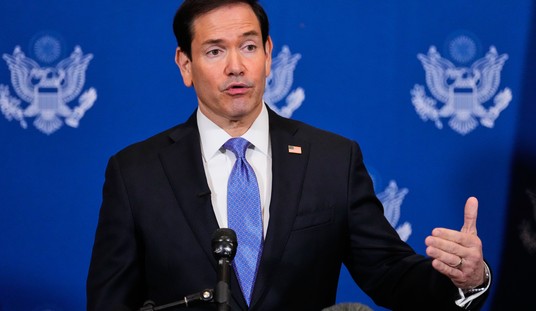
The midterm convention format will be familiar convention style with regular citizens citing the administration’s benefits, speeches by Marco Rubio, JD Vance, Scott Bessent, and Trump, and a wide array of damning video clips demonstrating unhinged Democrats.
To drive home those points and exploit other weaknesses, the Republican National Committee has $128 million cash in hand for the fall while Trump and affiliated PACs possess another estimated $800 million.
The Democratic National Committee, under beleaguered chairman Ken Martin, wallows in about $2 million debt. That’s principally the result of disappointed donors not writing checks after Kamala Harris squandered $1.5 billion in her 15-week campaign to nowhere in 2024.
So, the closing question stands: Can dissatisfied and divided Democrats, very unhappy with their party and its current weak leaders, resist the increasingly loud siren call of socialism's seemingly "free stuff"?
Methinks not.