




For every cloud, there is a silver lining. As Republicans and conservatives across the fruited plain wipe off their sweaty brows, wait for their heart rates to normalize and their blood pressure to return to something like a normal level, they are taking stock, and looking for just those silver linings. And, granted, they seem a little few and far between at the moment, with the federal government, starting in January, divided between a Democrat Congress and the Trump White House. A lot of the business of the national government may be grinding to a halt. That's one of the clouds on the horizon.
Or is it? Could gridlock be one of those silver linings we've been looking for? There's a compelling argument to be made for just that. The Democrats, to do anything, to accomplish anything, will sooner or later have to get President Trump on board, and frankly, for most of their announced agenda, that just doesn't look likely.
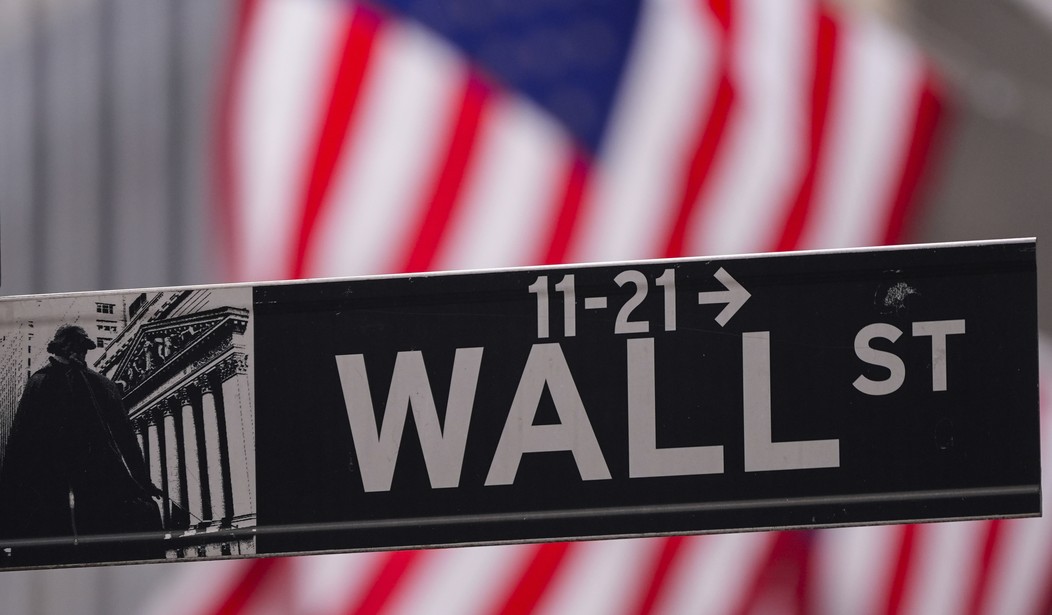
On Wednesday, the markets reflected some optimism, perhaps because of just that anticipated gridlock. Thursday, though, that appears to have changed. The S&P 500, the Dow, and the NASDAQ are all showing losses, even moving into correction territory. That appears to be the result of investors moving resources away from tech companies and into a more defensive posture, perhaps in anticipation of the coming gridlock; this would be a move away from more volatile investments into safer, long-term postures. That may also be due in part to some profit-taking; the next few days will tell that tale.
Historically, the markets have favored divided government. And for now, gridlock will give us what stability we are going to see as long as the coming 120th Congress is seated. Markets like stability, so don't cash in your 401k just yet.
Interestingly, the absence of partisanship does not lead to market instability. History shows that a divided Congress—where different parties control the House and Senate—has been correlated with stronger market returns. Data from LPL Financial reveals that the S&P 500 has posted an average annual return of 12.5% when one party or the other controls both the House and Senate, compared to 17.2% with a split Congress.
Why does this happen? When the government is divided, there is often gridlock, which reduces the likelihood of sweeping legislative changes. For markets, this translates to less policy uncertainty during a current administration. Companies can plan for the future with greater confidence, which is reflected in stronger market performance. So, rather than fearing political deadlock, investors can view it as a stabilizing force.
The fact is, that under a divided government and the resulting gridlock, in many ways operating a business or, even more, a major industrial enterprise, is easier. It's easier to make long-term plans, as the likelihood of Washington suddenly changing the rules on you is much less. Trust me on this, I worked in a heavily regulated industry for 30 years, and companies large and small innovated more and expanded more, broadly speaking, during divided governments; I was always much busier during gridlock than when either party had control of all the levers of power. Also, a plurality, perhaps a majority, of the resurgent Democrats seem to have "Get Trump" as their primary policy goal, which frankly isn't going to do what passes for their economic agenda any good.
A recent editorial over at Issues & Insights has some interesting points to make.
Now that the election is over, it’s time to ask if all the hyperventilating for the past year was worth it. Was this “the most important election in our history,” as so many have declared?
We are entirely unconvinced. If all it does is produce gridlock in Washington, we will be happy, because the biggest threat to the country is when lawmakers are productive.
To be clear, it would have been better if the GOP had kept their majorities, and we are deeply disturbed by the choices voters made in several races. The fact that a Casper Milquetoast leftist like James Talarico or a Hamas-loving extremist like Abdul Al-Sayed could get more than 2% of the vote does not bode well for our nation’s future.
There's a key point there in the second paragraph. We're all safer and more productive when Washington is gridlocked. The one good thing we can count on is gridlock, now that Democrats are about to be in control of Congress. We can take what comfort we can in knowing that President Trump will be standing there with a big, beautiful VETO pen, using it like a giant security gate to block the most onerous of the Democrats' agenda items. In that, the resulting gridlock will be an unmitigated good thing — meaning that all we have to do is make sure that a Democrat doesn't take the White House in 2028, because if that happens, all bets are off.
This doesn't just apply to business and the markets. The Congress can't act on its own. The Democrats have surged, but they don't have enough of a majority in the Senate to convict and remove President Trump, and even were they to succeed, they would just be facing President Vance. For the time being, divided Washington is and divided Washington will be, and after this election, a good dose of gridlock is the best we can hope for, not just for markets, not just for business, but for sanity.
It's a good time for Republicans and conservatives across the board to slow down and reassess what happened. It's also a time to start planning ahead, because we can count on having this divided government only until January of 2029, and if you need a reason for Republicans and conservatives to get their web-footed fowl arranged in a linear manner and pick the best possible POTUS candidate in 2028, well, I can only refer you to contemplate the notion of a "President Gavin Newsom," because you know he's contemplating it, and that's for sure and for certain.