








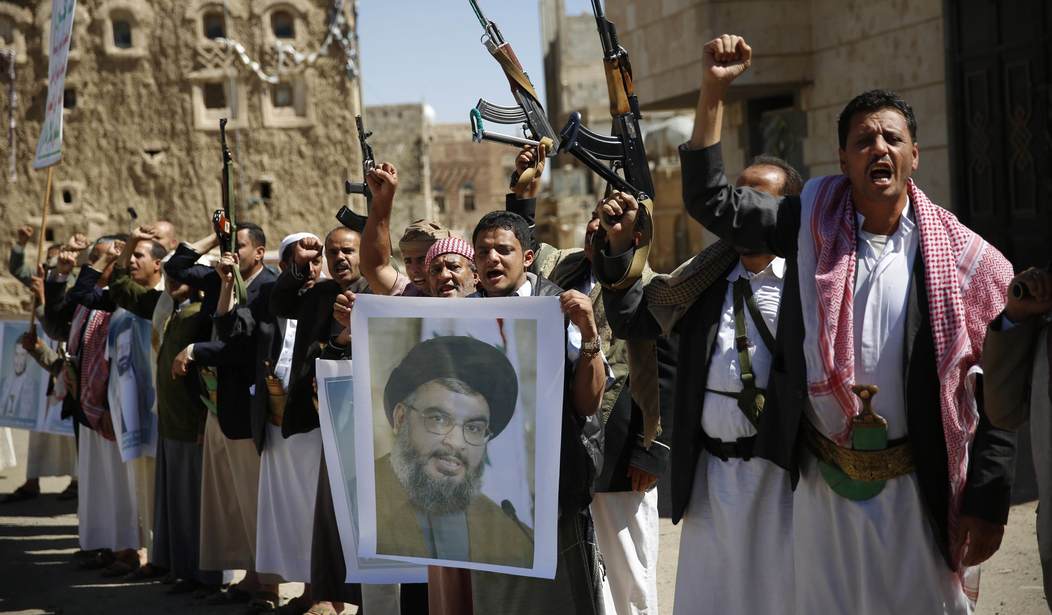
Things in the Middle East may have just grown considerably more complicated.
On Thursday, Iran-backed Houthi rebels reportedly seized the Yemeni city of Mocha on that country's Red Sea coast. If the reports are accurate, the Iran-backed Houthis now hold a key position at the Bab al-Mandab Strait, the bottleneck at the southern tip of the Red Sea, where it meets the Gulf of Aden. That puts them in a position to threaten shipping in and out of the Red Sea.
That has the potential to have a chilling effect on Red Sea shipping, including oil shipments.
Iran-backed Houthi forces seized Yemen’s strategic port city of Mocha on Thursday and pushed toward positions overlooking the Bab el-Mandeb Strait, opening a potentially dangerous new front for global trade as shipping through the Strait of Hormuz remains severely constrained.
The advance threatens the southern gateway to the Red Sea just as Saudi Arabia has increasingly relied on that route to bypass Hormuz — putting pressure on critical shipping lanes on both sides of the Arabian Peninsula and raising the risk of further disruptions to oil and commercial traffic through a key global trade choke point.
"Now you have Iran on one side of the Arabian Peninsula controlling Hormuz, and now the Houthis controlling Bab el-Mandeb on the other side of the peninsula," Hisham Al-Omeisy, senior Yemen advisor at the European Institute of Peace, told Fox News Digital. "Which basically is going to drive prices — oil prices, goods and everything else — up exponentially."
On Wednesday, the Houthis were showing signs of desperation, as RedState's own streiff wrote:
The Iranian-backed Houthis have been Iran's key ace-in-the-hole for years. The Houthis' attacks on shipping in the Red Sea, while not necessarily threatening the world's economy, gave Iran the potential to close two major maritime chokepoints, the Strait of Hormuz and the Bab al-Mandeb Strait.
When the U.S. upped the ante on Iran, the word went out from Tehran to its clients to expand the war.
The Houthis would seem to have done so. With this and with what Iran may yet be able to muster, both the Strait of Hormuz and the Bab al-Mandab Strait are threatened.
It's not clear when the Saudi Arabia-backed Yemeni government will be able to push the Houthis back out of this strategic location. The Saudis are reportedly becoming more directly involved in the fighting. In the last week, they have launched at least 15 air strikes against Houthi forces; the Houthis have responded with a barrage of drone and missile attacks. Saudi Arabia recently signed a mutual defense pact with Pakistan and Turkey, but neither of those countries seems inclined to get involved in this scrap.
Needless to say, this complicates things for the United States. Another threat to shipping in the area is now unfolding, and this is happening in a country that is supported by an American ally, namely, Saudi Arabia; any action the United States might take against the Houthis will require a little more diplomatic wheel-greasing than a similar attack against Iran. But, as of this writing, it's not clear when or even if the Yemeni military will be able to push the Houthis out of Mocha.
We do live in interesting times.
Oil prices ticked up on the news. As of this writing, United States crude (USOIL) was trading at 103.10, with UK Brent (UKOIL) at 108.41.
Editor’s Note: Thanks to President Trump and his administration’s bold leadership, we are once again respected on the world stage, and our enemies are being put on notice.
Help us continue to report on the administration’s peace through strength foreign policy and its successes. Join RedState VIP and use promo code FIGHT to receive 60% off your membership.


Join the Conversation
VIP members get the ability to comment on articles.