






In what may rate as one of the most significant strategic “own goals” in history, Iran’s attempted closure of the Strait of Hormuz seems likely to result in the relegation of Hormuz to a commercial backwater rather than giving Iran commercial and political clout.
The Washington Post uses a story about massive truck convoys hauling oil from Basra, Iraq, to the Syrian port of Baniyas to lead into what is to come.
In July, the Trump administration, which has embraced Sharaa, announced its support for a new Chevron-led pipeline that would funnel 2 million barrels of crude oil per day from Basra in southern Iraq to Baniyas, tracing the same route as the trucks now hauling fuel oil across the desert.
When the White House unveiled the pipeline project with senior Syrian and Iraqi officials, Trump’s special envoy, Tom Barrack, said in a statement that it would help make the Strait of Hormuz “an afterthought.”
…
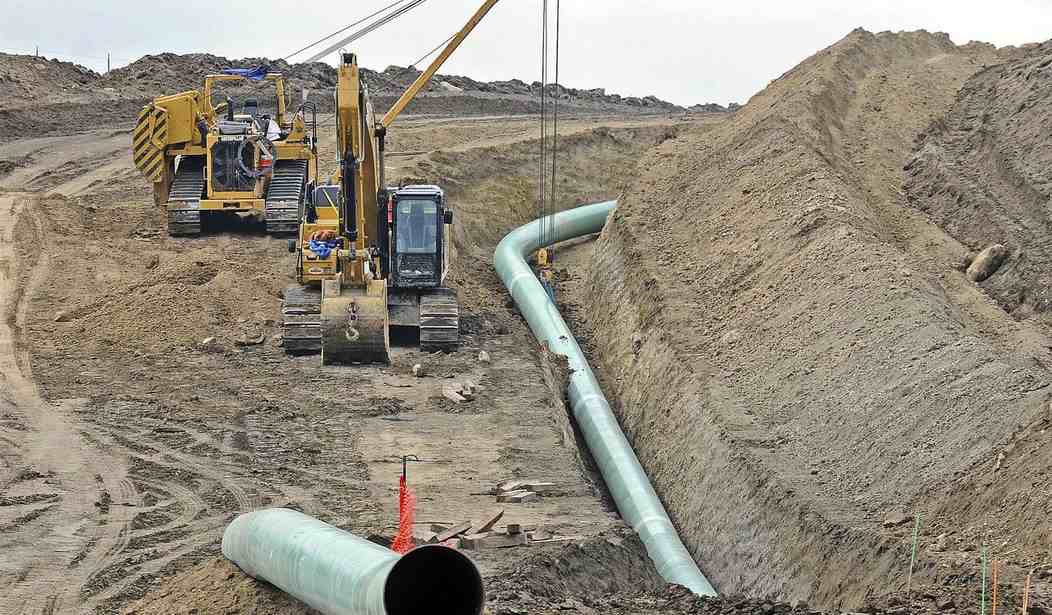
The 1,000-mile, $5.7 billion pipeline will take at least two and a half years to build and cannot fully replace the seaborne cargo vessels that transit the strait. But in the long term, it would allow oil exporters to diversify delivery routes after the war exposed the world’s dependence on the strait and sent energy prices soaring.
President Trump noted that workaround.
This is GREAT! President DONALD J. TRUMP
Syria is pitching itself as an alternative to the Strait of Hormuz: washingtonpost.com/world/2026/
To be clear, the truck convoy in the story is not important. The 5,000-truck convoy mentioned in the story hauls less than the contents of a single Very Large Crude Carrier. Before the current Gulf crisis, about 10 VLCCs departed Basra each week. No amount of trucks could make the 1,300-mile round trip between Basra and Baniyas to accommodate the current volume transported by sea. The Basra-Baniyas pipeline is a huge deal.
Due to disruptions in oil flows, the proposed Baniyas pipeline is just one of several projects underway to bypass the Strait of Hormuz.
Saudi Arabia’s East-West Pipeline
Saudi Arabia is actively expanding the capacity of its East-West Pipeline (aka Petroline) to the Red Sea port of Yanbu. The current capacity of 7 million bpd has been maxed out since the Hormuz crisis began. Saudi Arabia is in preliminary talks with its neighbors to push capacity toward 9 million bpd.
Saudi Arabia has officially declared finding an alternative to the Strait of Hormuz a national priority.
This pipeline brings its own potential problems; see New: Iran Now Calling on Houthis to Block Red Sea Gateway – RedState and Houthis Enter the Chat. Yemen Proclaims 'Embargo' of Red Sea Shipping From Saudi Arabia – RedState. But, in what is surely a coincidence, the Houthis, once deprived of Iranian monetary support, are a lot less willing to do Iran's bidding.
United Arab Emirates West-East Pipeline and Fujairah Expansion
The United Arab Emirates has been at the forefront of these efforts. The West-East Pipeline (also known as the Habshan–Fujairah pipeline expansion) is a flagship project.
This pipeline cuts 252 miles across Oman, with tankers discharging oil on the Persian Gulf side and other tankers taking on the same oil on the Gulf of Oman side. Originally a back-burner project with relatively limited capacity, the project was accelerated after the fun-and-games kicked off in the Persian Gulf last summer, with Sheikh Khaled bin Mohamed bin Zayed Al Nahyan, Crown Prince of Abu Dhabi and heir apparent to his dad, the UAE president, ordering its accelerated completion, targeting full operations by 2027. Once finished, the pipeline will boost overland capacity to approximately 3.6 million barrels per day (bpd), bypassing the strait entirely and routing oil to the port of Fujairah on the Gulf of Oman.
This volume amounts to nearly two VLCC cargoes per day, but a massive expansion of port facilities at both ends of the pipeline is underway. That volume will increase dramatically in a few years.
Iraq’s Basra–Haditha Pipeline Project
Separate from the Basra-Baniyas pipeline discussed earlier, a second pipeline is under construction linking Iraqi oil fields to Syria’s Mediterranean terminals. The Basra–Haditha pipeline officially began in May 2025, with $1.5 billion allocated initially by the same Chevron-led consortium that is funding the other pipeline. The 435-mile pipeline would connect Iraq’s southern oil fields to Jordan, Syria, and eventually Turkey, providing an overland route to the Mediterranean. This pipeline will come online by early 2027 and will pump 2.25 million bpd.
When combined with the Basra-Baniyas project, this could handle nearly all of Iraq’s oil output without using the Persian Gulf.
An Israeli Pipeline?
Israeli Energy Minister Eli Cohen has publicly proposed positioning Israel as an oil terminus for a new 435-mile land pipeline from Saudi Arabia to the Israeli port of Eilat that would connect to Israel’s existing Trans-Israel (Eilat–Ashkelon) Pipeline.
Though much work remains before this pipeline can be built, the Hormuz crisis has made the once-unthinkable idea of Saudi crude flowing through an Israeli pipeline a viable option. If the political gap between Israel and Saudi Arabia narrows, this project is four years away from completion.
Hormuz Obsolete?
The pre-war traffic through the Strait of Hormuz amounted to 20 million bpd. Existing bypass capacity is basically the 7 million bpd of the Saudi pipeline. Within a year, at least 13 million bpd will be moved via pipelines. This effectively makes the Strait of Hormuz a lot less important. If about 12 million bpd avoided the Strait of Hormuz, we'd be beyond the "existential threat" threshold. At 16 million bpd, Hormuz would no longer be a critical maritime chokepoint. Other critical materials, such as fertilizer precursors and liquefied natural gas, would continue to be forced to transit the Strait of Hormuz. Still, its hammerlock on the world's oil trade would be lifted.
The beauty of this is that Iran's behavior over the last year has removed any doubt about its willingness to use Hormuz oil traffic for its own purposes. No one will forget it, and if the IRGC regime has its heads paraded on pikes through downtown Tehran tomorrow, the pipelines are moving forward.
History Doesn't Repeat, but It Does Rhyme
The Venetians, Ottomans, Portuguese, Spanish, and Dutch all controlled trade routes for various commodities at one time. In all cases, the world found ways to acquire the commodities without dealing with extortionate trade restrictions imposed by the monopolistic power. The pattern is rather banal. A monopolist can tax or police a known trade corridor for a while. Once a rival opens a route that avoids the obstacle, commerce moves to the path of least resistance. The displaced power either lowers the toll, fights an expensive war, or watches the traffic leave.
Iran's smart play would have been to declare the Strait of Hormuz open for business and a conflict-free zone. But while Iran has been accused, rightfully so, of being duplicitous, vicious, and bloody-minded, no one has ever accused it of being smart.
Editor’s Note: Thanks to President Trump and his administration’s bold leadership, we are once again respected on the world stage, and our enemies are being put on notice.
Help us continue to report on the administration’s peace through strength foreign policy and its successes. Join RedState VIP and use promo code FIGHT to receive 60% off your membership.



Join the Conversation
VIP members get the ability to comment on articles.