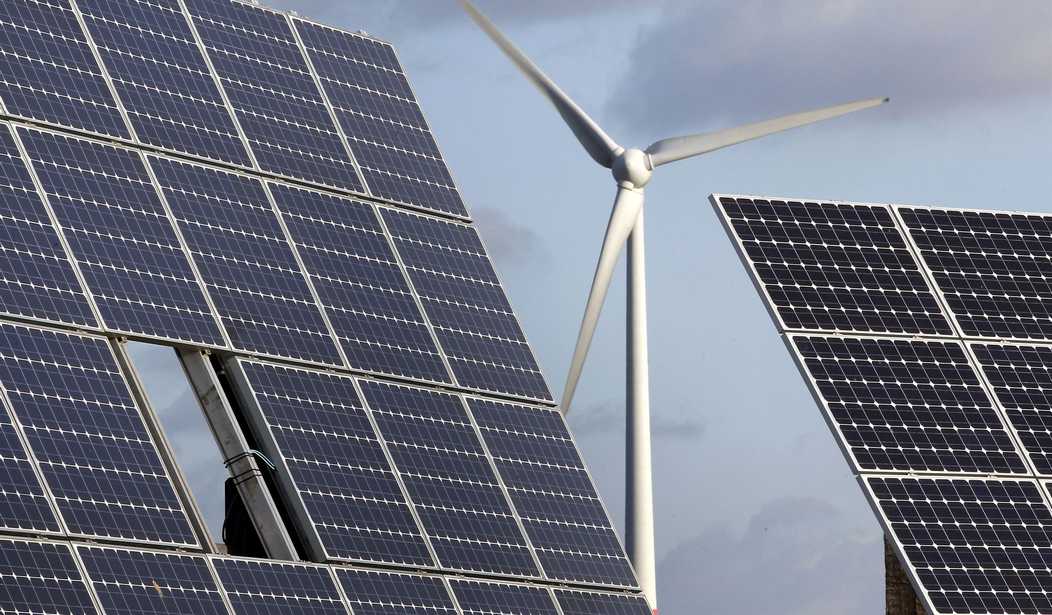

There are always unintended consequences in any new scheme, be it technology, politics, or pretty much anything. Nowhere is that more apparent than in the current race by the political left to embrace "green" energy, the foibles of which we have examined in depth in recent months. Aside from the problems of these schemes, most notably wind and solar power, aside from the problems of low energy density, intermittent generation, the massive land area required. There's also another problem: Disposing of the used materials.
These things have lifespans, after all. Windmill blades wear out. Solar panels degrade. There are problems with recycling the materials, there are problems with the toxic nature of some of the components and materials these things are made of, and there are problems that are literally buried, like the huge concrete foundations that wind turbine installations require.
It's a growing problem, and there are few good answers here. Paul Driessen is senior policy advisor for the Committee For A Constructive Tomorrow (CFACT) and he has some of the specifics.
The more turbines and panels we install, the more we must put them in increasingly poorer quality areas, the worse they then perform, the less electricity they generate, and the more we need.
The more we install, the more mining, drilling and processing we need for the metals, minerals and petrochemicals to manufacture them – from ever-lower quality deposits. Billions of tons of rock must be extracted to get millions of tons of ores, which are processed with acids and other chemicals, to get thousands or hundreds pounds of metals. Vast stretches of farmlands, wildlife habitats and scenic areas are despoiled and poisoned in the process, but they’re far away and out of sight.
Net Zero zealots rarely admits any of this – or that the “climate crisis” is exaggerated and fabricated. But they should at least acknowledge that wind, solar and battery systems will leave behind the biggest and most toxic garbage heaps in human history:
* Billions of tons of airborne, liquid and solid wastes, mostly left untreated in overseas operations that aren’t run by Western mining companies that are highly regulated on environmental, workplace safety, fair wage, child labor and other standards; and
* Billions of tons of enormous, non-recyclable, non-burnable trash – wind turbine foundations and blades, solar panels, vehicle and backup batteries, transformers and other components that mostly get left behind where installed, end up in huge landfills or just get dumped somewhere.
Well, now that's a real dookie in the punch bowl, isn't it?
Read More: In the Face of Summer Heat, Renewable Energy Falls Short
US Energy Revolution: Natural Gas Now Set to Lead Over Petroleum
Here's where the problem starts: The huge amounts of raw materials required. The same people who advocate for renewable energy are also the ones who insist that we can't pursue domestic development of resources like strategic metals and rare earth minerals, of which the United States has large reserves but which, until recently, were off-limits. Solar and wind power require a ton of these materials.
An energy system powered by clean energy technologies differs profoundly from one fuelled by traditional hydrocarbon resources. Solar photovoltaic (PV) plants, wind farms and electric vehicles (EVs) generally require more minerals to build than their fossil fuel-based counterparts. A typical electric car requires six times the mineral inputs of a conventional car and an onshore wind plant requires nine times more mineral resources than a gas-fired plant. Since 2010 the average amount of minerals needed for a new unit of power generation capacity has increased by 50% as the share of renewables in new investment has risen.
This is a cake that the "green" energy advocates can't have and eat, too.
Then, after a lifespan of delivering intermittent, low-density energy, these things wear out; the windmill blades and solar panels have to be disposed of. This is already becoming a problem in places like Sweetwater, Texas. Watch:
So, how much of this toxic waste are we looking at? Paul Driessen has those numbers.Depending on turbine size and height, US onshore wind turbine foundations are 50-100 feet in diameter and 10-16 feet deep. Each is composed of 460-1,500 cubic yards of concrete, weighing 1,100-2,700 tons.
That’s 76,000 foundations and (using averages) 145,000,000 tons of concrete and rebar, just for the USA!
Onshore wind turbine blades average 210 feet in length, 13 feet in height and 24 tons. (Offshore turbine blades are much longer, thicker and heavier.) Each turbine has three blades.
That’s 5,500,000 tons of American blades. Laid end-to-end, they’d stretch 48,000,000 feet: 9,100 miles – nearly two round-trip flights from Washington, DC to Los Angeles!
Using a combined residential/industrial average of 4×6 feet in size, 2 inches deep, and 55 pounds per panel, the 650 million United States photovoltaic solar panels add up to –
2,600,000,000 cubic feet of American solar trash, weighing 18,000,000 tons! Enough to fill the huge Los Angeles Coliseum 45 times, with bleachers, stairways and concessions removed!
These numbers represent only what is in use now. Today. And today's installations only meet a small percentage of the nation's electricity needs.
Now, to be fair, there are companies now that are working out ways to recycle the carbon fiber in windmill blades. That's good. But the demand for Amazon balsa trees isn't going away, nor is the ecological problem illegal logging for balsa is causing, as we recently discussed. And we still have the problem with the toxic materials the generators contain, and of which the solar panels are constructed, many of which defy practical recycling.
That's the question that renewable energy advocates can't practically answer: Where will all the worn-out materials go? We can't simply landfill them, to allow those minerals and metals to leach into groundwater. Heck, when I have an old printer or an old cellular phone to discard, I can't just throw it in the trash, for precisely those reasons; the borough has an annual electronics recycling day where those things can be taken in and handed over for whatever the proper disposal is. But a few cell phones or busted laptops are not the issue; millions of tons of potentially toxic waste from massive wind and solar power generation, that's the problem.
None of this is necessary. We already have the answer to our current electrical generation needs: natural gas, coal, and, increasingly, nuclear power. That's what we need to be building more of. Not "green" energy boondoggles that will fill landfills with toxic waste.