
It's been a hot summer across much of the United States. Here in our corner of Alaska, even, we've seen some unseasonably warm days, with highs reaching into the mid-70s - and overnight lows staying above 50. Imagine that!
All kidding aside, it's been a hot summer, and much of the lower 48 will see plenty of hot weather yet to come. Here in the United States, we are fortunate enough to be free to make use of a nearly 150-year-old technology that goes a long way towards making these heat waves more tolerable: Air conditioning.
The only downside of that wonderful technology is that it depends on electricity. Affordable, reliable electricity. The climate scolds and green energy advocates are pushing solar and wind power, in the name of dealing with the heat that they claim we are at fault for. There have been hotter summers, mind you; some of the hottest summers in the United States were in the 1930s, before most Americans had air-conditioning available. My father was a boy then, and he used to tell me how his family seldom missed a Saturday afternoon movie in town. The movie didn't matter so much, but the theater in Cedar Rapids, Iowa, near where they lived, was air-conditioned, and that mattered more.
And now, this summer, the generation capacity isn't keeping up. So, what to do?
The Department of Energy is dealing with this by ordering the firing up of currently unused backup generation capacity.
The U.S. Department of Energy (DOE) issued an emergency order to keep Americans across 17 states powered during the region’s energy emergency brought on by hot weather conditions. The order directs the Southwest Power Pool, Inc. (SPP) to dispatch specified generation units and to order their operation as needed to maintain reliability. The order also authorizes SPP to direct backup generation resources to operate as a last resort before declaring an Energy Emergency Alert (EEA) 3 or during an EEA 3. The order was issued pursuant to a request from SPP.
That's how you deal with these kinds of problems. The question, though, is this: With our increasingly energy-hungry society always demanding more and more electricity, why is this generation capacity held in reserve?
Founder and director of energy worker advocacy group Power the Future Daniel Turner told The Center Square: “We've been powering this country with electricity for almost 150 years – through World War II, through the Great Depression, through the Dust Bowl – and we've never had electricity problems until the last 20 years.”
“The American people need to ask why,” Turner said. “The American people need to understand where their energy comes from, and why it has been either politicized or weaponized.”
It was politicized, most recently, by the Biden administration, which was in cahoots with the climate scolds, as are all Democrats.
“It's not like we have forgotten how to power the country,” Turner said. “ It's not data centers. It's not demand. It's not Elon Musk. We know how to produce reliable affordable energy.”
“The question is, why we don't do it anymore,” Turner said. “And that's a really difficult conversation."
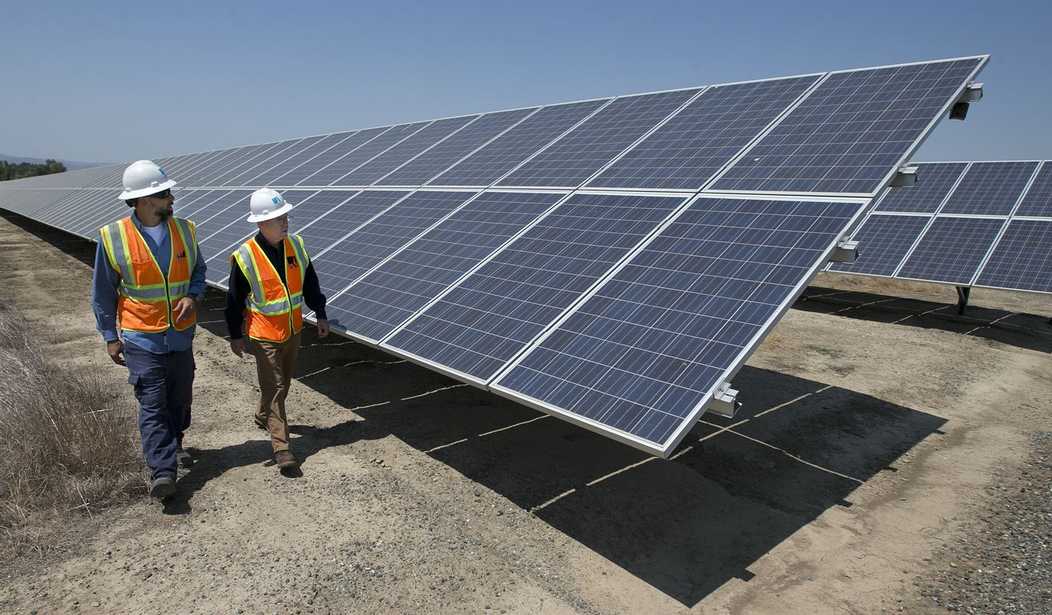
Turner said that “wind and solar are failing because they’re intermittent and that's always going to be their problem.”
“Wind will always rely upon wind power, and the wind does not always blow,” Turner said. “Solar is always going to rely upon fixed hours, and we're always going to have nighttime.
The same problems always apply: Wind and solar power are intermittent and low-density. As Mr. Turner points out, the wind doesn't always blow, and the sun doesn't always shine. But natural gas, coal, and nuclear power are reliable and constant. They are always on, and they are much easier to scale to meet demand.
Read More: Why America Handles Heat Waves Better Than Europe
UK Climate Rules Ban AC, As Temperatures Soar to 104 Degrees F
It gets worse: Areas that depend on solar power to any extent face the problem that people are more likely to have their energy-hungry air-conditioners on at night, when the sun doesn't shine. There has been a push for people to switch from gas to electric stoves, and people are also more likely to cook at night, or at least late in the day, especially in warm weather. And how about all those electric vehicles? When will most of those be recharged? One of our daughters has a hybrid Ford Fusion that is a plug-in hybrid. It works very well for her, since she lives in an urban area and has a short commute, but want to know when she plugs it in to charge? At night.
This backup generation should be our mainstream generation. Once again, we see that intermittent, low-density electrical generation isn't cutting the mustard. Nuclear power, coal and natural gas are the answers, not the problems.
As for the climate scolds who seem to want us to sweat and suffer in the midsummer heat, we may very well advise them to take their climate scoldery and place it somewhere where, like over a solar panel farm late at night, the sun in fact doesn't shine.