



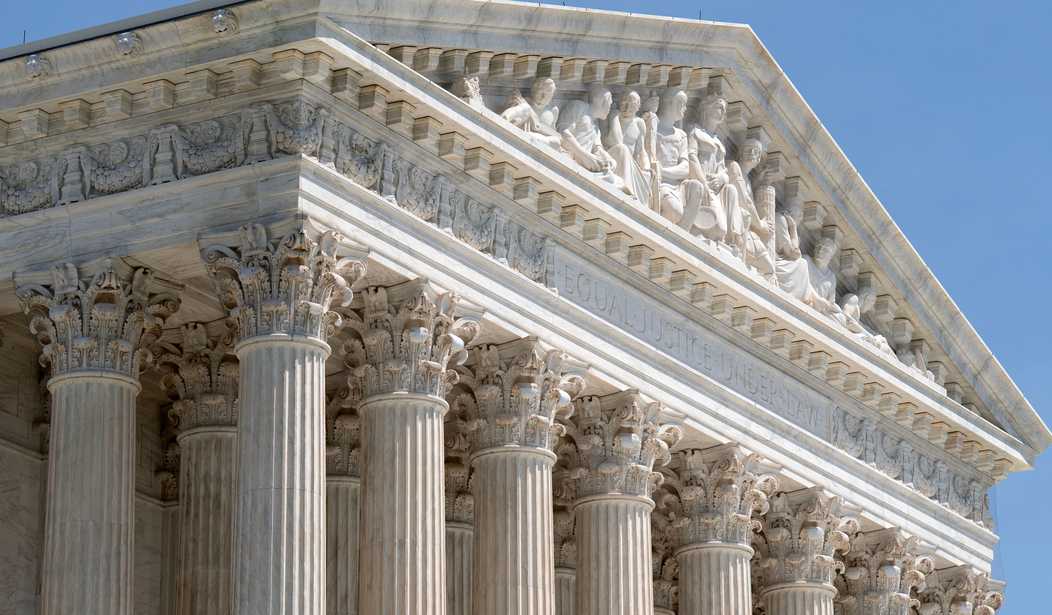
The Supreme Court handed the Trump administration another immigration-related win on Tuesday, declining to revive a Biden-era regulation that allowed immigration judges to temporarily put deportation proceedings on hold.
The one-sentence order in City of Baltimore v. Texas offered no explanation, and no justices publicly dissented. It leaves in place a federal court judgment striking down the regulation nationwide while a separate appeal continues.
NEW: The Supreme Court declined to immediately restore a Biden-era rule allowing immigration judges to temporarily suspend deportation proceedings. A federal judge vacated the rule nationwide in June after Texas sued and the Trump administration agreed it was unlawful. https://t.co/uw0iNJEAhB
— SCOTUS Wire (@scotus_wire) October 27, 2026
But there's a bit more to this story than the Supreme Court's decidedly brief order.
The dispute centers on a practice known as "administrative closure," which allows immigration judges to temporarily remove a deportation case from their active docket without actually dismissing it or deciding whether the individual should be removed from the country.
Essentially, it's a pause button. The case remains unresolved and can be returned to the active docket later.
Immigration judges have used versions of this procedure for decades, and the Biden administration issued a regulation in 2024 formally authorizing its use in certain circumstances. Supporters maintained that it allowed judges to manage their caseloads more efficiently and gave immigrants time to pursue other avenues of legal relief.
Critics, however, argued that the practice could leave deportation cases in litigation limbo indefinitely, effectively allowing individuals who might otherwise be removed to remain in the country.
Enter Texas.
On June 22, 2026, the state sued the Department of Justice (DOJ), challenging the legality of the Biden-era regulation. In a somewhat unusual turn of events, the Trump administration agreed with Texas that the rule was unlawful. And so, that very same day, U.S. District Judge Reed O'Connor approved a consent judgment between the parties, vacating the regulation nationwide and barring the DOJ from enforcing it.
Which might have been the end of the matter, except that not everyone was thrilled with the arrangement. Three cities — Baltimore, Maryland; Columbus, Ohio; and New Haven, Connecticut — along with immigrant legal-services organization Centro Legal de la Raza, sought to intervene in the lawsuit to defend the regulation.
They argued that the arrangement between Texas and the Trump administration effectively eliminated an existing federal rule without the usual opportunity for public participation or a meaningful judicial examination of its legality.
O'Connor denied their request to intervene, finding they hadn't demonstrated the necessary legal standing to join the case. The groups appealed to the 5th Circuit and asked the Supreme Court to temporarily block the Texas judgment while their appeal proceeds, contending that the consent agreement was the product of "egregious collusion."
As you might expect, Texas and the DOJ opposed that request, maintaining that the groups had not established a legally sufficient basis to challenge the judgment.
On Tuesday, the Supreme Court denied the emergency application, leaving the lower court's judgment undisturbed.
Now, we should note what the justices didn't do here: They didn't issue a ruling declaring administrative closure unconstitutional or definitively resolve whether immigration judges have statutory authority to use the practice. They simply declined to suspend the existing judgment while the challengers pursue their appeal.
The practical impact, however, is significant. The 2024 regulation remains off the books, and immigration judges cannot rely on it to administratively close removal proceedings. That doesn't mean every previously paused case automatically results in deportation, nor does it eliminate every other procedural mechanism for delaying or resolving a case.
But for now, the Trump administration's position prevails; the Biden-era regulation remains vacated, while the fight over who can challenge that outcome continues in the lower courts.
Pretty notable for a Supreme Court order that consists of a single sentence.
Editor’s Note: We voted for mass deportations, not mass amnesty. Help us continue to fight back against those trying to go against the will of the American people.
Join RedState VIP and use promo code FIGHT to receive 60% off your membership.

Join the Conversation
VIP members get the ability to comment on articles.