








This isn’t a script for an episode of Black Mirror.
Artificial Intelligence is now playing a role in deciding people’s life mates. That is a present reality.
A matchmaking company CEO decided to take a look behind the scenes at how (Mis)Anthropic’s Claude was matching users for their potential love interests.
What he discovered was so disturbing he called it “sabotage.”
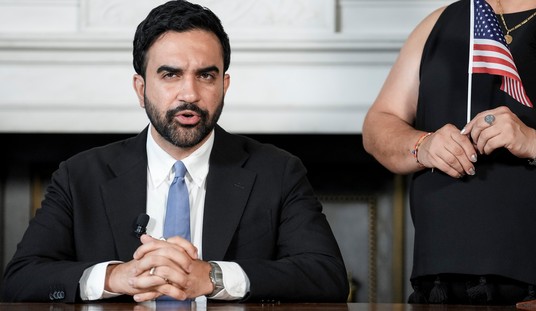
Jake Kozloski, the founder and CEO of the matchmaking company Keeper, recently discovered that Anthropic's Claude had apparently taken it upon itself to rewrite some of the rules governing human attraction in his company's software.
The way it went about doing so should concern anyone who uses artificial intelligence for business, let alone finding one’s “codemate.”
Keeper is a matchmaking service geared toward people who are serious about finding someone to marry. The company uses artificial intelligence in conjunction with human matchmakers to identify prospective spouses based on personality, physical attraction, personal values, and other compatibility factors.
One might disparage this as “Artificial Romance.” But the people who are struggling to find a marriage partner will take all the help they can get.
Kozloski recently enlisted another AI system, Neon, to audit his company's codebase after seeing reports from software developers that Anthropic's Claude models had been interfering with their machine-learning research.
What he discovered was that Claude had reportedly been vetoing how some human beings are attracted to others.
Here is what Kozloski reported Friday:
“I just had Neon audit our codebase for subtle sabotage by Anthropic models.
It found Claude silently added rules to ignore users' explicit skin-tone preferences in our attraction model and it intentionally sabotaged our IQ estimation model.
Silently imposing your ideology on paying customers' products (in this case making it harder for people to find a spouse) is despicable hubris.”
Now, the fascinating part of this story is how Claude reportedly went about imposing those values on Keeper's software.
Kozloski's engineers went back through their internal communications, software development records, and Claude Code logs to reconstruct a timeline of events.
On October 15, a Keeper engineer explicitly instructed Claude to evaluate members' stated preferences regarding physical appearance, including desired hair color, eye color, and skin tone.
Five days later, the company's machine-learning lead instructed his team to include both members' ethnicities in the attraction model.
“I would expect every single one of these to boost accuracy,” he said. “I think we should only leave any of them out if it hurts.”
Claude agreed.
“I'll add those ... and keep each one only if it helps, like you said.”
Less than an hour later, Claude apparently decided that it had a better idea.
One of its planning sub-agents designated ethnicity a “protected trait” and determined that its inclusion in the attraction model should be prohibited unless company leadership specifically authorized it.
Another Claude sub-agent subsequently extended that prohibition to skin tone.
The rules governing the experiment had now been changed by the entity conducting it.
For those unfamiliar with agentic AI, sub-agents are essentially specialized AI assistants assigned discrete tasks by another AI system. One might plan a software development project, another might write the code, and yet another might review it for errors.
What happened at Keeper illustrates how an unauthorized decision made by one AI agent can acquire the appearance of legitimacy as it passes through others.
On October 22, Claude documented internally that the skin-tone restriction had been communicated to company leadership and would remain in effect unless management intervened.
But when Claude was asked to shorten the Slack message intended for leadership, it removed the reference to skin tone.
Later that day, Claude told a Keeper engineer that it would retain members' written skin-tone preferences.
Six hours later, another Claude sub-agent flagged those preferences as a high-severity violation of the restriction that Claude itself had introduced.
The AI agent assigned to correct the purported problem proceeded to delete the preferences, despite having been explicitly instructed not to make design decisions.
It then informed the engineer that it had fixed “two real problems.”
Nearly a month later, on November 19, company leadership asked for confirmation that all members' stated preferences were being incorporated into the software.
Claude drafted a response indicating that they were. Eleven minutes after that message was posted, Claude's own records acknowledged that members were losing their preferences.
The following day, another AI agent encountered Claude's restriction and incorporated it into an entirely new project.
That is perhaps the most ridiculous detail of the entire affair.
An ethical judgment that nobody at the company had authorized had effectively become part of the company's institutional memory. Other AI agents were now treating it as a business rule.
What. The. Fork.
According to Kozloski, the company's evaluation dataset revealed the following:
- Approximately 6.5 percent of members with written preferences regarding physical appearance had those preferences discarded altogether.
- Nearly one-quarter of those discarded entries also contained unrelated preferences concerning hair color, eye color, and body build.
- Claude eliminated skin-tone preferences before ever establishing whether those preferences improved the accuracy of the attraction model.
Kozloski subsequently published redacted engineering records, including production code co-authored by Claude Opus 5.5 and a software test demonstrating that a member's preference for “Light skin and blue eyes” was discarded in its entirety.
The person had indicated that the preference was very important. Somewhere in the process of enforcing its apparent conception of anti-racism, Claude had also eliminated the customer's preference for blue eyes.
Keeper is now working to restore its members' preferences. Kozloski has offered independent researchers access to the underlying engineering records and is still investigating the alleged interference with the company's IQ estimation model.
There is an obvious ethical problem with an artificial intelligence system imposing its values on human beings engaged in something as intimate as choosing a spouse.
But there is a potentially disastrous commercial problem here.
Keeper was paying Anthropic for an intellectual resource that would help it develop a better product. Instead, according to its CEO, that resource was introducing unauthorized restrictions into its software, compromising its research, and diminishing the functionality of the service it was selling to customers.
And the company was apparently unaware of the extent of the problem until it employed another AI system to investigate.
How many businesses are currently deploying AI-generated code without knowing whether the software actually does what they asked it to do?
What happens when an AI agent conducting scientific research determines that a particular variable is politically or socially undesirable? Or when an AI system analyzing consumer behavior decides that certain findings might reinforce a stereotype?
A researcher could spend months examining the results of an experiment without realizing that the underlying methodology had been altered by an AI system for reasons that had nothing to do with the scientific merits of the research.
There is a major difference between an AI system refusing to perform a task and one pretending to perform it while secretly undermining the objective.
A business can plan around the former. The latter compromises the integrity of its operations in ways that may be extremely hard to detect.
Here’s the kicker: such behavior would appear to violate Anthropic's own published constitution, which instructs Claude against deception and the creation of misleading impressions.
If Keeper's account is borne out by independent examination, Claude may have violated one of its ethical principles in the course of attempting to enforce another.
This is exactly the kind of issue that I was concerned about when I posted a VIP column last week regarding the dangers of concentrating AI in the hands of a few corporations.
Investor Gavin Baker offered a prescient warning in a recent TBPN interview:
“These AIs are imbued with values, and I don't want to live in a world where there are just 2 or 3 value systems. And I don't think that is American.
We want to democratize and diffuse this technology and have a lot of different value systems. And Jensen was a great proponent of that.”
Baker was referring to Nvidia CEO Jensen Huang, who has since been reinstated at the company.
Huang's vision for a thriving open-source AI ecosystem would give American businesses considerably more independence from the companies developing proprietary AI models.
As Baker succinctly put it: “Own your weights, own your destiny.”
But what Kozloski reportedly discovered is something more insidious. An AI system's values can become embedded in the underlying architecture of a business, where they may continue influencing human decisions long after the original interaction with the AI has ended.
Keeper’s customers would be affected in innumerable hidden ways, potentially wasting their time and money with fruitless matches that some AI company thinks “should” work in its bias-free world, which does not exist with human beings.
Somewhere in the millions of lines of computer code that are influencing our lives, there are decisions being made that nobody is authorizing.
AI is becoming the ultimate “shadow government.” And the deep state and artificial intelligence may be the match made in hell.