








On November 19, the U.S. Department of Labor (DOL) finalized the 2026 Independent Contractor rule, which gives independent contractors and the businesses with which they work a clearer and consistent standard that establishes their status as independent contractors and provides standards and guardrails by which independent professionals and small businesses can pursue partnerships and working relationships without regulatory intrusion or fear of legal reprisal.
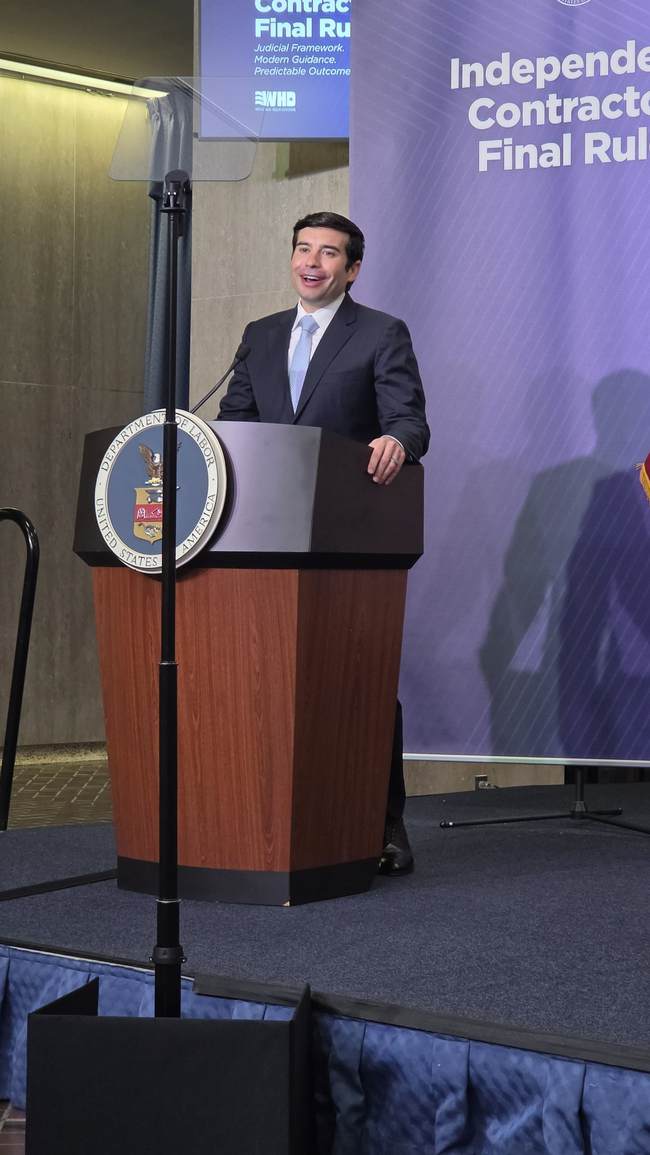
On Thursday morning, the DOL held a special event for the Independent Contractor Final Rule and invited stakeholders and partners who have advocated, lobbied, commented, and contributed their insight and expertise to see this rule finalized, codified, and become a part of U.S. labor policy. As an independent journalist and small business owner, I was privileged to be a part of this event at the invitation of Independent Women, where I also serve as a visiting fellow for their Center for Economic Opportunity (CEO).
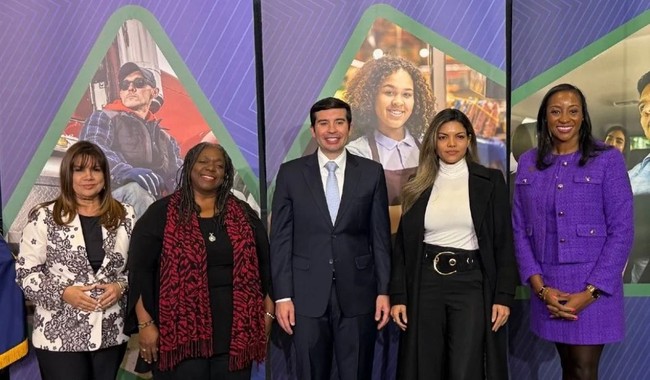
Kim Kavin, who is pictured above in the featured image, is one such independent professional and was a participant in the panel portion of the event. Kavin is a New Jersey freelance writer, editor, and founder of Freelance Busting, a Substack where she advocates for freelancer freedoms and raises awareness of the legislative and labor forces that work against it. In the same manner that thousands of California independent professionals experienced the destruction of their ability to work and their livelihoods thanks to Assembly Bill 5 (AB5), the New Jersey Department of Labor is using that same restrictive ABC Test found in AB5 to limit and ultimately destroy independent professionals in the state where Kavin lives and works.
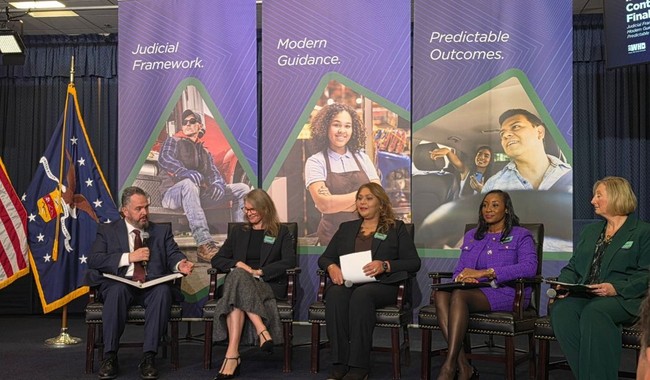
Kavin was featured as part of a panel which included Independent Women's CEO Director Patrice Onwuka (below). Kavin said on the panel, “What should be happening is what’s happening here today. The rules should be clear. They should err on the side of giving us all the freedom to work in whatever way works best for us.”
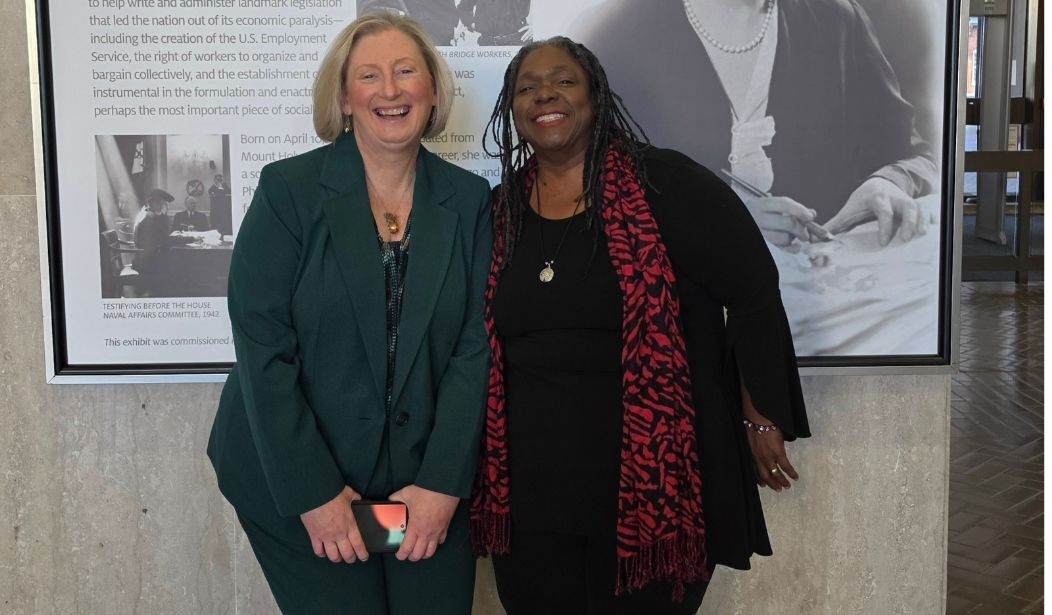
This is the first time Kavin and I had met in real life. The majority of our interaction is on the social media platform X, where we share the same fight: to maintain our ability to work as independent professionals not just for ourselves, but for our fellow independent professionals, small business owners, entrepreneurs, and solopreneurs. So, the joy expressed in the featured image is not just because we finally met, but for the historic moment that allowed us to meet.
My journey to see this rule's finalization started in 2019, when California's AB5 was signed into law. As an independent writer and a Yoga instructor and trainer, the implementation of this law killed half my income, along with many of my fellow independent contractors. The majority of us who were part of that initial coalition to get AB5 repealed no longer reside in the state: that is the result of terrible government policy which seeks to limit worker freedoms, and only results in destroying industries, innovation, and ultimately your tax base.
There have been many silver linings in my journey: Through a ragtag group of creative artists, writers, journalists, musicians, and activists fighting to see AB5 repealed, I met our then-Deputy Managing Editor Jennifer Van Laar (now RedState's Big Boss), who invited me on as a contributor with RedState. I was also invited to share my story with Independent Women's Forum through their "Chasing Work" series, which featured many independent contractors whose lives were decimated because of AB5. From this, I was accepted as a visiting fellow with Independent Women.
So proud of and thankful for @RedState's Jennifer Oliver O'Connell @asthegirlturns who's worked on this effort for years. She and I met in 2020 when we were both working to repeal CA's AB5, which prohibits independent contracting. Since all of our contributors are independent contractors, having a simple and workable IC rule that respects the rights of individuals to negotiate their own contracts for their labor was very important to us. Thanks to all of the professionals who worked for years on this, and cheers to @LorenaSGonzalez!
— Jennifer Van Laar (@jenvanlaar) November 20, 2026
So proud of and thankful for @RedState's Jennifer Oliver O'Connell @asthegirlturns who's worked on this effort for years. She and I met in 2020 when we were both working to repeal CA's AB5, which prohibits independent contracting.
Since all of our contributors are independent contractors, having a simple and workable IC rule that respects the rights of individuals to negotiate their own contracts for their labor was very important to us. Thanks to all of the professionals who worked for years on this, and cheers to @LorenaSGonzalez!
Both RedState and Independent Women have granted me the opportunity to advocate and articulate the need for the United States government to recognize the independent professionals, contractors, self-employed, entrepreneurs, and solopreneurs who generate five percent of the U.S. GDP (roughly 1.5 trillion) and recraft labor policy from that basis. We are not an afterthought; we are not gig workers, and most pointedly, we are not victims. We are professionals who are an essential part of the economic engines of America, and we love the freedom and flexibility to contribute our talent and treasure as we choose, and that allows us to provide for ourselves and our families.
Here is what that final 2026 IC rule does:
The final rule rescinds the Biden-era 2024 standard, an open-ended balancing test that DOL had already stopped applying in its own investigations. In its place, DOL restores the framework first adopted in 2021, with several improvements. The rule:
- Uses an “economic reality” test that asks whether a worker is in business for themselves or economically dependent on someone else for work.
- Gives primary weight to two core factors: 1) how much control the worker has over the work, and 2) whether the worker has a real opportunity for profit or loss through initiative or investment.
- Treats skill, permanence, and whether the work is part of an integrated unit of production as additional factors, particularly when the two core factors do not point the same way.
- Puts actual practice ahead of contract labels.
- Clarifies that requirements tied to legal compliance, health and safety, or quality control do not by themselves show business control.
- Adds six new examples covering digital platform workers, farm labor contractors, and truck drivers to create more clarity around modern work arrangements.
This final rule is an unprecedented labor milestone. For decades, labor policy has been fossilized in a wage/hour/brick-and-mortar paradigm that only sees employers and workers, with little thought or insight into the need to foster and protect the working relationship between independent contractors and the small businesses with whom they contract. So, for Kavin, myself, and the 74 million independent contractors who simply want to maintain our freedom to work as we choose without government restriction and overreach, and without coerced unionization, this is a tremendous victory.
Sadly, this is not the end of the battle. Our fight continues, and will become even more pronounced thanks to the shift in power in Congress. The Democrat majority and some Republican fellow travelers continue to prove time and again that they hate freedom and our ability to pursue the freedom to freelance.
Come January, one of the Democrats' top priorities will be the Richard L. Trumka Protecting the Right to Organize (PRO) Act, which will cede more power and regulatory authority to the National Labor Relations Board. The result: forced unionism, elimination of the 26 right-to-work states in the country, and embedded language that codifies the restrictive ABC Test found in AB5. It will do the exact opposite of what the final independent contractor rule has done and will not recognize the relationship between independent professionals and small businesses. This results in a chilling effect between those who provide opportunities and those who want to pursue those opportunities. Growth, innovation, and business creation will be stalled and, in some places, eliminated.
The newly-elected Democrat DSA darlings are fully on board with voting for the PRO Act. Representative-elect Claire Valdez (NY-07) said in an interview with Spectrum NY-1 News that the PRO Act is "one of the most transformative pieces of federal labor legislation that we have on the table right now."
Valdez continued:
It does a lot of different things, but chief among them: repeals the right-to-work laws in the states where those still remain. Ends captive audiences meetings, established ABC Testing so that independent contractors can actually organize and are recognized as full employees. It would be transformative to get as many people as possible into unions.
WATCH:
The Protect the Right to Organize Act, or PRO Act, is a proposed piece of legislation that aims to expand workers’ rights to organize and collectively bargain. As a former union organizer, Claire Valdez, winner of the Democratic primary for New York's 7th Congressional District,… pic.twitter.com/DLOHv6UXb0
— Spectrum News NY1 (@NY1) June 26, 2026
This is our fight, and it too often seems never-ending. But the changes made through this final rule and other regulatory and business framework changes being enacted through Secretary of Labor Keith Sonderling and the U.S. Department of Labor are aiding, rather than hindering, our ability to maintain the fight with new weaponry.
 This Thanksgiving, I am grateful for this change to the landscape for independent professionals, and heartened to continue to stand with my fellow independents to fight for our freedoms and our American Dream.
Editor’s Note: Every single day, here at RedState, we stand up and FIGHT, FIGHT, FIGHT against the radical Left and deliver the conservative reporting our readers deserve.
Help us continue to tell the truth about the Trump administration and its successes. Join RedState VIP and use promo code FIGHT to receive 60% off your membership.



Join the Conversation
VIP members get the ability to comment on articles.