



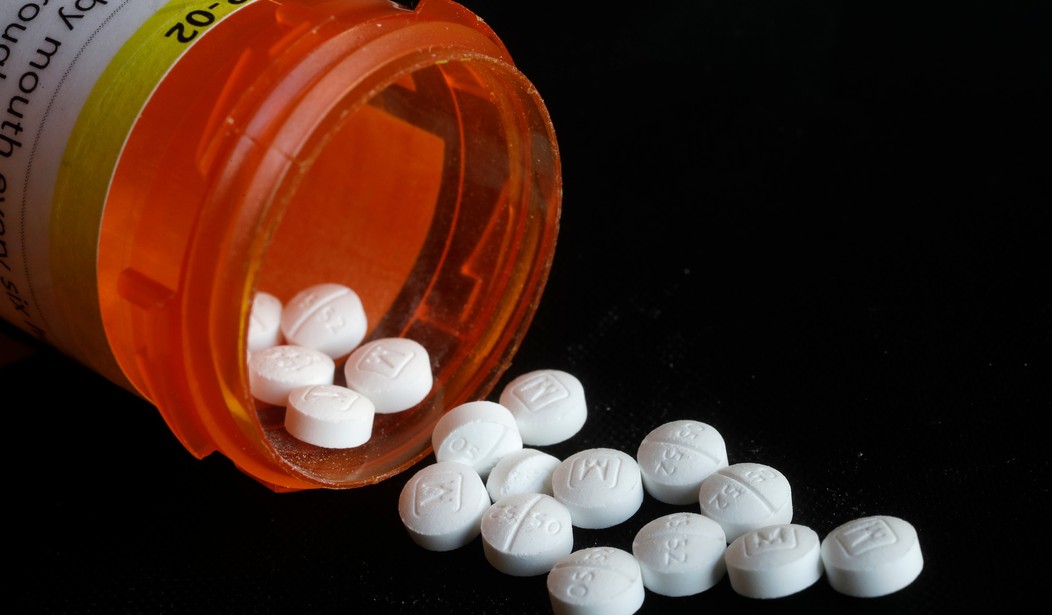
Due to a family member's recent catastrophic diagnosis, I have been going down the rabbit hole of medical research. Miracles can happen, and sometimes those miracles come through an untested or unrecognized medical treatment or drug protocol. So, despite what our family may be facing, we still hold out hope that a cure can be found. Hope is what keeps us alive, even when circumstances say there is none left.
Which is why Dr. David Fajgenbaum and his organization, Every Cure, researches, tests, and works to repurpose prescription drugs used for one form of disease and apply the treatment to other diseases that may not even use that particular protocol. What he is doing is not just fascinating, but extremely promising.
Look to the helpers is the subject of this week's Feel-Good Friday.
Eleven years ago, when Dr. David Fajgenbaum had just begun his career as an oncology resident, he developed a rare disorder called Castleman's disease, which causes enlarged lymph nodes and a host of horrible symptoms. Fajgenbaum was not given a whole lot of hope. He was told he didn't have long to live, and his family even administered last rites. But Fajgenbaum fought to find a cure, and it came in the form of a repurposed drug. He told his story to CBS News' CBS Morning program.
WATCH:
Dr. @DavidFajgenbaum’s hope to find treatments for up to 25 diseases in the coming years using AI began with his own quest to treat himself, when he was diagnosed with a rare and life-threatening disease while in medical school. Dr. David Fajgenbaum shares about his nonprofit, @EveryCure, and how he’s using artificial intelligence as a tool to treat rare diseases.
— CBS Mornings (@CBSMornings) November 12, 2026
Dr. @DavidFajgenbaum’s hope to find treatments for up to 25 diseases in the coming years using AI began with his own quest to treat himself, when he was diagnosed with a rare and life-threatening disease while in medical school.
Dr. David Fajgenbaum shares about his nonprofit, @EveryCure, and how he’s using artificial intelligence as a tool to treat rare diseases.
As stated in the above CBS interview, Fajgenbaum has been in remission for 11 years, and his organization Every Cure works to do the same lifesaving work for others. They search out FDA-approved drugs, 4,000 of them for 18,000 diseases, and repurpose them to give others a fighting chance either to gain more time, a better quality of life, or to extend one's life altogether.
Quite amazing.
In 2025, Fajgenbaum sat down with Andrew Huberman, a professor of neurobiology and ophthalmology at Stanford Medicine, to discuss in detail the work that Every Cure does. Fajgenbaum said, "We scan the world's knowledge for every usage for every disease."
The video of the interview is linked below, and the information Fajgenbaum gives is not only mind-blowing, but has heartened me to continue my crawl down the rabbit hole of potential medical cures.
We know that aspirin is often used to help ward off or prevent the recurrence of a heart attack. But did you know that it has been shown to reduce the recurrence of colon cancer?
And lidocaine, which is what dentists use to numb your mouth for dental surgery, is now being used before breast cancer surgeries! Studies have shown a 29 percent reduction in the breast tumor with this treatment, and a reduced mortality rate.
Fajenbaum stated that it's not as though this information is being hidden; it's that there is no centralized database that allows doctors and patients to tap into the wealth of knowledge not just in the U.S., but worldwide. Sadly, there is no incentive for corporate medicine to pursue, utilize, or maximize these findings.
Thank God for Dr. Fajenbaum and his groundbreaking work. He is trying to replicate this work so that all doctors and patients can benefit from it.
One of Fajenbaum's first patients was a man named Michael, who was diagnosed with metastatic angiosarcoma, and his doctors told him he was pretty much out of options. Every Cure found research on PubMed published in 2013, and a particular drug that had been used in rare cases and showed some promise. Fajenbaum said that not only did the drug show success in terms of extending life in about 20 percent of the cases, but it changed how the medical world now treats this form of cancer.
The most beautiful part? Michael is now nine years into remission. In 2024, he was able to walk his daughter down the aisle at her wedding.
Fajenbaum said in the video below:
"These drugs are out there, and sometimes there's even breadcrumbs. Like, it didn't require any brilliance from my lab. We literally just had to find a study that published three years earlier. And that again is what really drives us with this work now to say: Can we find all these breadcrumbs, can we put them together and can we make sure that people actually benefit from all the great science that's being done all over the world, let's translate that to our patients."
Dr. Fajenbaum's conversation with Andrew Huberman is almost two hours long, so taking the time is necessary, but well worth it. Who knows, it may be life-altering for you or someone that you love who is battling illness or disease.
WATCH:
The new Huberman Lab episode is out: Using Existing Drugs in New Ways to Treat & Cure Diseases of Brain & Body | Dr. David Fajgenbaum (@DavidFajgenbaum)
— Andrew D. Huberman, Ph.D. (@hubermanlab) November 3, 2025
0:00 David Fajgenbaum
4:06 Self-Agency in Healthcare; New Uses for Old Medicines
6:44 Other Uses of Aspirin & Viagra; Drug… pic.twitter.com/fAkZ7TVROk
Editor's Note: At RedState, it's not all about politics and policy. We like to bring attention to what's good in the world, with columns like "Feel-Good Friday," "Start Your Weekend Right," and "Hoge's Heroes."
Support our work! Join RedState VIP and use the promo code FIGHT to get 60% off your VIP membership!


Join the Conversation
VIP members get the ability to comment on articles.