
There's a long list of things modern women say they're victimized by, and while most of them aren't actually real, some of them seem very obvious and inarguable. One such claim is called the "pink tax," or women being forced to pay more for feminine products than men do for their own.
This claim usually revolves around healthcare or self-care products like shampoos and conditioners, moisturizers, razors, or anything else you might find in the toiletries aisle.
For some reason, the complaint about the pink tax has been creeping into my algorithm, and I got hit with this post on X this morning.
What nobody tells women about the pink tax is they can just buy the male version of the product and nobody can stop them.
— Hitchslap (@Hitchslap1) July 24, 2026
Crazy, I know. pic.twitter.com/HB3tj8Xlac
Now, given that this is a post attempting to tell women they don't have to pay more for what seems like the same product, and that it is correct, it highlights something that I feel puts the claim of the "pink tax" in the trash where it belongs.
Let's start with a basic fact that isn't polite to say around women, but is a basic truth.
They're far more easily marketed to. This isn't news. Corporations found out that marketing to women is the way to get more money since your grandfather was in diapers. Women did most of the shopping for the home, and as such, if you wanted to sell your product, you talked to Mrs. Smith, not Mr. Smith. As time went on, corporations got better and better at talking to Mrs. Smith and learned that they could upsell her with some clever marketing and personalization.
They learned that they could simply make the product look more feminine and women would pay a little extra for it. They found out that if they added a few more features here and there, they could increase the dollar amount significantly, and women would actually gravitate toward the product more, seeing it as more valuable, not just because of the look and features, but because it cost more.
You don't have to take my word for it. As reported by the CATO Institute, the Federal Trade Commission hired economists Sarah Moshary, Anna Tuchman, and Natasha Bhatia to dive into the price difference and shed light on the issue. What they found was effectively what I just explained, but with an interesting twist:
Women, it seems, were more likely to want more expensive products, given their ingredients. On a like-for-like comparison, women’s body wash, shampoo and shaving creams were cheaper than those targeted at men, with prices roughly equal for deodorant.
To economists, these findings make sense. If women could buy a product they deemed near-identical for cheaper in the men’s aisle, why wouldn’t they? If a disposable razor shaves just the same, who would pay more because of its colour? That these price differences persist indicates there must be meaningful gendered difference in the sellers’ costs of producing the item or consumers’ tastes for buying it.
In other words, women are paying more up front for their aesthetic choices, but are actually getting more bang for their buck in the end. They're paying extra for the features, extra ingredients, and feminized look, but are actually paying less per feature than men are for theirs.
But in the end, women are attracted to items that cost more because they see the higher cost as a sign of greater value and quality, even if the product's features are borderline similar to those of men's or women's products that are the same but have a lower cost:
They found women shopped in less concentrated product markets than men and had more diverse consumption habits. Women also were more price-sensitive and cautious shoppers. Primarily, the price gap arises because women are more likely to buy products with higher production and distribution costs. In an analysis of five gendered products, women generally chose costlier-to-produce items in four (yoghurt, deodorant, disposable razors and shampoo).
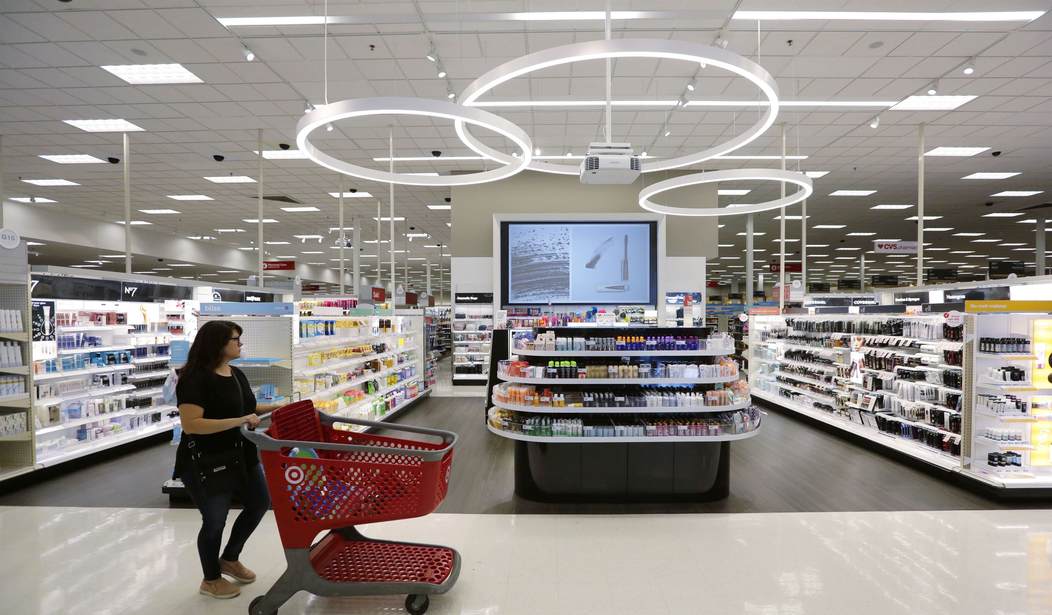
You can actually see how corporations have figured this out in stores. Next time you head into Target, Kroger, or other major retail stores, hit up the aisles where they sell men's products. You'll notice it's pretty basic, with maybe a display or two on the aisle shelves, but otherwise, nothing too fancy.
Then go to the women's sections. You'll notice they have dedicated lighting. There are far more posters and pictures featuring models or celebrities using the products. There may be dedicated displays arranged stylishly on the front part of the aisle. Target, which I think is probably the most successful at this, is playing the aesthetic game because they know they can rope women into not just buying products from the aisle more often, but also cause them to linger there as well.
And the longer they linger, the more likely they are to upsell themselves. Do you like this shampoo? You should pair it with the conditioner. Like this face scrub? Pair it with this moisturizer. This moisturizer doesn't just moisturize; it also protects your skin in the sun. Be sure to pick up some makeup-removing wipes to help with your new skin routine, now with gentler and all-natural ingredients for healthier, youthful, and glowing skin.
What was going to be a $15 purchase for Mrs. Smith is now an $85 or more purchase. Meanwhile, Mr. Smith bought the same Irish Spring soap he's been using since he was 10 and called it a day, and a pack of razors that are the same as Mrs. Smith's, but hers has gentle curves and a colorful plastic and costs a dollar extra. Why? Because she'll pay for the look, and corporations know it.
So, the "pink tax" isn't real. Women told corporations what they were willing to buy, and corporations were only happy to accommodate. They heard the demand, and created the supply.