








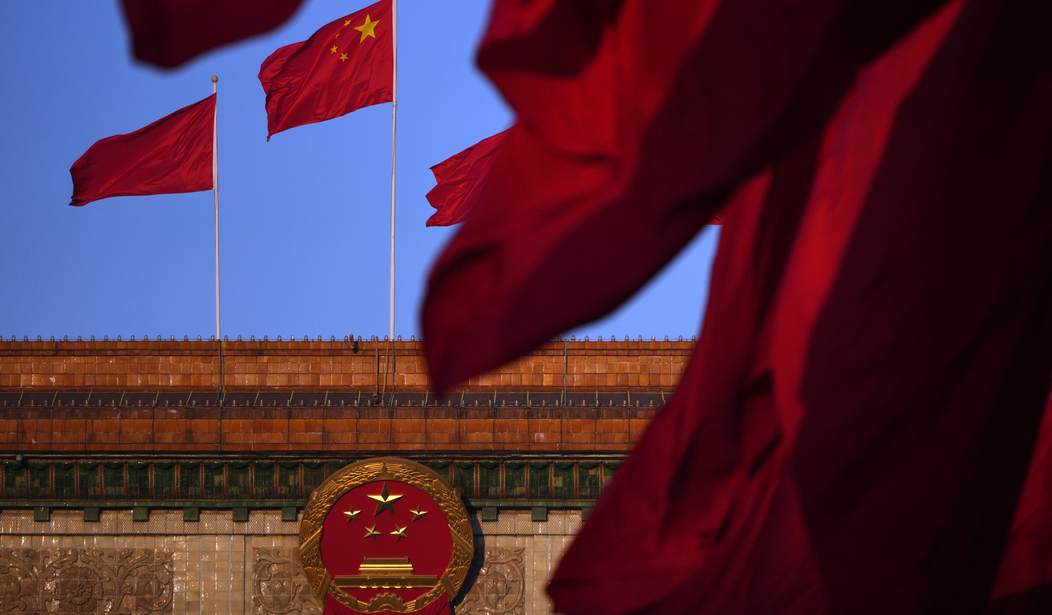
A former University of Florida professor spent more than two years helping decide which computer science projects received federal money. At the same time, federal investigators say, he was participating in Chinese talent programs, government-run efforts to recruit academics abroad to transfer knowledge and technology back to China, and never told the National Science Foundation.
Tao Li served as an NSF program director from 2015 to 2017. Documents reviewed by Bloomberg show he was involved in the process of awarding roughly $80 million for research involving hardware, software, and algorithms. The NSF Office of Inspector General concluded that Li participated in China’s Dragon Star Plan from 2012 to 2016, then joined the Changjiang Scholars Program in 2017 without disclosing either affiliation to the agency.
"The position carried unusual visibility. According to the NSF, program officers screen proposals, choose outside reviewers, analyze their input, and make award or rejection recommendations to the division director."
Investigators found that Li participated in awarding grants to at least seven other scientists who allegedly failed to disclose their own involvement in Dragon Star. One recipient was reportedly the program’s original founder, who had previously served as an NSF program director himself. Li’s old University of Florida biography openly listed his NSF position, along with research interests that included data centers, cloud computing, computer architecture, and artificial intelligence.
The inspector general's report also alleges that Li made at least 16 undisclosed trips to China while working at NSF, giving lectures at universities and computer forums without authorization.
Read More: Stanford Spy Scandal Rocks Academia: Hegseth's Security Audits at 30 Universities Are Long Overdue
NatSec First: DoW Puts 30 Universities on Notice Over Research Ties to Foreign Adversaries
The FBI found Li's suspected connection to Dragon Star in late 2018. Counterintelligence agents briefed NSF leadership in early 2019, according to Jeff Stoff, a former CIA analyst who participated in the work. An inspector general investigation followed, but the agency did not impose its punishment until May 2026.
The Justice Department declined a criminal referral in 2024. Two years later, NSF quietly banned Li from receiving federal funding for six years. The agency did not announce the punishment, although his debarment (a formal ban from federal contracts and funding) was entered into the federal government's SAM.gov database.
"Li disputes the government’s description of his China connections and denies that they influenced the grants awarded during his time at NSF."
Li called Dragon Star “a summer academic teaching program.” He said the grants involving other participants were awarded “based on the merits.”
Li also faced serious allegations at the University of Florida. A doctoral student accused him of forcing the falsification of data in an NSF-funded paper. Li denied wrongdoing, but the university later concluded that he had intentionally fabricated results. The paper was retracted, the Association for Computing Machinery banned him from its venues for 15 years, and the Institute of Electrical and Electronics Engineers permanently expelled him.
The university placed Li on administrative leave in February 2021. Two months later, the school and NSF terminated three of his awards. Li returned to China the following day, which the inspector general said he did rather than face the university investigation. Li said he went home to care for his sick father.
NSF did not mince words when it finally acted.
“In total, your actions were egregious. There are no mitigating factors,” the agency told Li in its debarment letter.
By then, Li had a new job. He is now dean of the Metaverse Innovation Research and Development Institute at the Hunan University of Science and Technology. The university is co-supervised by a Chinese government agency that oversees military-industrial research and development.
At a 2024 event convened by a Chinese Communist Party group, Li pushed for Changsha to become an AI hub and called for faster development of a laboratory working on large language models and humanoid robots.
The NSF punishment keeps Li away from American research grants until 2032. He is already in China, running an AI center and working in some of the same fields he once helped fund with American tax dollars.
Editor's Note: Do you enjoy RedState's conservative reporting exposing the radical left and woke media? Support our work so we can keep bringing you the truth.
Join RedState VIP and use promo code FIGHT to receive 60% off your membership.
Join the Conversation
VIP members get the ability to comment on articles.