








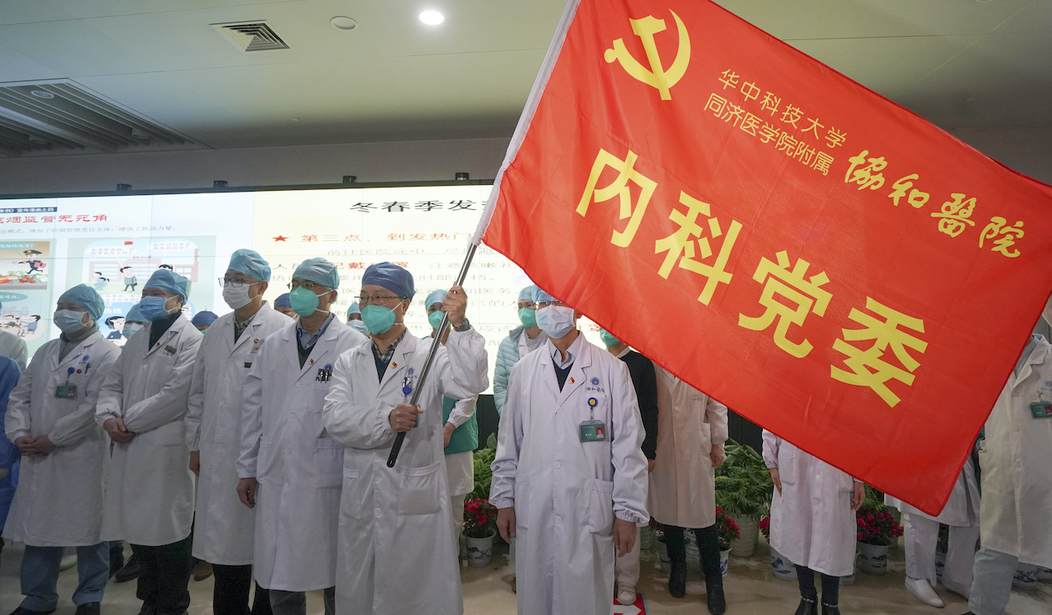
Three patients died in experimental clinical trials in China. Two of them were children. Now two House Republicans who help oversee FDA funding want the agency to stop taking China's word for it.
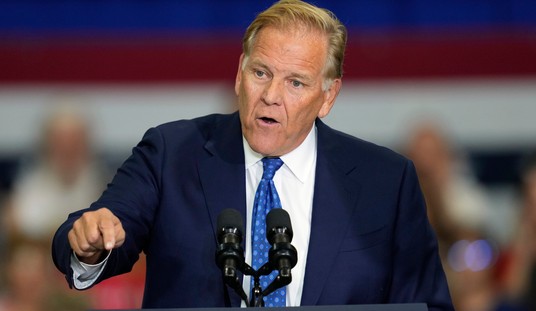
Republican Rep. John Moolenaar (MI-02), chairman of the House Select Committee on China, and Republican Rep. Ben Cline (VA-06) sent a letter Thursday to Acting Food and Drug Administration (FDA) Commissioner Kyle A. Diamantas asking the agency to stop accepting China-generated clinical trial data for new drug and clinical trial applications unless FDA inspectors have personally inspected the trial site within the previous 12 months. Both lawmakers sit on a House Appropriations subcommittee that oversees the FDA.
The committee didn't mince words. Its Friday press release described three participant deaths in Chinese trials as having been hidden from the public. The lawmakers wrote:
We note with grave concern recent reporting that has exposed three separate, tragic deaths of patients — two of them children — enrolled in experimental gene-editing investigator-initiated trials in China. In one case, the sponsoring company halted all public updates about the treatment for more than a year and only acknowledged the death after persistent inquiries.
The first case is rough. A 6-year-old girl with Snijders Blok-Campeau syndrome received an experimental treatment after her parents reportedly paid $860,000 toward developing it. She was the first person known to receive gene editing directed at the brain. Days later, she developed a high fever, showed signs of kidney damage, and died. The hospital ethics board later concluded the death was “definitely related” to the treatment.
Then came another problem. Researchers published work connected to the treatment without saying that the girl had died. Her parents eventually pushed the matter, and Shanghai Jiaotong University School of Medicine opened an investigation. The hospital's punishment was a fine of about $3,600.
A second case involved a boy with Duchenne muscular dystrophy who died in August 2025 after receiving HuidaGene’s experimental CRISPR treatment, HG302. HuidaGene did not publicly acknowledge his death until Aug. 5, 2026, after outside inquiries. The company said the boy developed acute respiratory distress syndrome following severe complement and cytokine activation after treatment.
The third death came during a RiboX Therapeutics trial of RXIM002, an experimental in vivo CAR-T treatment for autoimmune disease. A patient with systemic sclerosis died during an investigator-initiated trial in China. RiboX publicly disclosed the fatal serious adverse event Aug. 9, after the therapy had received FDA clearance for a U.S. Investigational New Drug application.
There is an important distinction in that case. RiboX says the death was not hidden from regulators, even though it had not been publicly disclosed previously.
As part of standard IND submission process, the complete data from the investigator-initiated studies, including information regarding this event, were provided to the applicable regulatory authority.
RiboX said the patient had “significant pre-existing medical conditions.” The company also said the study's overall tolerability profile remained acceptable. That's one way to put it.
The size of China's clinical-trial business, run under a system lawmakers say is controlled by the CCP, is part of what worries lawmakers. China accounted for just 1 percent of global clinical trial starts in 2009. By 2025, that number had jumped to 32 percent. The United States was at 35 percent. More than 30,000 patients have also taken part in more than 1,000 investigator-initiated cell and gene therapy trials in China since 2015.
There is another number in the letter worth looking at: 46. That is how many inspections the FDA carried out at clinical trial sites in China from fiscal year 2012 through March 1, 2023, according to the Government Accountability Office.
Read More: Are We Handing Biotech to Chinese Military? House Panel Demands Answers From Pfizer, Merck and More
Moolenaar and Cline want two changes. First, they want China-generated data excluded from Investigational New Drug applications, New Drug Applications, and Biologics License Applications unless the FDA has inspected the site in the preceding year. Second, they want a public risk assessment showing how much U.S. drug development and approval currently depends on Chinese trial data, with special attention paid to high-risk technologies such as gene editing.
There is a reason companies go to China for some of this work. Trials can be cheaper and move faster. But cheap and fast doesn't mean much if you can't trust what comes back, and right now, there's good reason not to.
Here, one child’s death went unmentioned in related published research. Another death was not publicly acknowledged for roughly a year. In the RiboX case, the company says regulators had the information, but the public did not get the disclosure until after the FDA had already cleared the therapy for a U.S. trial.
Moolenaar and Cline are asking the FDA to verify the sites itself before taking Chinese trial data at face value. Given what's already surfaced, requiring an inspector to actually walk through the door doesn't seem like much to ask.
Editor’s Note: Every single day, here at RedState, we stand up and FIGHT, FIGHT, FIGHT against the radical Left and deliver the conservative reporting our readers deserve.
Help us continue to tell the truth about the Trump administration and its successes. Join RedState VIP and use promo code FIGHT to receive 60% off your membership.


Join the Conversation
VIP members get the ability to comment on articles.