








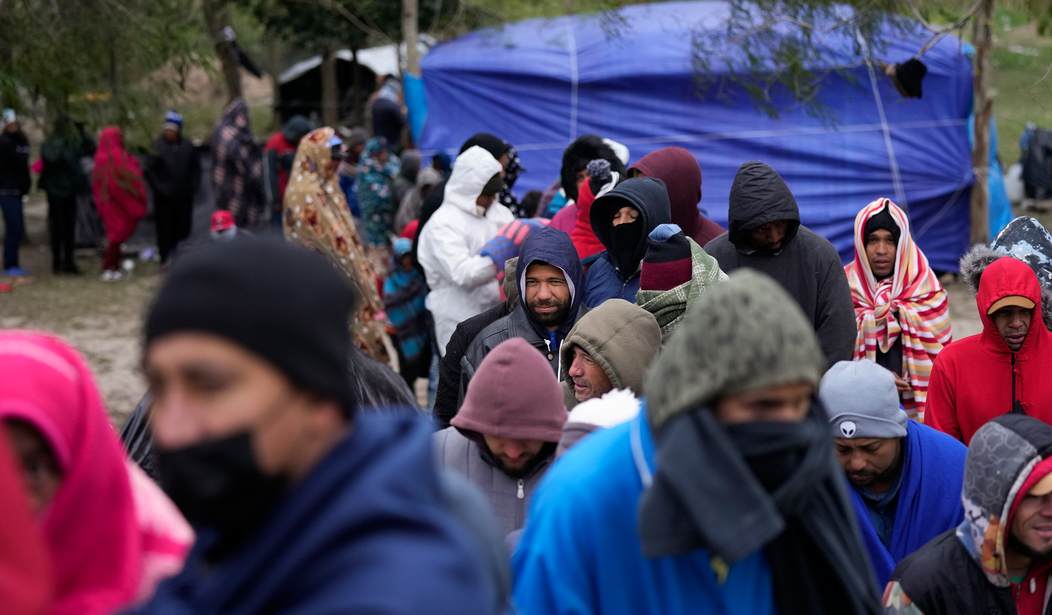
The Supreme Court kicked off its new term Monday with a lengthy order list — and another win for the Trump administration in its ongoing battle over Temporary Protected Status (TPS) for Venezuelan nationals.
The High Court granted the administration’s petition in Mullin v. National TPS Alliance, vacated the judgment of the 9th Circuit Court of Appeals, and sent the case back for further consideration in light of its June ruling in Mullin v. Doe.
For those wondering why that June SCOTUS ruling didn't end the inquiry, here's a refresher:
Last year, U.S. District Judge Edward Chen ruled that then-Homeland Security Secretary Kristi Noem acted unlawfully when she terminated Venezuela’s TPS designation. Chen granted summary judgment to the challengers in September and later entered declaratory judgment in their favor. (Markwayne Mullin, who has since succeeded Noem as Homeland Security secretary, is now the named government official in the case.)
In January, the 9th Circuit affirmed Chen's ruling. But then came Mullin v. Doe.
In that case, the Supreme Court held that the federal statute governing TPS strips the courts of jurisdiction to consider nonconstitutional challenges to the Homeland Security secretary’s TPS decisions. The Court also concluded that the remaining constitutional challenge to the administration’s action was unlikely to succeed.
That left the 9th Circuit’s ruling in the Venezuelan case resting on some decidedly shaky ground.
Monday’s order removes it altogether.
Big from Supreme Court today -- first day of its 2026-2027 term. When the Court decided the Temporary Protective Status cases at the end of last term, those cases involved only Syria and Haiti. Other TPS designations have been ended by the Trump Administration, but the Court did not take up lower court decisions for review -- only the cases involving Syria and Haiti. A very complicated and long-standing case -- the first one brought if I am not mistaken -- out of the Ninth Circuit involved the largest group covered TPS -- Venezuelans. An Obama appointed District Judge in San Fran -- former ACLU attorney Edward Chen -- has issued three different decisions finding the termination of TPS by Sec. Noem to have been unlawful, and invalidating her decisions. The Ninth Circuit twice refused to stay the lower court decisions, and Judge Chen ultimately granted summary judgment in favor of the Plaintiffs, blocking the ending of TPS by Noem. The Ninth Circuit upheld his ruling, and the Trump Admin. appealed to SCOTUS. This was the most significant case NOT decided by SCOTUS last June because it was in a slightly different procedural posture, and Judge Chen's ruling was on different legal grounds that the two cases the Court did decide. But the Venezuela case involved the most aliens covered by TPS. This morning the Court accepted the Government's Petition, reversed the Ninth Circuit's decision upholding Judge Chen, and remanded the case back to the Ninth Circuit for further proceedings in consideration of its decision in the Syria and Haiti cases. This means the Court is done with TPS -- it's not going to consider any of the other challenges involving other countries that were still pending after it reversed the lower courts in the Syria and Haiti cases. Clean sweep by the Trump Administration on this very important question because one key factor in the Syria and Haiti case was the Court's finding that district courts where the cases all began lacked jurisdiction to hear and decide the claims. From the Court: "A provision of the TPS statute, 8 U. S. C. §1254a(b)(5)(A), provides: “There is no judicial review of any determination of the [Secretary of Homeland Security] with respect to the designation, or termination or extension of a designation, of a foreign state under this subsection.” This text is clear, and its plain meaning is very broad." Expect to see these same words repeated in other immigration cases in the Court's new term as more of the lawfare on immigration cases makes its way to SCOTUS.
— Shipwreckedcrew (@shipwreckedcrew) October 5, 2026
To be clear, the Supreme Court did not issue a new opinion on the merits of the Venezuelan TPS dispute. Nor did the justices directly enter judgment for the Trump administration or expressly overturn Chen’s underlying district court ruling.
Instead, the Court employed what is known as a GVR: It granted the petition for review, vacated the appellate court’s judgment, and remanded the case for another look under the legal standard established in Mullin v. Doe.
The practical effect here is that the 9th Circuit’s decision affirming Chen is no longer binding, and the appeals court must now reconsider the case knowing that the Supreme Court has held the plaintiffs’ nonconstitutional claims are beyond the reach of the courts. Given that holding — and the Court’s dim view of the related constitutional claim — Chen’s ruling is unlikely to survive in its current form.
The order also does not spell any immediate change for Venezuelan TPS holders. The Supreme Court had already issued a stay that allowed the administration to proceed with ending the protections while the litigation continued.
What Monday’s order does is clean up the remaining appellate loose end. The 9th Circuit backed Chen. The Supreme Court has now wiped that decision off the books and told the appeals court to take another look — this time applying the High Court's June ruling.
In Mullin v. Doe, the Court, referring to the TPS statute provision regarding judicial review, noted, "This text is clear, and its plain meaning is very broad."
Likewise, the Court's order today may have consisted of only a few lines, but its message is difficult to miss.
Editor's Note: Unelected federal judges are obstructing President Trump's agenda and ignoring the will of the people.
Help us expose out-of-control judges determined to halt President Trump's mandate for change. Join RedState VIP and use promo code FIGHT to receive 60% off your membership.
Join the Conversation
VIP members get the ability to comment on articles.