








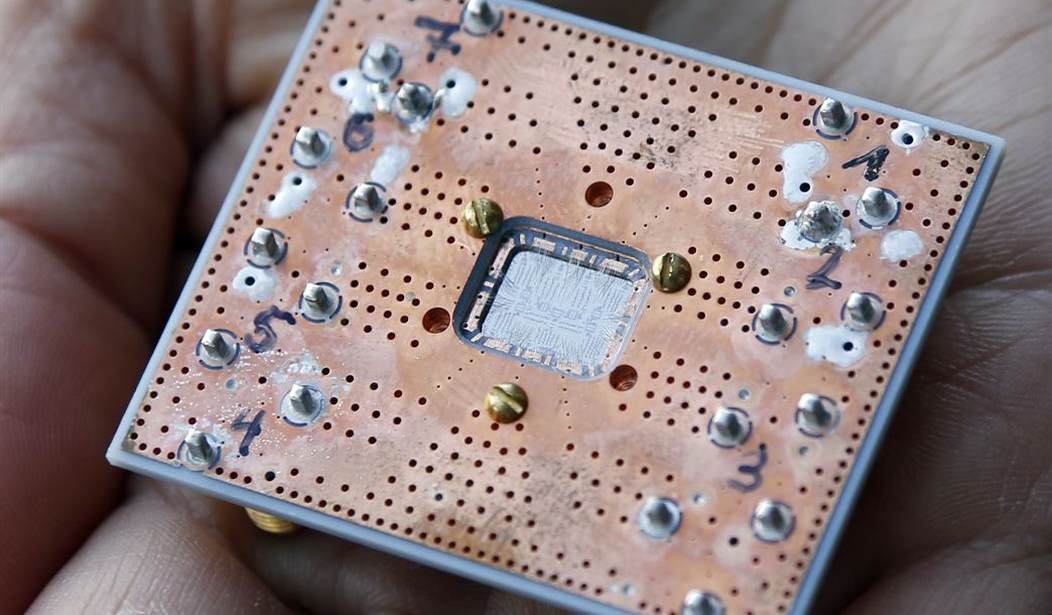
The Trump administration just put a date on America's effort to stay ahead in what could become the next great technology race: 2028.
That's when White House technology adviser Michael Kratsios says the administration wants the first quantum computer capable of scientific discovery online. The goal was announced Monday alongside two executive orders signed by President Donald Trump aimed at accelerating quantum computing development, expanding quantum sensors and networks, and strengthening the nation's defenses against future cyber threats.
For all the technical language surrounding quantum computing, the administration is framing this as a competition issue: Whichever country controls the next leap in computing power could gain an edge in encryption, intelligence, manufacturing, and weapons development.
The executive order repeatedly warns that rival nations are moving quickly to challenge American leadership in quantum technology and directs federal agencies to strengthen domestic supply chains, protect sensitive research, coordinate with allies, and limit adversaries' access to critical technologies.
Trump described the initiative as a national effort to produce "a quantum computer capable of performing important scientific calculations" while developing quantum-enabled sensors and networks over the next five years.
According to Kratsios, the Department of Energy will lead development of the quantum computer, while the Departments of Commerce and War, NASA, and other agencies work on related technologies. The order gives agencies a series of deadlines beginning within the next few months. The Department of Energy has 90 days to identify technical requirements for the project, while federal officials have 180 days to explore partnership opportunities with private-sector companies.
Today, @POTUS signed an Executive Order to accelerate U.S. innovation in quantum technologies and strengthen our national security.
— Director Michael Kratsios (@mkratsios47) June 22, 2026
The Trump Administration will execute an ambitious agenda:
➡️@ENERGY will develop the first quantum computer powerful enough for scientific… pic.twitter.com/bIRQcBqALZ
The White House also is not limiting the effort to raw computing power.
Trump also signed a second executive order directing federal agencies to accelerate their transition to post-quantum cryptography, a process intended to protect government systems from future quantum-enabled cyber threats. Kratsios said the administration wants that transition completed by 2031.
Read More: Musk and Sacks Fought It. Trump Signed the AI Order Anyway
One of the more striking reactions came from the National Science Foundation (NSF).
Federal agencies do not typically rush out statements celebrating presidential executive orders. NSF did.
Within hours, the agency endorsed the initiative and argued that the nation leading the transition will shape the future of computing, communications, sensing, and national security.
This executive order reflects a clear-eyed recognition that quantum innovation is not a distant horizon — it is happening now, and the nation that leads this transition will define the future of computing, sensing, communications and national security.
NSF also made clear that it expects to be deeply involved in carrying out the administration's plans.
Across academia, government and industry, America has an unmatched array of brilliant people working on quantum science and technology. Too often they are working in silos. NSF is uniquely positioned — and now formally directed — to bring that talent together. We are ready.
Private industry responded much the same way.
IonQ, one of the largest American quantum computing companies, praised the orders and pointed to their emphasis on manufacturing, commercialization, workforce development, and cybersecurity. The company also highlighted growing concerns about "Q-Day," the point at which advanced quantum computers could become powerful enough to defeat some forms of current encryption.
The administration's argument is straightforward: The next major technological competition is already underway, and waiting for a breakthrough before taking action would mean starting from behind, especially if adversarial nations reach the encryption-breaking stage first.
Whether the 2028 target proves realistic remains to be seen.
But the White House has now attached a deadline to the effort, and unlike many long-term technology initiatives, this one comes with a clock already running. The administration says it wants a scientific-discovery quantum computer online within two years.
Editor's Note: Do you enjoy RedState's conservative reporting that takes on the radical left and woke media? Support our work so that we can continue to bring you the truth.
Join RedState VIP and use promo code FIGHT to receive 60% off your membership.



Join the Conversation
VIP members get the ability to comment on articles.