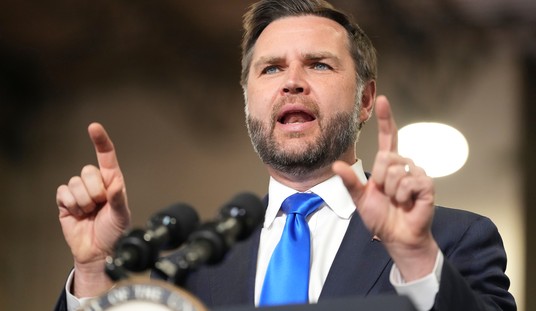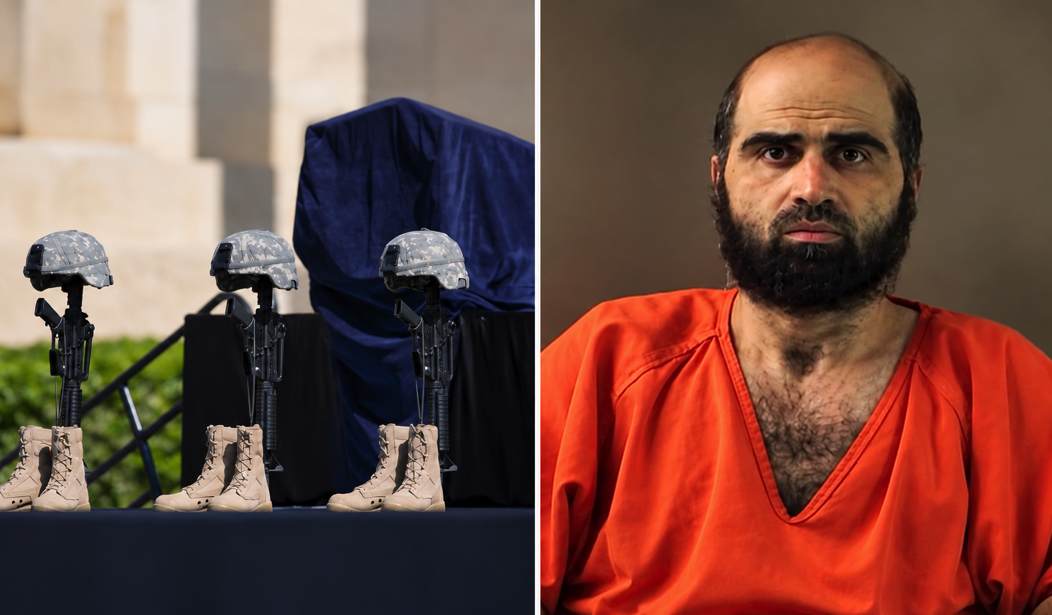

President Donald Trump was absolutely right to cancel livestreaming the upcoming execution of the Fort Hood shooter, Nidal Malik Hasan.
Not because there’s anything legally or morally wrong with the military execution of that Muslim mass murderer of 13 fellow service members, including an expectant mother, and the wounding of 32 others in 2009.
Not because anyone fears that the video images of Hasan’s death would incite militant Muslims around the world. They’ve been incited by their religion's leaders to commit both minor and mass murder against infidels for a lot longer than the 56-year-old shooter has been alive.
And you don’t need a prediction-market wager to know that such senseless killings and terrorism by religious extremists will continue long after he's been terminated. Eliminating nonbelievers is their nonnegotiable mantra.
Hasan, who was partially paralyzed by gunfire during the response to his killing spree, definitely deserves to die. And he will shortly after noon on Dec. 3 by gunfire without mercy at the very same central Texas Army base where he shot his defenseless, unarmed colleagues, also without mercy.
We don't really need to see the execution, as long as Hasan ends up very dead. We never saw a photo of the deceased Osama bin Laden to prove his demise. Had to take the word of Barack "You Can Keep Your Health Plan" Obama word for it, always a big ask.
Supreme Court decisions in the 1970s first halted, then limited capital punishment when it was reinstituted by states. Twenty-seven states, the military, and the federal government currently permit executions, though not all use it. President Biden, or his aides using the autopen, commuted to life in prison almost all 40 people on the federal Death Row.
The number of U.S. executions has ranged widely this century from 85 in 2000 to 11 in 2020, 47 last year, and 31 so far this year.
Controversy always surrounds them in modern times. However, a general consensus has emerged that the homicides by some criminals are so profane and brutal that they have forfeited the right to live in our civil society, even in prison.
Mass murderers are in that category, in my opinion. The operational mastermind of 9/11, Khalid Sheikh Mohammed, and three accomplices are finally scheduled to go on trial in mid-2028.
I agree that Trump was right to cancel the livestreaming of Hasan’s end-of-life experience for one very simple reason: The globally streamed live video of a military firing squad executing a man in a wheelchair would totally distract attention from the apt lethal justice being administered to the man who gave his victims none. Trump’s instincts were correct; it’s just smart PR.
“He will die, as scheduled, by firing squad,” the president said, “but this event won’t be streamed.” Only immediate families of the victims will view the event in person, if they choose.
The same rules applied to the 2001 federal execution of Timothy McVeigh for the 1995 Oklahoma City bombing; 200 relatives of the 167 victims were present.
Witnessing an execution of murderers in person, which I’ve done twice, is a somber affair. But if you know the specific, grisly reasons, it's not disturbing at all. I found the more profound impact was witnessing the silent closure for the victim’s survivors and some sense of justice for the rest of us in the larger, law-abiding society that too often sees no consequences for wrongdoing.
For those opponents of capital punishment who argue that the death penalty is not a deterrent to homicide, I would argue neither is prison. Execution, however, certainly deters that potential repeat offender.
Hasan’s case does raise questions. How did someone so fundamentally unbalanced rise to become an Army major? As often happens with mass shooters, there were warning signs, not acted upon.
Why has the sentence taken so long to carry out? I would suspect Democrat presidents.
Speaking of delayed justice, the 9/11 plotters have been in Guantanamo Bay since 2006. The Biden administration negotiated a plea deal for life in prison, which Trump officials discarded.
And — are you sitting down? – how did an American-born Muslim like Hasan, with deep professed concerns about his country's response to 9/11, become a military psychiatrist counseling fellow soldiers? An assignment that ridiculous smells of DEI.
At his military tribunal, Hasan said he felt that the U.S. military, which he had voluntarily joined, was at war with Islam. If recollection serves, it was the other way around on 9/11, the Beirut barracks bombing, the Cole attack, and so many other instances of lethal violence against non-Muslims.
Hasan also claims, without evidence, to have been mocked for his Muslim religion of peace after 9/11. And there’s a police record of his Honda being vandalized near the Texas apartment he rented. Not exactly issues, if true, that could justify mass murder.
A Pew poll last summer found 68 percent of Americans say capital punishment is morally justified for murder.
Some still profess opposition. And last month’s botched execution of Christa Pike in Tennessee may contribute. Pike was convicted of luring a classmate into the woods in 1995 and, with her boyfriend, torturing and killing her.
Two lethal doses of chemicals failed to kill Pike. For unexplained reasons, she was then nursed back to health.
The Supreme Court has ruled that execution is not inherently unconstitutional under the Eighth Amendment prohibiting cruel and unusual punishment.
But the court has placed some limits on its application, such as juveniles under 18 at the time of the crime.
I became intrigued by the death-penalty issue some years ago as a newspaper correspondent covering national issues. I wondered why so many death sentences took so long to carry out.
The reasons, I discovered, included governors reluctant to schedule them and lengthy legal appeals carried up the tiers of courts, resolved, only to be followed by additional lengthy appeals using the same delaying strategy. They were designed to raise prosecution costs to prohibitive levels and to stall, hoping for new laws.
In one Montana case, the man accused of kidnapping and killing a young Lana Harding was Duncan McKenzie Jr. She was seized around midnight from her one-room schoolhouse near Conrad, taken to an isolated farm, raped, sodomized, and beaten with a heavy metal object.
A sheriff's deputy and his tracker dog found Harding's body draped over a piece of farm equipment. The top of her head was missing. Her body was frozen. I saw the photos.
That was January 1974. I interviewed McKenzie on Death Row in 1990 through bulletproof glass and a phone. Despite overwhelming evidence, he maintained his innocence.
''Living with a death sentence is just a state of mind,'' McKenzie told me, ''I take one day at a time.'' He had air conditioning, cable TV, and three squares a day.
We were sitting 50 paces from where his life would end five years later.
One of the numerous lawyers during the many years of his legal appeals described to me how each successive lawyer would insert mistakes in their defense presentations to provide grounds for the next legal appeal.
He said accepting the judge’s assignment to defend the teacher-killer basically ruined his career. His law practice collapsed. He received threats. Friends would no longer sit with him at the café. When a national nonprofit took over the defense, the lawyer locked up his office and walked away. Eight years later, his McKenzie files still sat on his desk, covered in dust.
The editorial board of my employer, The New York Times, had long opposed all capital punishment. My newsroom editors, however, had expressed no concerns to me. The lengthy story was published on an inside page on a summer Saturday later that year.
But that wasn’t the end. McKenzie’s serial court pleas were finally denied years later, after two decades, and an execution date was set. McKenzie had 21 years of legal appeals, almost as long as the entire life of the young woman he tortured and murdered.
It would be Montana’s initial execution by lethal injection and its first death penalty since 1943, when the method was hanging.
As it happened, at the time of the execution, I was executive assistant to the governor of Montana. After meeting personally with McKenzie in prison, the governor denied the clemency appeal and designated me as his official witness.
On the appointed day near midnight, McKenzie was strapped to a gurney at one end of a modified mobile home without interior walls. Several intravenous tubes ran into his arms.
Seated at his feet were about three dozen witnesses, including the county sheriff and prosecutor, three media people drawn by lot, and Lana Harding’s mother. Her father, who was never the same after the killing, had passed away.
All had been warned that any outbursts or remarks would cause ejection. There were none.
A priest offered to say a prayer, which McKenzie rejected. Prison officials had granted a last wish to listen to his Marty Robbins music tape on a prison recorder's earphones.
After a last-minute phone check with the governor, the Proceed signal was given. The lethal injection, which would halt his heart, began from a separate room behind a one-way window. The room was completely silent.
About three minutes in, the convict coughed.
After seven minutes, a doctor checked for a heartbeat. He nodded to prison officials.
Without speaking, the living left the trailer. After conferring by phone with the governor, I conducted a lengthy briefing for the large crowd of regional media.
No one would claim McKenzie's corpse. It was cremated and the ashes disposed of.
Years later, newly refined DNA technology connected McKenzie to the previously unsolved murder of a teenage Idaho girl.