
Farming is probably the world's oldest organized business model. The rise of agriculture gave rise to the first real divisions of labor, the first local and regional governments. It made possible the rise of towns and cities, the first tradesmen who, freed of the necessity to work in the fields to feed themselves, were able to develop and pass on other skills. The Agricultural Revolution probably gave rise to the first written languages, the first forays into mathematics, all to keep records of what was grown and what it was traded for.
In other words, agriculture, farming, was the first step towards modern civilization, and it's still essential today. I don't just write this as the son and grandson of farmers, either. We all still have to eat, and we are all dependent on farmers, and on the various, almost completely diesel-fueled systems to transport that food to us. It is a complex web we weave, with inputs including electricity, fertilizer, diesel fuel, and a lot of plain old work, and outputs including a well-fed population in a modern, high-tech society.
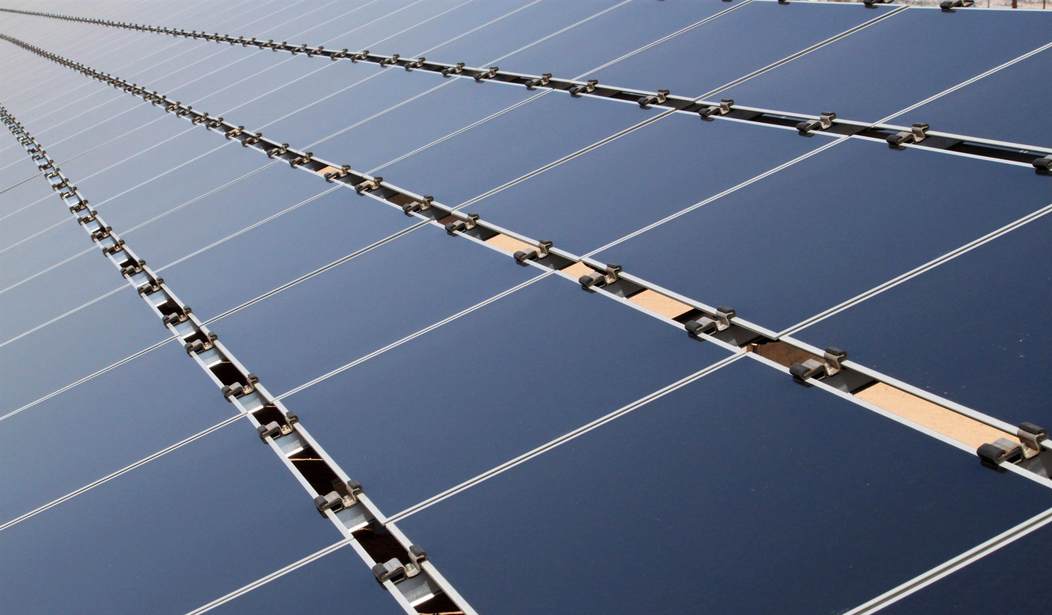
In the U.K., agriculture has been, throughout the history of that island nation, a vital occupation. An island nation that doesn't grow at least some of its own food is vulnerable. But that's precisely the direction the U.K. is going. The latest such policy that is slamming a door on British agriculture involves oppressive inheritance taxes, that are leading some farmers to give up farming and allow their land to be covered with solar panels. They are, in effect, trading food production for charging smartphones.
Charles Goadby, 48, began farming aged 11.
He spent thousands of hours in his youth working with his family on their farm near Nuneaton, Warwickshire, after school, at weekends and during the holidays.
Often unpaid – or for a small amount of pocket money – Goadby gladly did the work, helping the business prosper and building up a wealth of experience alongside his brothers.
But decades on, he says, the family farm has been forced to lease land to a renewable energy company just to prop up food production.
Think on that for a moment. A British farmer is turning productive farmland over to a green energy boondoggle: Solar panels. Now, to an extent, this is understandable; farming is too often as "steak yesterday and steak tomorrow, but never steak today" enterprise. It's a lot of work for, all too often, little reward. And these farmers are being promised quite a bit for turning over their cropland for solar farms.
But this policy, replacing not only traditional energy sources but productive farmland for a low-density, unreliable energy source, solar power, this has the potential to be outright self-destructive. We might note that farmland not only produces food, but the fields and the forests and meadows on the margins also provide vital wildlife habitat. This, too, is being sacrificed in the name of "green energy."
Proposals for a solar development are making their way through the planning process, which will take up a significant portion of the business’s agricultural land.
It is a decision that leaves the family conflicted.
“In principle, I’m dead set against it,” Goadby says. “I think everyone in the family is too.
“But we’ve gone ahead with it because it’s just cash flow that we’re desperate for.
“Unfortunately, we’ll be making 10 times the amount I would from producing food, which is absolutely ridiculous that we prioritise charging smartphones over being able to feed ourselves as a nation.”
There's another perverse incentive for the farmers in this matter: The U.K.'s onerous inheritance taxes.
In April, agricultural property relief was capped by Labour. It marked the first time that farmers would pay inheritance tax on their land in decades.
Initially, the Government announced that the new tax would apply to all pasture and property above the value of £1m.
After a public backlash and extensive campaigning, Labour raised the threshold to £2.5m for individuals and £5m for couples just months before the policy came into force.
But for Goadby, even the altered measures still risk a substantial bill. The value of the land set to become a solar farm will increase sharply, meaning that the family’s farm faces a steeper inheritance tax fee.
Farmers and, indeed, lots of rural dwellers, are often land-rich but cash-poor. We see it here in the United States, too; a farmer may own hundreds of acres of farmland worth a million dollars or more, but have a very modest actual income. The incentive, then, becomes to either convert that farmland to some other use, such as the aforementioned solar panels, or to give it up and parcel it out for development. We are seeing this in Britain, and we are seeing it in the United States. In the 30 years we lived in Colorado, we spent a lot of time mooching around in the mountains, and it seemed scarcely a year went by when we didn't see another old family ranch being broken up into 45-acre "ranchettes."
In both the Great War and in World War II, Germany tried to throw a naval blockade around the British Isles, one of the goals of which was to starve the UK into submission. In both of those conflicts, British farmers stepped up, and if things got lean — and they did — at least the British people were fed. But now?
The U.K. can't afford to lose its agricultural sector. People will always have to eat, and these policies, these taxes and these "green energy" boondoggles, are political malpractice of the first water. They may well kill British agriculture, and if the day comes when another hostile nation tried to starve Britain, they may well succeed.
But at least the UK people can take comfort, as they starve, in knowing that their nation's carbon footprint has been lowered.