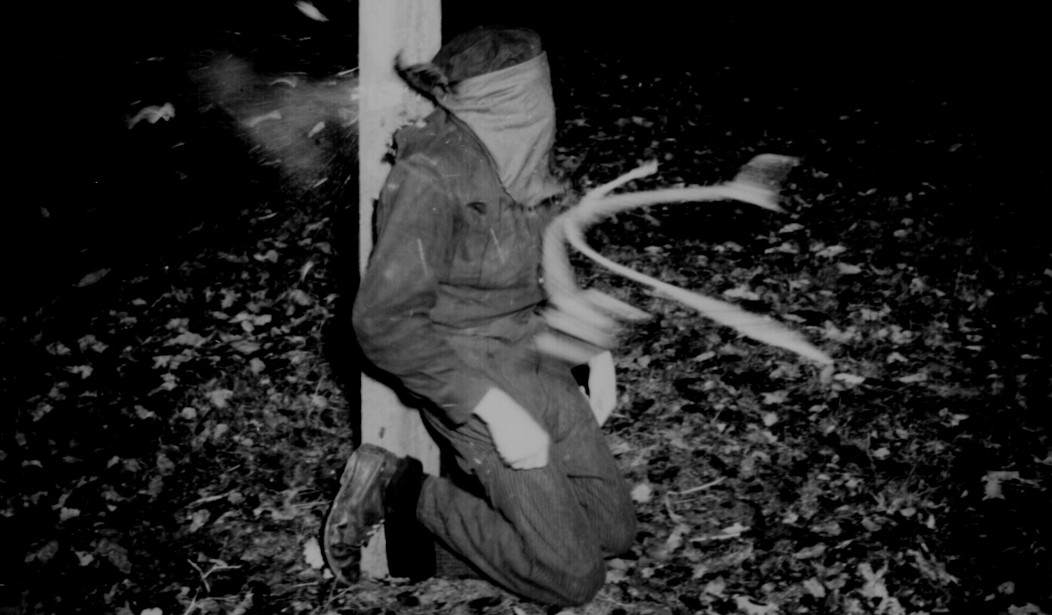

It's official. Nidal Hasan, the convicted murderer of 13 of his fellow soldiers, one of whom was a pregnant woman who, in her last moments, begged not for her life but for her baby, will be put to death by firing squad. He was convicted in a military court-martial, and duly sentenced to this ultimate penalty.
The event was, according to the original reports from the Department of War, going to be livestreamed. In addition to the usual suspects' bleating about the death penalty, even when applied to the most heinous of criminals, like Nidal Hasan, the live-streaming aspect of this raised even more controversy, and there's an argument to be made that a public execution is anathema to a civilized society.
I'm not too sure I buy that. But whatever the argument, President Trump has put a kibosh, not on the execution, which will proceed, but on the live-streaming. Family members of the victims may attend and watch, but this execution will not be televised. RedState's own Rusty Weiss covered the president's announcement of the decision on Thursday. Rusty writes:
The execution itself will proceed as planned.
"He will die, as scheduled, by firing squad, but this event will not be streamed," said Trump. "That said, the execution may be viewed in person by the immediate families of the victims, if they so choose. They deserve to witness JUSTICE!"
An Associated Press account notes what they claim are some of the reasons behind the Pentagon's initial decision to make the execution public.
The announcement earlier this month from Defense Secretary Pete Hegseth that Hasan’s execution would be public — and subsequent confirmation from the Pentagon that it would be livestreamed — prompted significant blowback from both Republicans and Democrats, with many pointing out that the images could be used to fuel radicalization.
Pentagon chief spokesperson Sean Parnell said Trump and Hegseth discussed the decision to drop the livestream plans before the president’s announcement on social media.
“The Secretary supports the President’s decision, and they are completely aligned,” Parnell said.
So, the administration is now, after the president's order, of one mind on this. Plenty of good people on both sides (hah) of the death penalty debate have moral concerns about live-streaming an execution. I don't share those concerns, and I'll get into that here in a moment, but plenty of people have them, and some of those people would seem to have gained the president's attention. That's fine; that's how these things work, President Trump made his decision, he issued an order, and that's that.
But for those complaining that a public execution is not the mark of a civilized society, we should ask ourselves, how long has that really been the case?
The last public execution in the United States took place on August 12, 1936, on Owensboro, Kentucky, when one Rainey Bethea, who had been convicted of rape and murder, was put to death by hanging. Since then, the United States and the various state governments have still employed the death penalty, and it's generally the practice to let family members of the victims to attend. But through much of the nation's history, public executions were routine. That started to change in the mid- to late 19th century, but slowly, and in the late 19th century, public hangings were still widespread spectacles, especially in the rough-and-tumble American West. Numbers aren't readily available, but if you were convicted of murder in the late 1800s, a public hanging was very likely to be your sentence, with the crowd enjoying snacks and souvenirs available from enterprising vendors.
There are, like any such issues, pros and cons.
Pro: Public executions send a very clear message: Commit a capital crime, and you face a noose, an electric chair, or you get to look at a bunch of rifles from the wrong side. That's a loud and clear message, although, there's little evidence to be had that this had much of an impact on crime rates. There is, however, the other message: To the general public, seeing justice and, yes, retribution done. And we shouldn't casually dismiss the value of visible retribution, or revenge, if you like, in these matters. That is one of the reasons, if an unspoken one, that family members are allowed to attend executions: To see justice done, and to see the criminal pay with his life.
Con: We are a civilized, modern nation. Some things, the argument goes, should not be public. It's enough to announce the results.
Is it, though? I'm not so sure.
This was President Trump's decision to make. He made it. But as a former service member myself, and I suspect many of the veterans who followed the case of Nidal Hasan with horror at his unspeakable treachery, I would have watched the absolute daylights out of Nidal Hasan's execution, with grim satisfaction at seeing justice visibly and finally done. That's it. That's all.
And, as for the impact on Hasan's fellow jihadis: Earlier, on this topic, I wrote:
And, finally, some people arguing against this execution will make the argument that by killing Nidal Hasan, we, the United States, are making him a martyr for his jihadi cause. Fine, fine. You know what all martyrs have in common?
They're dead.
I stand by that. On December 3, Nidal Hasan will face his fate. And that's good enough.