






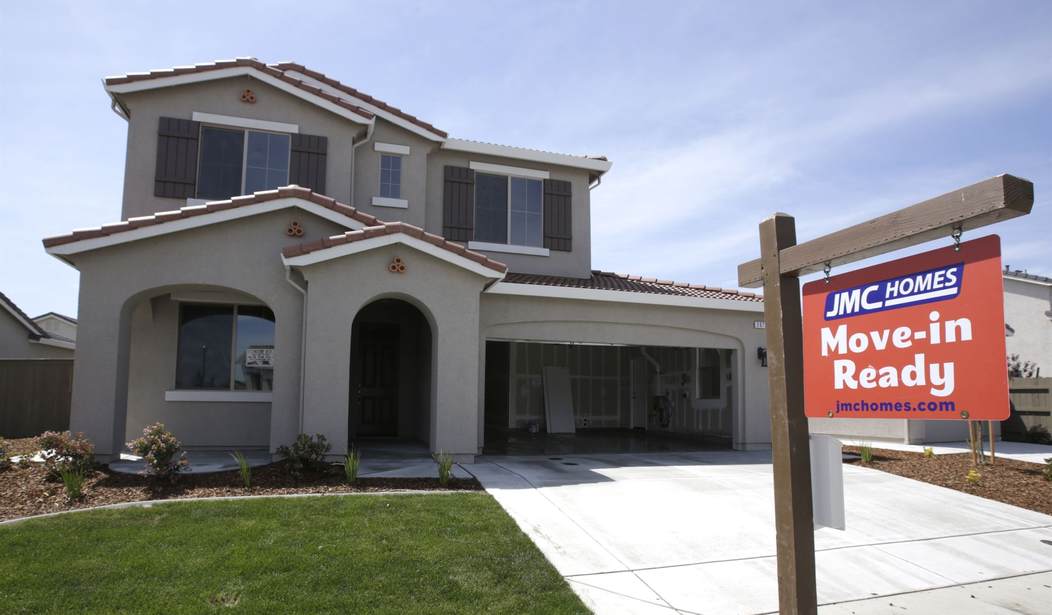
Supply and demand applies, as it does in all things, to real estate. If there is an increase in the supply of homes, all else being equal, there will be a concomitant decrease in price. That's Economics 101 right there. What's interesting about that, with respect to real estate, is that two generations who, right now, own a lot of houses, are the Silent Generation, and the Baby Boomers. The Silent Generation are those people who were around for World War II but too young to have served (born 1928-1945) while the Boomers, including this writer, are the 1946-1964 crowd.
So here's the question: What happens to all the real estate owned by these two generations as that pig works its way down the demographic python? Will there be a housing glut that could really help young people afford a home of their own? Turns out, it might not help as much as we may like to think.
America's housing sector is set to see nearly 14 million homes belonging to members of the baby boomer and Silent generations be released to the market over the next decade – though it may not directly lead to an influx of starter home listings, according to a new report.
An analysis by Realtor.com found that 13.9 million homes are currently owned and occupied by baby boomers and members of the Silent Generation, which are likely to be released to the housing market between 2026 and 2036.
That figure represents an increase of 33.7%, or 3.5 million homes, when compared with the prior decade's pace for older households; or an increase of 74% or 5.9 million homes over what baby boomer and Silent Generation households handed off in the last decade.
There's just one catch (there's always a catch): Starter homes.
However, the influx of homes being released onto the market over the next decade will have a relatively minor impact on the supply of starter homes with two or fewer bedrooms – as a high retention rate for homes in that category means just 0.38 million are expected to be released over the next decade.
Ay, that's the rub. Suburban neighborhoods used to abound with small, two to three bedroom, one-bathroom homes. They sold cheap, were simple and easy to maintain, and were great for young couples starting out. And, many of the Silent Generation types and we Boomers started thus, with a small house suitable for a young couple with a couple of small kids.
Thing is, we traded up. The Greatest Generation (the World War II crowd) often stayed in one home for most of their lives, but we Boomers in particular traded up, recognizing the American dream wasn't just owning a home, but owning a bigger, shinier home, with more bedrooms, more bathrooms, a den, a two-car garage. Starting in the 80s and 90s, when you drove through a major city, the construction you saw took, broadly, two forms: Apartment buildings or condos, and big, expansive, expensive houses.
Now, these bigger, fancier homes are likely to see more impact from this than starter homes. Why? Because there are more of them, but mostly because they will be vacated, not by people moving up, but by people moving in with kids, or into a care center — or into the cemetery. But that won't do the kids starting out in the world much good. Building more starter homes, that remains, as it has been, the needful task.
Editor’s Note: Thanks to President Trump’s leadership and bold policies, America’s economy is back on track.
Help us continue to report on the president’s successes and combat the Democrats' lies about America's economic revival. Join RedState VIP and use promo code FIGHT to receive 60% off your membership.


Join the Conversation
VIP members get the ability to comment on articles.