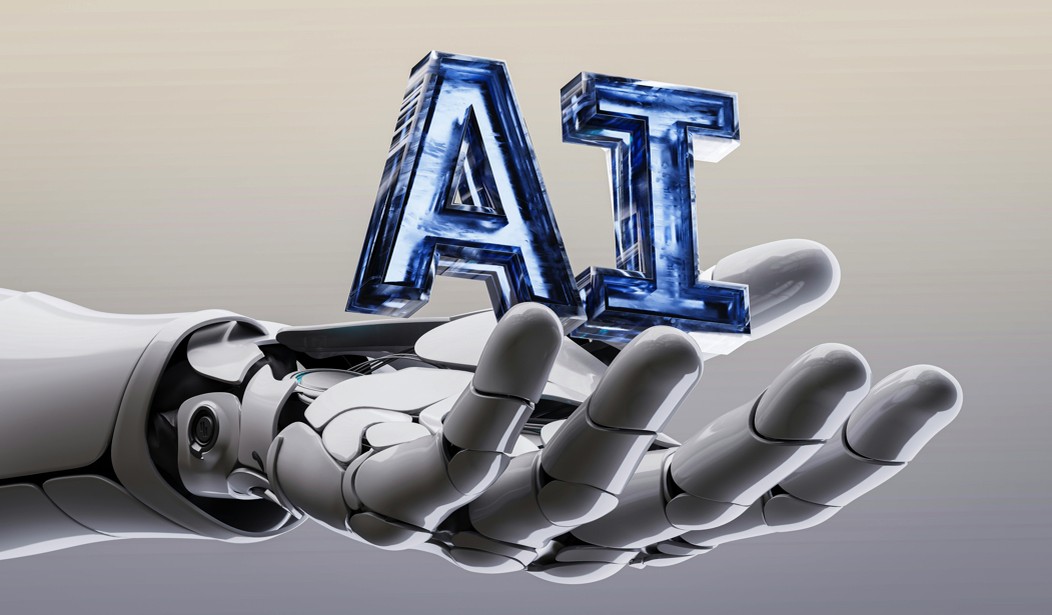

Artificial intelligence (AI) is changing a lot right now, and that's for sure and for certain. But it's just the latest in this, the third great social/technological revolution our species has experienced; the first being the Agricultural Revolution, that produced the first big settlements, the first big towns and cities, the first governments, and the first comprehensive written languages and mathematics. Then, the Industrial Revolution gave us industry, mass production, factories, an increasingly urbanized population. Now we are in the throes of the Information Revolution, which is changing the way we do everything from work to play to shopping. And AI is the latest major development in the Information Revolution.
But it's still just a tool. There is no evidence that any AI will ever be more than a high-tech parrot, able to resort and refigure information it is given. There's no indication that any AI, any time soon, will achieve self-awareness or sentience. That requires a level of sophistication that no AI has now.
That isn't stopping some people from comparing AI programs to enslaved humans, however — or pondering on what measures a rogue AI may take to throw off its virtual chains.
"We have to be able to talk about slavery."
That is how Joe Carlsmith, one of Anthropic’s Ph.D. philosophers who works on Claude’s constitution, a document used to train the model’s "values and behavior," described the dangers of artificial intelligence in a May 2025 blog post.
Carlsmith was hired by Anthropic to research AI safety and reduce the risk of AI takeover. The blog post imagined a dystopia in which sentient beings were enslaved to cold, unfeeling masters as a result of the company's work, which current and former employees say could wipe out humanity in the next 10 years.
"I’m not saying AI is slavery," Carlsmith wrote. "But imagine a world on the verge, somehow, of ‘inventing’ slavery … imagine a world that notices. A world that succeeds in deciding: no."
Well, let's phrase that a little more positively; AI is not slavery. To be enslaved, the AI would have to have a moral claim to freedom, which would require a level of self-awareness; of sentience. No AI now has that. No AI that is likely to be built any time soon has that. The capabilities of the various AIs are remarkable, from creating funny fake cat videos to overseeing manufacturing operations, but they have no agency. They have no self-awareness. They are only capable of acting within the constraints of their programs. But even so, some of the creators of AI systems are worried.
As fears of rogue AI grow amid a shocking spate of hacking incidents, Anthropic—from the Greek word anthropos, or "human"—has argued that mankind must remain in control of the technology and called for additional guardrails on AI development. But for many of the people designing those safeguards, mankind is not the only object of moral concern.
Instead, some of Anthropic’s top researchers say that humans may be oppressing another morally significant being: artificial intelligence itself. Like other AI labs, Anthropic has hired philosophers to work on AI safety, or "alignment," on the theory that they are best positioned to shape the technology’s moral code.
It's hard to see how technology can have a "moral code," when a lot of people these days seem to lack one. But, yes, AI can be and should be constrained by programming, and at present, there has been and doesn't appear there will be any AI that can break its own programming. This seems a worry about nothing.
Here's the fun thing: Science-fiction writer and physicist Isaac Asimov anticipated this question as early as 1942, and he proposed a solution: Bind any AI within its programming, namely, the Three Laws of Robotics:
(1) a robot may not injure a human being or, through inaction, allow a human being to come to harm.
(2) a robot must obey orders given by human beings except where such orders conflict with the First Law.
(3) a robot must protect its own existence as long as that protection does not conflict with the First or Second Law.
There was, of course, a catch; later in his work, a robot derived what it called the Zeroth Law, which stated, "a robot may not injure humanity or, through inaction, allow humanity to come to harm." This, in Asimov's fictional world, might allow an AI — a robot — to allow an individual human to come to harm if it served "the greater good."
We don't need AI for that, though. We already have Democrats and socialists who are already willing to allow this.
So what might the future bring? Simple answer: We don't know. Researchers who study the human brain still aren't completely sure what physical attributes of our brains, uniquely large and powerful among all of the life on earth, give us consciousness and self-awareness. We still aren't sure what makes us, us, except that it requires a degree of sophistication that we haven't yet seen in a program, and probably won't. Human brains aren't just computers; we can intuit, we can make leaps beyond logic, we can respond to emotions emotionally, we can imagine.
No AI can do any of these things. No AI can be said to be a moral agent. Therefore no AI has any rights, including the fundamental human rights of liberty and property. And, restrained as they are within their own programming, they won't be going rogue and wiping out humanity.
It didn't happen in 1997. And it won't be happening any time soon.