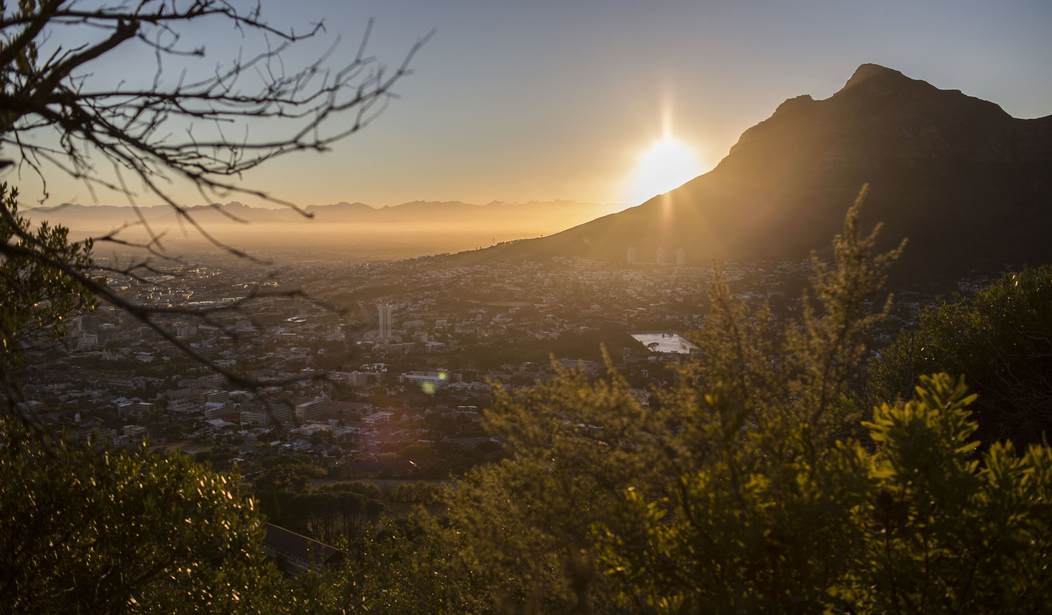

Africa is a vast place, beyond the imagining of many of us. It's a place with many different climates and ecosystems, from desert to rainforest, and many different peoples, from Cape Town to the mouth of the Nile, from Dakar to Djibouti.
It's also a place where many of the local people are struggling to escape the grinding poverty that has been their lot for a few thousand years. Many people in Africa are subsistence farmers and herdsmen still, even now, even in that huge continent with enormous resources. That's too bad, but while well-meaning but ill-informed Western activists interfere by insisting on applying liberal thinking to people trying to rise out of the Stone Age, these same people are still relying on ancient ways of thinking, like employing magical rainmakers.
Now, the two have combined; a recent piece in the Africa News reports that these magical rainmakers are themselves facing hard times, due to climate change.
For generations, communities across Africa have revered spiritual leaders known as “rainmakers,” who perform rituals to call for rain.
The role is often passed down through generations, with the rainmaking spirit believed to enter members of particular clans.
But with increasingly erratic weather, the rainmakers are becoming victims of their own reputation.
Across parts of sub-Saharan Africa, farmers who depend on rainfall for their livelihoods are placing enormous expectations on those believed to have the power to summon it.
And when the rain fails to come, some rainmakers are paying the ultimate price.
The price for failure is indeed steep: Stoning, live burial, or any number of other ways for the rainmaker to meet a premature end when his magical efforts come to nothing. But here's where this piece goes a little bit off the rails: Now, it seems, these rainmakers, who of course cannot influence the weather one way or another, are being challenged by — you guessed it - climate change.
Droughts and unpredictable rainfall are destroying crops and livelihoods, while rainmakers are increasingly blamed for their inability to deliver the rain communities expect.
The rainmakers themselves insist their powers come from above and are genuine.
“I got powers to make rain. I use herbs to perform rain rituals that can make me call rain or stop rain from raining,” says rainmaker Kilindon Simiyu.
Ugandan rainmakers have not faced the killings reported in South Sudan, but some have been assaulted or reported to authorities for allegedly taking money under false pretenses.
Those seeking their services are expected to pay a fee — sometimes as little as $13, and in some cases as much as $260.
That was the amount rainmaker David Nabutsilili was reportedly paid to prevent rain during President Yoweri Museveni’s campaign visit to the area last year.
It did not rain that day.
Here's the thing: This is, in effect, magical thinking all the way down. None of this is based on facts or science; these rainmakers have no magical powers, nothing has come to them from above or anywhere else, and they have no powers to make rain; herbs and rain rituals do not affect the weather. Killing these people when they fail to make rain is little more than savagery, although there's an argument to be made for some kind of recompense for the poor and uneducated people who paid these rainmakers in what is essentially a fraud scheme. But belief in these people is as widespread, and just as logical, as Western climate scolds' belief in the need to back away from the Western world's technological lifestyles in the name of anthropogenic climate change. In that, the two groups are much alike; uninformed by facts, and to some degree at least, engaged in magical thinking.
In Africa, the belief in these rainmakers remains widespread, even if the weather proves them wrong over and over.
“These people, to some extent, they help us,” says Namisindwa local, Isaac Watenga. “Like now, we are having a lot of drought. But these people are at least trying, because if you compare this area with other parts, however much rain is not there, they can try to some extent. You see some drops dropping that support our crops.”
Nabutsilili, who walks barefoot wherever he goes, is regarded by many as particularly powerful. He is said to be able to summon rain without even travelling to the waterfall where other rainmakers perform their rituals.
They try? Maybe they do. But facts are stubborn things, and the facts are these: Their efforts are ineffective. They cannot influence the weather. They simply can't. They could not do so before the current Western hand-wringing about climate change, and they cannot now.
These are facts.
Africa, at present and throughout history, has been troubled with drought. But the wringing of hands over the fate of native rainmakers isn't the answer. The people of sub-Saharan Africa would be far better off drilling wells, building reservoirs and desalination plants, and it would serve them better if the Westerners who wish to help them would stop squawking about climate change and help the governments and peoples of these nations to build the infrastructure to provide reliable electricity to all of the people who need it. Reliable electrification, along with some wells and reservoirs, would do far more to help lift much of Africa out of the Third World than anything else. And while we're at it, let's convince these poor people that they shouldn't be paying these "rainmakers" who are little more than witch doctors.
This seems appropriate.