








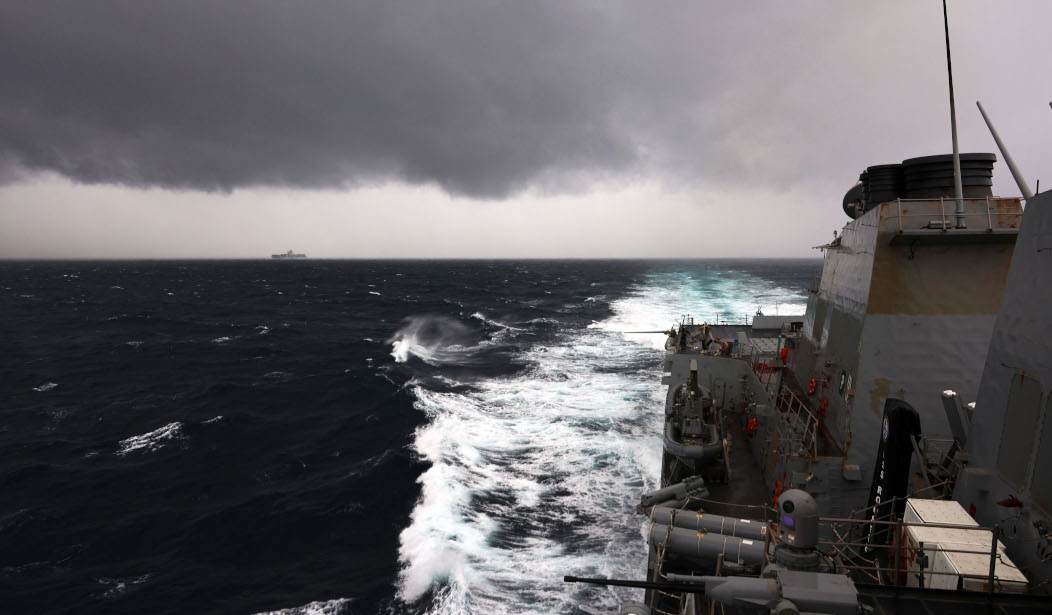
Rhetoric between the United States and Iran on the Strait of Hormuz is beginning to resemble a championship game of ping-pong, with both sides volleying claims back and forth. In one of the latest, on Sunday, the United States Central Command (CENTCOM), which has control over Middle East operations, released a broadside on X, declaring the Strait of Hormuz open despite Iran's claims.
The Strait of Hormuz is open to all vessels seeking to lawfully transit the international waterway. U.S. forces are positioned and prepared to ensure that freedom of navigation remains available despite unwarranted Iranian aggression, harassment, threats, and arbitrary… pic.twitter.com/FS3TUBOZEj
— U.S. Central Command (@CENTCOM) July 12, 2026
The post states:
The Strait of Hormuz is open to all vessels seeking to lawfully transit the international waterway. U.S. forces are positioned and prepared to ensure that freedom of navigation remains available despite unwarranted Iranian aggression, harassment, threats, and arbitrary declarations. Iran does not control the strait. Traffic is flowing.
The graphic accompanying the post states that Iran does not control the Strait, it being an international waterway, and claims that 800+ ships and 400+ million barrels of crude oil have transited the Strait of Hormuz over the last two months, with 140+ of those ships in the last seven days.
Trump Admin Gives Iran a Saturday Deadline: Admit the Strait Is Open or Face the Consequences
This announcement comes on the heels of the third night of operations by U.S. forces continuing to degrade Iran's capabilities in and around the Strait of Hormuz, as CENTCOM detailed in a press release on Saturday.
U.S. forces hit approximately 140 Iranian military targets with precision munitions launched by land- and sea-based fighter aircraft, drones, and naval vessels. Targets included Iranian missile and drone sites, naval capabilities, ammunition storage facilities, communication networks, and coastal surveillance locations.
During three nights of strikes this week, CENTCOM has struck more than 300 targets at the direction of the Commander in Chief to degrade Iran’s ability to attack civilian mariners and commercial vessels freely transiting the strait. Commercial vessel transits through the vital international maritime corridor continue.
Iran is still frothing at the mouth over the Strait of Hormuz, and the Strait does remain a tight strategic bottleneck for shipping in the area. About 20 percent of all the oil traded by sea passes through this bottleneck. And, we might note, since the end of World War II, the United States Navy has been the guarantor of the safety and free passage in the world's shipping lanes, taking on the job previously done by the British Royal Navy and enforcing a Pax Americana on the world's sea lanes. It's not unreasonable to see the enforcement actions by CENTCOM against Iran, where the Strait of Hormuz is concerned, as an extension of that policy.
Iran's Speaker of Parliament (They have that? Who knew?) reportedly issued a predictable and toothless threat:
Iran's main negotiator and speaker of parliament, Mohammad Bagher Ghalibaf, said that "the era of one-sided deals is over".
"We told you: keep your word or pay the price. Reality is knocking," he said in a post on X.
Reality is indeed knocking on Iran's door. They can't keep this up forever.
Editor's Note: For decades, former presidents have been all talk and no action. Now, Donald Trump is eliminating the threat from Iran once and for all.
Help us report the truth about the Trump administration's decisive actions to keep Americans safe and bring peace to the world. Join RedState VIP and use promo code FIGHT to get 60% off your VIP membership.



Join the Conversation
VIP members get the ability to comment on articles.