








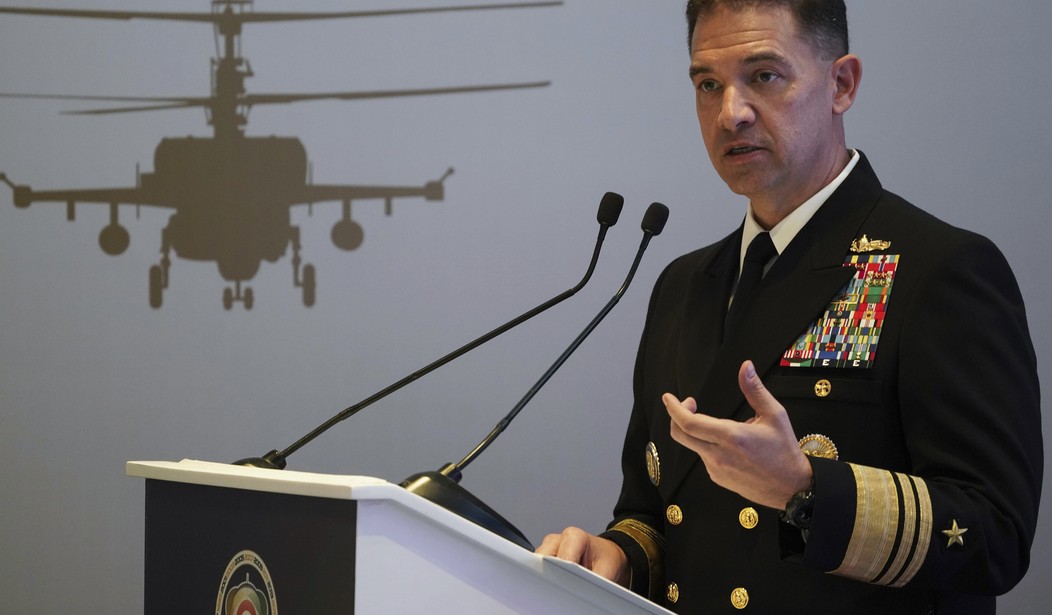
MUSCAT, Oman – Indirect negotiations between the United States and Iran over Tehran's nuclear program concluded without breakthroughs in Oman's capital on Friday, but the inclusion of Adm. Brad Cooper, commander of U.S. Central Command (CENTCOM), marked an unusual military dimension to the diplomatic theater. Mediated by Omani officials, the talks aimed to de-escalate tensions following last year's U.S. strikes on Iranian sites during Operation Midnight Hammer. Ongoing uprisings in Iran that have persisted for nearly 40 days and the regime’s brutal response to those protests led to a spike in tensions, which has calmed in the past week.
The U.S. delegation, led by special envoy Steve Witkoff and including Jared Kushner, met separately with Oman's Foreign Minister Badr al-Busaidi, who shuttled proposals to Iranian Foreign Minister Abbas Araghchi's team. Sources confirmed to RedState that the sessions lasted about 90 minutes in the morning and another in the afternoon, focusing on nuclear enrichment limits, missile programs, and proxy activities. However, as Iranian state media have reported, the talks "ended for now" with no agreements. The results are unsurprising given the known irreconcilables, such as Iran’s missile arsenal, which the regime said is "non-negotiable” in advance of the talks.
Following the Friday session, President Donald Trump described the talks as “very good” and indicated Iran “looks like they want to make a deal very badly.” Iranian Foreign Minister Abbas Araghchi called the discussions a “good start” in a “good atmosphere,” emphasizing they focused solely on the nuclear file and stressing the need to refrain from threats or pressure to build trust, though he reiterated uranium enrichment as an inalienable right and missiles as non-negotiable. On Saturday, Witkoff and Kushner, accompanied by Adm. Brad Cooper, visited the USS Abraham Lincoln carrier strike group in the Arabian Sea to meet with crew members, including a pilot who recently downed an Iranian drone. The visit reinforced the administration's emphasis on military readiness despite the Oman talks.
RELATED: THE ESSEX FILES: Talks With Tehran Require Strength, Not Wishful Thinking
Trump's Armada Advances: Iran Now on Notice for Nuclear Deal
Cooper's presence during the indirect negotiation raised eyebrows and drew sharp criticism from the Iranians.
As CENTCOM head overseeing U.S. military operations in the Middle East, his involvement deviates from prior rounds and suggests the Trump administration is leaning heavily on power projection and military leverage to persuade Iran. An Iranian diplomatic source told Reuters that Cooper's attendance "endangered" the talks, while Iranian lawmaker Ebrahim Rezaei condemned it as a violation of Iran's law designating U.S. forces in the region as terrorists. He posted on X that "One does not negotiate with terrorists."
Andy Alem, founder of The New Persian Times, told RedState he viewed the talks as a futile regime ploy. "This is a desperate attempt by the regime to pull the U.S. back into JCPOA talks that are now completely irrelevant,” Alem said. He doubted that Iran would make serious concessions in line with the U.S. timeline, although he acknowledged that “Operation Midnight Hammer and the latest uprisings that have unfolded over the last forty or so days have changed things.”
In the weeks leading up to the indirect talks in Oman, the United States has dramatically increased its military presence across the Middle East, deploying the USS Abraham Lincoln carrier strike group to the Arabian Sea. Patriot and THAAD missile defense systems, and a surge of fighter jets and support aircraft were also deployed to the Al Udeid base in Qatar. Using a military buildup as a deterrent to showcase strength rather than compromise aligns closely with the tactics of Pete Hegseth’s Department of War. This approach has left many, including Alem, to believe the Iranian regime is cornered and desperate to stave off complete collapse, making the indirect Oman talks a last-ditch bid to buy time amid internal and external pressure.
We won’t have to wait long to find out — the next round of indirect talks between Iran and the U.S. begins this week.
Editor’s Note: Do you enjoy RedState’s conservative reporting that takes on the radical left and woke media? Support our work so that we can continue to bring you the truth.
Join RedState VIP and use the promo code FIGHT to get 60% off your VIP membership!

Join the Conversation
VIP members get the ability to comment on articles.