








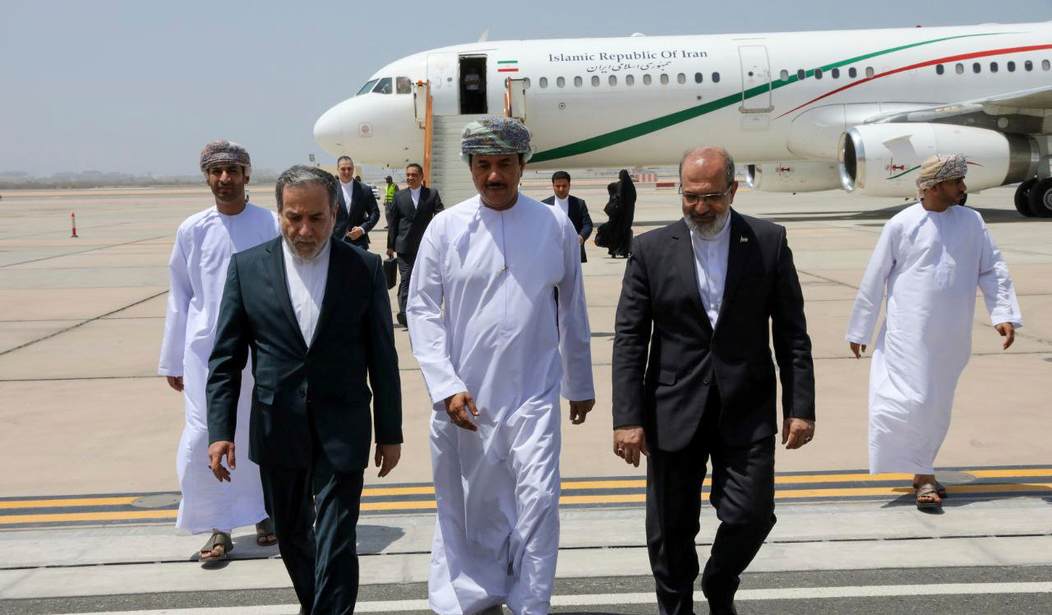
The Biden years taught Tehran one lesson above all others: If you stall long enough and smile for the cameras, Washington will eventually talk itself into calling failure a diplomatic breakthrough. That is the trap the United States must avoid as it reenters nuclear talks with Iran in Muscat.
Foreign Minister Abbas Araghchi described the first meeting with American representatives as a very good start, with both sides pledging to continue discussions focused on nuclear issues. It is a familiar script. Iranian officials praise the tone, hint at progress, then go home to brief leaders who will decide how far to push the standoff without triggering a response they actually fear. The atmospherics always sound encouraging. The record does not.
Another message from Tehran to President @realDonaldTrump
— Mayra Yazdari (@MayraYazdari) February 9, 2026
“Making a deal with this regime, is a betrayal of all those who were killed. Please stop these negotiations.”
06.02.2026#IranRevolution2026 pic.twitter.com/nbiOXjbCJR
The context behind this latest round is not a seminar on conflict resolution. It is a confrontation that followed a June offensive by Israel and the United States against Iranian nuclear sites, after years of Tehran inching closer to weapons capability while insisting its program is peaceful. That strike was a reminder that there is a limit to how much deception and delay the region will tolerate.
Translation:
— Mayank Pandey (@mayank5885) February 8, 2026
Iran won’t quit its nuclear program because “sovereign right,”
won’t blink at troop buildups because “seen this movie before,”
and is “ready for peace” in the same way a boxer is ready for hugs after weigh-in.
Abbas Araghchi basically summed it up:
Talk if you want.…
The current talks include Trump special envoy Steve Witkoff and presidential adviser Jared Kushner, signaling that the White House is not subcontracting security to the usual diplomatic class that keeps promising Iran can be managed with just one more round of concessions. Trump has already backed that message with power, deploying an armada of naval vessels near Iran after warning that any continued march toward a bomb or support for militant proxies would be met with swift and severe action.
The regime has proven it has no intention of honest diplomacy. It is killing people through executions, bullets, torture, and brutal repression — while pretending to talk peace.@POTUS @SecRubio Appeasement only strengthens oppression.#EndIslamicRepublicNow#MIGAwithPahlavi pic.twitter.com/piVmkE46dQ
— S (@SNZ_IRAN) February 6, 2026
Iran understands that language. It also knows when Washington is nervous. Before the Muscat meetings, the United States renewed a security alert urging Americans to leave Iran, even suggesting alternate routes through Armenia and Turkey because of flight cancellations. That is a sober acknowledgment of risk, not an argument for retreat. It underscores why a nuclear Iran is unacceptable. A regime that already forces Americans to calculate escape routes should not be handed more leverage through nuclear brinkmanship.
RELATED: US Blasts Iranian Drone Out of the Sky, Blocks Attempted IRGC Takeover of Oil Tanker
Trump's Armada Advances: Iran Now on Notice for Nuclear Deal
Iran is not going to make a deal it plans to keep. This regime hates the United States. Peace comes when the Iranian people are free. pic.twitter.com/jWdYbWfwp7
— Rep. Don Bacon 🇺🇸✈️🏍️⭐️🎖️ (@RepDonBacon) February 8, 2026
The administration’s message before the talks has been unusually direct. White House Press Secretary Karoline Leavitt reminded Tehran that the president commands the most powerful military in history and has numerous options if Iran miscalculates. For once, the public line from Washington matches the gravity of the situation. Diplomacy backed by real deterrence is not warmongering. It is the only kind of diplomacy that has ever slowed Iran’s ambitions.
Skeptics will argue that any conversation is better than confrontation. That sounds reasonable until you remember how often Tehran has used negotiations as cover for advancing its nuclear program, expanding missile ranges, and arming proxies from Lebanon to Yemen. A process that allows Iran to keep inching forward while Western officials congratulate themselves on their patience is not diplomacy; it is theater.
A serious approach starts with clear terms. Iran must halt enrichment at levels far beyond civilian need, accept intrusive inspections, curb its missile program, and stop underwriting militias that destabilize the region. Any agreement that dodges those questions is an invitation to a larger crisis down the road. Enforcement matters as much as text. Snapback sanctions that are never used are ornaments, not tools.
There is nothing wrong with Araghchi calling the talks a very good start. Diplomats are paid to sound optimistic. The responsibility of an American president is different. Trump’s task is to make sure that the good start is not the end of the hard line. The measure of success is not whether both sides feel heard in Muscat. It is whether Iran leaves the table convinced that there is more to lose by cheating than by complying. That is how you keep the peace in a dangerous neighborhood.
Editor’s Note: Do you enjoy RedState’s conservative reporting that takes on the radical left and woke media? Support our work so that we can continue to bring you the truth.
Join RedState VIP and use the promo code FIGHT to get 60% off your VIP membership!


Join the Conversation
VIP members get the ability to comment on articles.