








The Democrat candidate for U.S. Senate in Texas, James Talarico, has been at it again.
While he was in California fundraising, he did an interview with Jimmy Kimmel. But then Kimmel said that they weren't going to air it on his ABC late night show, but instead, on YouTube.
As we reported, it was the network who decided on where the interview should air, apparently not wanting to have to deal with any questions about the FCC's equal time rules or even have to give Talarico's opponent, Texas Attorney General Ken Paxton, air time should he request it. Even Kimmel essentially acknowledged this:
And so, out of consideration for our local stations, especially our ABC affiliates in Texas, who would have to deal with this nonsense, my interview tomorrow with James Talarico will not air on television. It will be posted on YouTube instead. It will not be on TV.”
But then Talarico claimed the interview had been "banned" and the Trump administration didn't want you to see it. Just a bald-faced lie to drive traffic to the interview that they wouldn't get if he just appeared regularly on Kimmel's show.
Then you had a ton of people on the Left throwing a fit about the supposed "censorship" and asking how it was, then, that Ted Cruz could then appear during a Game Day segment on ESPN.
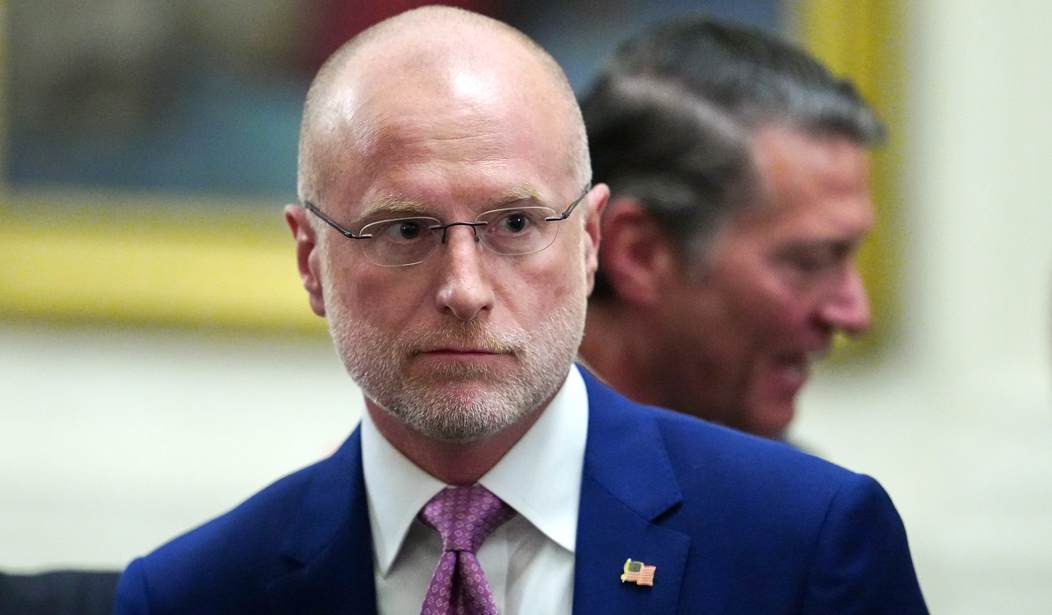
Now the Federal Communications Commission head, Brendan Carr, has weighed in, just decimating the Talarico "hoax." The meme is cute, too.
Ok, fine. I’ll weigh in.
— Brendan Carr (@BrendanCarrFCC) September 13, 2026
1. The Equal Time statute doesn’t apply to GameDay for several reasons.
For one, when it passed the statute, Congress applied it to broadcast tv stations—not cable programs like GameDay.
For another, Congress stated that the statute only applies to… https://t.co/r3KP7RvQL8 pic.twitter.com/m5IbEl8Ngr
First, he pointed out how the Equal Time rule doesn't apply to cable programs like ESPN. Then he noted that it only applies to candidates, and Cruz is not currently running for office.
He made an important point about the rule.
The Equal Time statute does not prohibit anyone from interviewing anyone on broadcast tv. It is about more speech, not less. Congress wanted to ensure that voters would decide elections, not media gatekeepers picking winners and losers by providing preferential airtime to some candidates and not others. Indeed, when the statute applies, it simply requires broadcast stations to offer comparable time and placement. And comparable does not necessarily mean an interview by the same person on the same program either.
Then he nuked Talarico, saying that he was "just running the same hoax he did a few months ago on Colbert for the purpose of getting clicks and donations" and that "he’s banking on people not understanding the statute or operating as partisan lemmings."
Ooh, that burn is going to hurt, but Talarico deserves every bit of it; he's trying to manipulate people.
Then he laid out why broadcasters were different, and how some want to get around the rules that apply to everyone.
But to bring this back to the law, cable shows are different than broadcast programs.
Broadcasters are unique. The FCC gave them free licenses worth many billions of dollars to use a public resource (spectrum). They are given a government sanctioned monopoly on their broadcast frequencies, too. If anyone else wants to use that same public resource (spectrum) for the purpose of expressing their own views, the government will not let them—it will eject anyone else that tries to use a broadcaster’s licensed spectrum.
This means that Americans are subsidizing the distribution of broadcast programs over a public resource to the tune of many billions of dollars. We don’t do that with cable or anything else.
In exchange for that free and exclusive right to use spectrum, broadcasters made a deal with the American people. They agreed to operate, not in their own narrow interests, but in the public interest. There are various rules and policies that they must follow. This sets them apart from newspapers and cable shows and podcasts.
But some broadcasters want to break their deal with the American people. They want to keep their free access to billions of dollars worth of spectrum, of course. They are less eager these days to abide by their public interest obligations.
Yet the Supreme Court has already ruled that holding broadcasters to their public interest obligations is not censorship or any sort of 1A violation.
And Congress has charged the FCC with ensuring that broadcasters meet those public interest obligations, as required by their licenses. The agency should do so.
Bottom line? This was all nonsense for clicks and votes.
Although they said they weren't rating the claim until they got more information, even Snopes pointed out questions about the Talarico spin and a response from the White House.
There is no evidence that the FCC issued a direct threat to Jimmy Kimmel or threatened his network to specifically prevent him from airing an interview with James Talarico, a Texas Democrat running for a U.S. Senate seat [...]
The White House denied that FCC Chairman Brendan Carr had threatened Kimmel and said Kimmel was "play-acting" to create a "false narrative" about the Trump administration's policies. A "Jimmy Kimmel Live!" spokesperson did not immediately return a request for more information.
Davis Ingle, a White House spokesman, said in an email, "Any media outlet blindly amplifying Kimmel's egocentric delusion should insist on proof. Of which they will find none."
Editor’s Note: The 2026 Midterms will determine the fate of President Trump’s America First agenda. Republicans must maintain control of both chambers of Congress.
Help RedState continue to report on the Democrats’ radicalism and inform voters as our nation faces a crossroads. Join RedState VIP and use promo code FIGHT to receive 60% off your membership.

Join the Conversation
VIP members get the ability to comment on articles.