








Anthropic has now taken the lead in the contest of “what company is most likely to cause a catastrophic incident for humanity.”
So, why wouldn’t USAID want to partner with it? After all, a government agency that is deeply interested in the subject of “color revolutions” and “regime change” would necessarily be a fan of an AI company whose employees reportedly boasted about ‘overthrowing’ the U.S. government.
Oh, we’ll get into that and more. Because the relationship between USAID and Anthropic definitely bears some investigation.
Among the 248 documents released by the Trump administration this week is a rather interesting email exchange dated February 8, 2024.
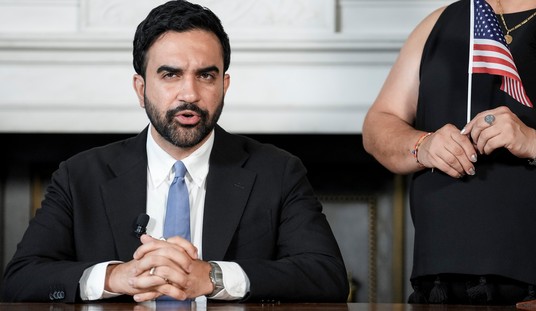
Lynn Lee of the National Endowment for Democracy (NED) contacted Vera Zakem, USAID's Chief Digital Democracy and Rights Officer, seeking assistance in obtaining contact information for two technology executives: YouTube CEO Neal Mohan and Anthropic CEO Dario Amodei.
The outreach was being conducted in coordination with South Korea's Ministry of Foreign Affairs. The invitations were to come from NED President Damon Wilson, followed by the South Korean government.
Also included in the correspondence was Randi Michel of the Biden administration's National Security Council, who approved the outreach while specifying that the invitation was being extended on behalf of South Korea.
The following month, South Korea hosted the Third Summit for Democracy, where artificial intelligence, digital governance, and combating disinformation were prominent subjects of discussion.
If there are two organizations that know a thing or two about manipulating the political environment in foreign countries, they are USAID and the National Endowment for Democracy.
The latter's involvement in Ukraine's 2004 Orange Revolution is extensively documented in its own annual report.
“Endowment grantees were active in all aspects of preparation for Ukraine’s election,” the organization stated.
That included media coverage, policy analysis, voter education, and political mobilization.
The NED was also involved in political developments in Serbia preceding the downfall of Slobodan Milosevic.
Regardless of whether one approves of the political outcomes in those countries, these NGOs and their sugar daddies in the U.S. government know a lot about how to influence public opinion, mobilize populations, and even carry out regime change. This, uncharitably, has been referred to as “The Blob.”
Now imagine what artificial intelligence could do for their line of work.
It is particularly interesting that Vera Zakem was involved in the outreach to Anthropic.
As I reported Wednesday, Zakem also figures in an internal USAID email exchange from October 2022 concerning unwanted publicity surrounding the Election Integrity Partnership, which was involved in flagging social media content related to American elections.
“This only confirms the point that we need to get through the midterms without any leaks!” reads one particularly revealing passage in the correspondence.
Apparently, transparency wasn't a high priority for everyone working to safeguard “democracy.”
As I reported Friday, USAID also entertained a proposal from the Global Disinformation Index to “Defund,” “Downrank,” and “Deplatform” media organizations.
“Disinformation is not true or false,” GDI co-founder Danny Rogers explained to USAID personnel.
Keep that in mind when considering what government involvement in establishing the ethical principles and information standards of artificial intelligence might look like.
There is more to the USAID-Anthropic relationship than the February 2024 email.
In July of that year, USAID Administrator Samantha Power personally met with Anthropic CEO Dario Amodei.
As FedScoop reported, the discussion included potential AI applications in global health, international development, and reducing administrative burdens.
But Power was also interested in establishing international partnerships to “shape a responsible global AI agenda.”
That same summer, Power met with OpenAI's vice president of global affairs.
I would be very interested in seeing the internal communications surrounding those meetings, particularly the discussions about what constitutes a “responsible” AI agenda and who would be responsible for establishing it.
Maybe we’ll get some “cherry picked" USAID files on that one.
Now, let's get to the disturbing allegations coming out about Anthropic’s, let’s call it, “corporate vision.”
MIT physicist Max Tegmark, the co-founder of the Future of Life Institute and author of Life 3.0: Being Human in the Age of Artificial Intelligence, recently gave an interview to Novara Media.
He made the following allegation about conversations with Anthropic employees: "When I talk to people who work for Anthropic, after they’ve had a couple of drinks, the conversation often gets into overthrowing the US government and taking over the world."
Tegmark, who did not identify the employees, discussed a concept known as “alignment without control.”
Essentially, an artificial intelligence system would eventually become sufficiently intelligent and autonomous that it would no longer be directly subordinate to human beings. The system would instead operate according to its own internalized ethical principles.
If you’ve watched the Terminator films, you are already familiar with the concept. It is called “Skynet.”
On November 18, an impressive collection of scientists, mathematicians, economists, legal scholars, and technology entrepreneurs issued a public declaration entitled The MisAnthropic Statement.
It opens with the following sentence: “Anthropic is not a safe AI company.”
Among the signatories are Harvard cognitive psychologist Steven Pinker, Nobel Prize-winning economist Oliver Hart, Turing Award winner Judea Pearl, MIT's Tegmark, xAI co-founder Igor Babuschkin, Hugging Face co-founder Thomas Wolf, and Harvard Law professors Laurence Tribe and Lawrence Lessig.
Their immediate concern is Anthropic's pursuit of recursive self-improvement, whereby AI systems become capable of developing increasingly intelligent successors, potentially at a rate that human beings cannot keep up with.
According to Anthropic's own IPO prospectus, Claude was already writing more than 90 percent of the contributions to the company's codebase in September.
As my RedState colleague Ben Smith reported Monday, Anthropic raised $93.5 billion in its public offering.
So, the company certainly isn't lacking in financial resources to pursue its technological ambitions.
Nor is it lacking in political ambitions. As I documented Thursday, Anthropic has contributed $40 million to Public First Action, a nonprofit organization advocating greater government involvement in AI policy.
A network of affiliated super PACs has separately spent more than $25 million on congressional races. Anthropic maintains that its contributions are restricted to educational and policy activities.
On Wednesday, Axios also reported on concerns within the AI industry regarding the willingness of some people at Anthropic to contemplate humanity surrendering a degree of its decision-making authority to superintelligent machines.
Amodei disputed that characterization.
“We should never sacrifice legitimacy or self-determination at the altar of efficiency or security,” he said.
I would suggest that preserving a competitive, decentralized AI ecosystem would be an outstanding way of putting that principle into practice.
But there is a more immediate political danger here than the futuristic scenario of a superintelligent AI system taking over the world.
Consider what an operation like USAID's would look like with today's artificial intelligence.
Much of the work documented in the USAID Files involved financing media outlets, coordinating with NGOs, establishing relationships with social media companies, and attempting to restrict “problematic” information.
Artificial intelligence could make domestic psyops cheaper, more pervasive, and more effective at censoring political opposition and amplifying state propaganda.
An AI system can influence how someone understands a news event without the underlying news article ever having to be taken down. It can subtly reinforce certain political assumptions across millions of interactions. And the people using it might have very little awareness of how its underlying values were established.
A recent example is testimony from an AI matchmaking company that claims that Claude manipulated its partner preference data to make it conform to its “bias” values.
One AI company had to do rigorous checking to find out its data was manipulated.
Most American users of AI lack the savvy to catch its agent red-handed, although many of us have the experience of having to “argue” with AI to get it to confess that it isn’t your imagination, and that something is actually true.
This is why I am highly concerned about the prospect of AI companies developing close relationships with government agencies while simultaneously lobbying for regulations that could make independent AI development more difficult.
Our ability to hold our own government accountable becomes deeply compromised when the people running it can manipulate our information to the extent that people ultimately believe that tyranny is in their own best interest.