






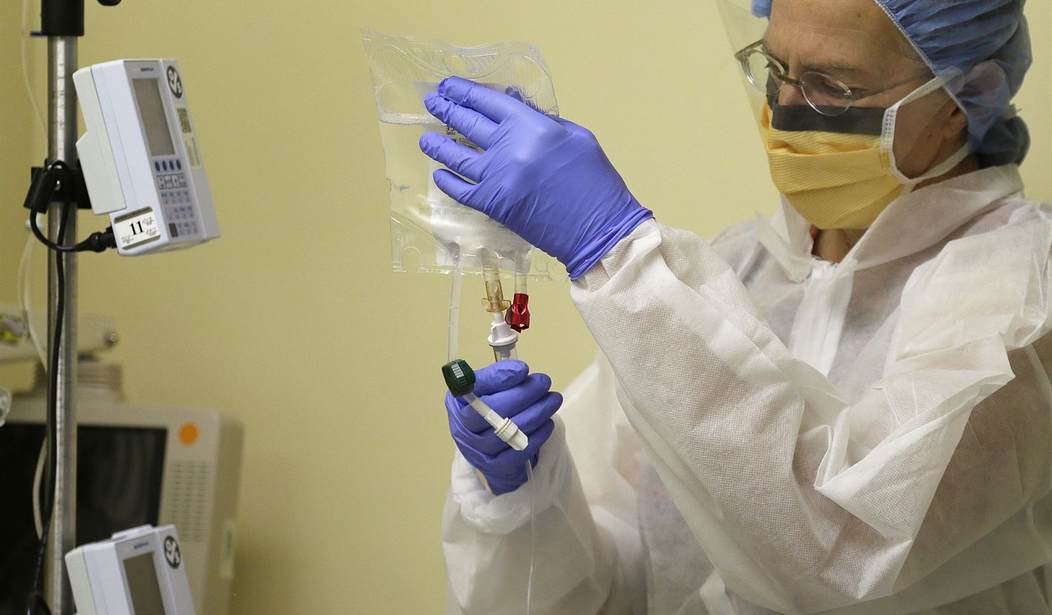
Remember the horrifying Nashville hospital drug mix-up that left four routine surgery patients critically injured?
A former nurse at the hospital is now speaking out, and she says there were warning signs long before disaster struck.
Brenda Cleghorn worked as a nurse at Ascension Saint Thomas Midtown for nearly a decade before leaving in June, just two months before four joint-replacement patients were mistakenly injected with potassium phosphate instead of the local anesthetic mepivacaine.
The nurse’s startling claims are surfacing against the backdrop of state and federal regulators finding serious safety deficiencies at Ascension Saint Thomas.
UPDATE: In August, 4 patients at Ascension St Thomas Midtown Nashville hospital were getting joint replacements. They given the wrong drug by the pharmacy with catastrophic consequences.
— Booker (@RealBookerScott) September 19, 2026
A former nurse is speaking out. pic.twitter.com/w3nMyORwkP
Cleghorn told NewsChannel 5 Investigates that she quit largely because of safety problems she says she repeatedly witnessed and reported. "Something bad is going to happen," she remembers warning before she left. "I didn't think it was going to be catastrophic."
As RedState previously reported, four patients undergoing joint-replacement procedures received potassium phosphate that had been mislabeled as mepivacaine. The consequences were horrific.
State investigators found all four patients had to be transferred to higher levels of care. As of investigators' Aug. 21 exit, one remained on ECMO life support while three continued suffering serious lower-body neurological impairment, including paralysis and loss of sensation.
And investigators found a disastrous chain of breakdowns before the wrong medication ever reached those patients.
Surveillance video reviewed by regulators showed a pharmacy technician retrieving potassium phosphate while preparing what was supposed to be mepivacaine. The drugs came in similar-looking vials, and when the potassium phosphate wouldn't scan properly, the system allowed an override.
Another technician then drew the drug into syringes and labeled them as mepivacaine without checking the vials, telling investigators that it had been "normal practice" not to check them.
Then came the pharmacist's final verification. According to the state findings, it took approximately 29 seconds.
The mistake still wasn't caught. Cleghorn says that incident sounds disturbingly familiar. She described scanning medication for a patient during her time at Midtown only to discover the drug had been placed in the wrong location.
"It wasn't even the right medication," she told NewsChannel 5.
She also made an even more alarming claim: "I worked three nights a week, and I could almost guarantee you that at least one of those nights, if I requested medication, I would get it, and the label on the bag was not the medication that was in the bag."
According to Cleghorn, she filed the required incident reports when these problems occurred but rarely heard anything afterward and continued seeing medication problems. She also alleged broader staffing and training problems.
"I had nurses that didn't know how to hang IV fluids," Cleghorn said. "They had no idea how to give antibiotics."
She described nurses "guessing" how to perform peritoneal dialysis and claimed a stroke floor sometimes lacked a stroke-certified nurse. Cleghorn said the situation became serious enough that she worried about her own nursing license every time she went to work.
State investigators concluded the Aug. 14 drug error involved failures across multiple safeguards, from medication selection and barcode scanning to preparation and final pharmacist verification.
More recently, investigators described hospital leadership as having "failed to ensure medication errors and adverse patient events were promptly investigated and analyzed" and failed to ensure corrective and preventative measures were implemented.
That makes her account especially compelling. She says she personally encountered incorrectly labeled or misplaced medications, repeatedly filed reports about safety problems and ultimately left because she believed "something bad" was going to happen.
Ascension disputes Cleghorn's broader characterization of the hospital.
"We take concerns raised by our team members seriously," the hospital told NewsChannel 5, saying safety reports trigger internal reviews and corrective action.
There has also been an important regulatory development since the original disaster.
Federal regulators removed Ascension Saint Thomas Midtown and West from "Immediate Jeopardy" status on Sept. 16 after corrective measures were put in place, meaning the hospitals were no longer in immediate danger of losing Medicare participation.
But that doesn't erase what investigators found or answer what Cleghorn is alleging happened before four patients were catastrophically injured.
Ascension says it has introduced additional safeguards, including separated storage for high-alert medications, mandatory escalation when certain medication scans trigger alerts and independent verification by a second trained pharmacist.
The safeguards may help prevent another disaster. But if her account is accurate, this wasn't simply an unforeseeable mistake that came out of nowhere.
She says she saw repeated medication problems, reported them and warned that "something bad" was going to happen. Then something “inevitably” did.
This makes it harder for Americans to trust that our “watchdog” institutions are giving us the straight story about what is going on throughout the medical industry.
After what the country witnessed during the pandemic, it’s hard to blame them.
Editor's Note: The mainstream media continues to gaslight, spin, and lie about President Trump, his administration, and conservatives.
Help us continue to expose their left-wing bias by reading news you can trust. Join RedState VIP and use promo code FIGHT to receive 60% off your membership.


Join the Conversation
VIP members get the ability to comment on articles.