
The Supreme Court decision that launched President Trump's firestorm on Truth Social may contain a silver lining.
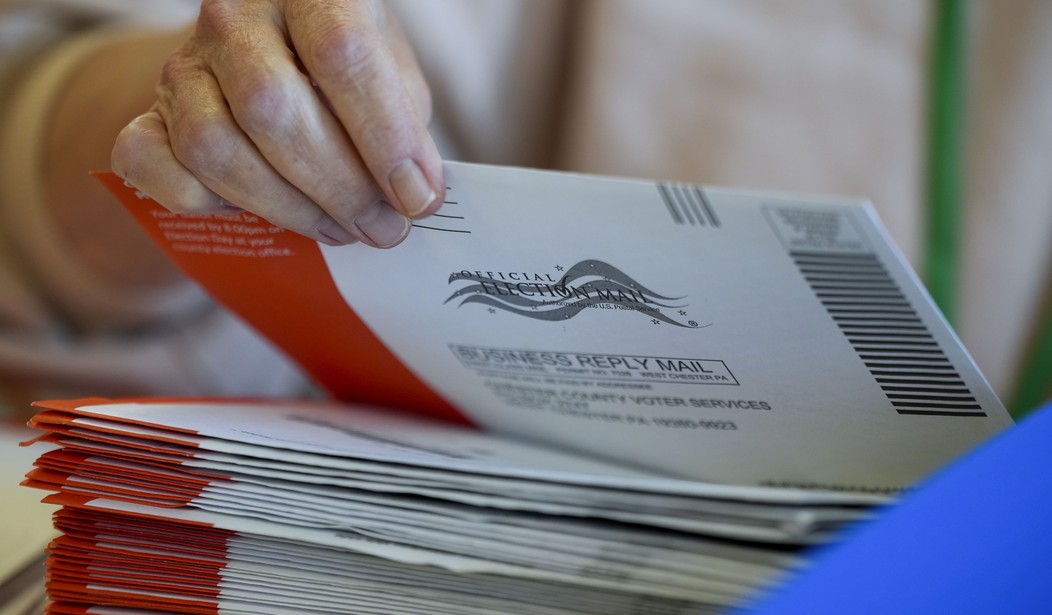
While the midterm elections are but weeks away, and it will once again be a mail-in ballot free-for-all, there is hope yet for the president's meager attempt at federal election integrity.
Because buried in the SCOTUS decision is a line from the concurring justice Brett Kavanaugh that suggests that this case is far from a dead letter issue.
When three Trump-nominated Supreme Court Justices — Neil Gorsuch, Brett Kavanaugh and Amy Coney Barrett — sided against the president in a devastating 7-2 decision, Trump was beside himself.
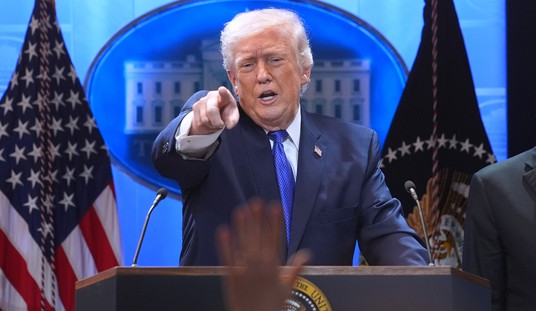
Republicans just got another bad decision from the United States Supreme Court, one that the Court System took forever to give, and then blamed it, in part, on no time left to implement a solution to our totally CORRUPT and out of control Mail-In voting “disaster,” which is a laughing stock all over the World, and where we are the only country that has to endure such a Nation Destroying SCAM. Justices Alito and Thomas, legends both, strongly disagreed with this horrible, highly political, ruling. It is a big loss for Republicans, and America itself, and makes cheating by the Radical Left “Dumocrats,” on Mail-In Ballots, a much easier thing to do - And now they have an open field to do so! The Supreme Court has really let our Country down! Certain Justices are petrified of these crazed and depraved Democrats, and are totally unable to show the courage necessary to save our America.
Then came the line that sent shockwaves throughout the media.
This Supreme Court is bullied and cajoled by the Radical Left into making decisions that have set America back at least a hundred years. These are not the people I interviewed to serve on the United States Supreme Court, they are merely a shell of their original selves, a Court that is costing the United States Trillions of Dollars with shockingly bad rulings that are of such magnitude that it won’t be easily possible for our Country to recover or heal. It is a Court that will go down as having rendered some of the most destructive, hurtful, and damaging decisions in our Country’s history. It is not easy for me to write this criticism of the United States Supreme Court - it will likely cost me dearly for years to come - but I feel it my obligation and duty, as President, to do so for the America we love! Thank you for your attention to this very important matter.
As RedState's Susie Moore explained in a post on the backbreaking decision at the time, Kavanaugh's decision did not shut the door on the issue.
The Court's denial of the application for stay was per curiam (the ruling was issued by the Court as a whole rather than attributed to a particular justice), but Justice Brett Kavanaugh authored a concurrence, agreeing with the denial of the stay, but it should be noted that he did not conclude that the USPS lacks authority to issue the rule. In fact, he says there's “at least a fair prospect” the rule falls within the USPS's statutory authority.
Kavanaugh's problem with the rule is timing: Implementing it for the 2026 elections would, in his view, be arbitrary and capricious under the Administrative Procedure Act (APA) because state/local election officials haven't been given sufficient time to implement the requirements reasonably. In other words, for Kavanaugh, this is effectively “not now,” rather than necessarily “not ever.”
Kavanaugh wrote in his decision, "In my view, based on the briefing the Court has received at this interim stage, there is at least a fair prospect that the final rule falls within the Postal Service’s statutory authority."
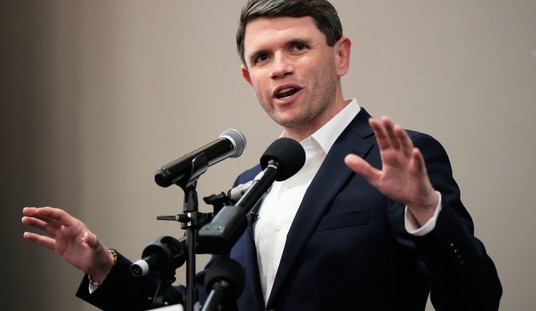
"I would note though that Justice Kavanaugh threw the government a lifeline by saying that he views it as likely that they do have the statutory authority. And I think if you read the dissent, you can see where Justices Thomas and Alito are on questions like that as well," Jason Snead, executive director of Honest Elections Project, told Fox News Digital.
"I think there's a fair chance that it winds back up in front of the Supreme Court eventually," Snead added.
The two justices' dissent, authored by Samuel Alito, made the case that the Postal Service was within its rights to track mail-in ballots.
“It is also not clear that the Postal Service created a new class of nonmailable matter, let alone that it is specifically prohibited from doing so,” Alito wrote.
“The rule’s requirements appear more similar to other threshold requirements for mailing—such as the basic requirement to list the recipient’s address on one side of the package or stamping requirements—that do not render noncompliant mail ‘nonmailable material,’” Alito continued.
“I express no view on whether the Government would be likely to succeed on de novo review of the Postal Service’s powers. But for now, the Government has satisfied its burden of making a strong showing that the plaintiff States’ ultra vires claim is not likely to succeed,” the justice added.
The totality of the opinions raises the prospect that the USPS rule could successfully be implemented by the 2028 presidential election.
"I do think that as a practical matter, the rule is not going to be implemented in time for the midterms. I think that's a done deal at this point. But I do hold out hope that there will be some additional litigation over this that could allow this rule to be implementing ahead of the 2028 presidential election," Snead said.
As Fox News pointed out, Kavanaugh had similarly given Trump a "lifeline" on birthright citizenship with his concurrent ruling.
Voting with the 6-3 majority, Justice Brett Kavanaugh agreed that Executive Order 14160, which restricts automatic citizenship to people born to U.S. citizens or permanent residents, couldn't take effect. But in a concurring opinion, he also pointed to a different path forward. Kavanaugh argued the court should have resolved the case under federal law rather than the Constitution, laying out a potential legislative path for Congress to pursue changes to birthright citizenship.
"So this case is still alive and well, and I think that Kavanaugh has given us all some hope that as it progresses eventually, this rule might be allowed to go into effect hopefully in time for the 2028 election since the left has successfully killed it for 2026," Snead concluded.