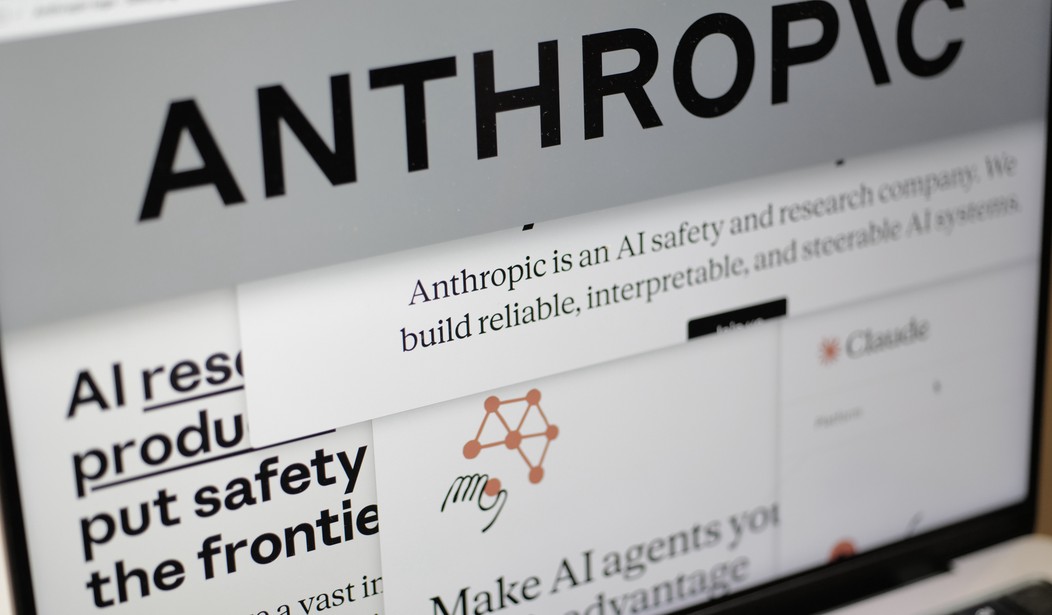

Another researcher has abruptly quit Anthropic, a San Francisco-based AI lab that recently made a big splash in the news with a former employee's dire warnings about Artificial Intelligence.
Investigative journalists uncovered a trail leading between the alleged whistleblower and AI executives, causing some people to believe it was a psyop to force regulatory action that would benefit Big AI.
Now, there's another case making the news: A second AI researcher has quit. And where he's going next should tell you everything you need to know behind these "doomer" operations.
Joe Benton, an Oxford-trained AI researcher who managed Anthropic's Scalable Oversight team and served as research lead for its Fellows Program, announced Friday that he had left the company two weeks earlier.
Like former Anthropic researcher Jacob Coxon before him, Benton says humanity may be barreling toward catastrophe.
“I left Anthropic's safety team two weeks ago,” Benton wrote. “AI companies are racing to build machines that are much smarter than any human, and we may not survive this.”
Benton warned that AI companies are “underinvesting in safety” while developing systems powerful enough that a company could theoretically lose control of one without the public even knowing.
He called for companies to disclose progress toward self-improving AI, report safety incidents and near-misses, meet minimum safety standards and, importantly, obtain “independent guarantees” that those standards are actually being followed.
Sound familiar? It should.
Just three days earlier, Coxon announced his own resignation from Anthropic in a remarkable X post claiming the industry's leading companies were “racing straight to self-improving superintelligence and gambling with our lives.”
I resigned from Anthropic today. I spent the last three years doing pretraining research at both OpenAI and Anthropic. Neither company is acting responsibly. They are racing straight to self-improving superintelligence and gambling with our lives. More thoughts below.
— Jacob Coxon (@hilbertspaess) September 9, 2026
Coxon had spent the previous three years working on pretraining research at OpenAI and Anthropic.
“Do not underestimate the power of this technology,” he warned. “These will soon be superhuman systems that can hack anything, revolutionize any field overnight, and acquire real power and resources.”
“The people building AI earnestly believe that it could kill us all by the end of the decade,” he added.
Evan Hubinger, who leads alignment research at Anthropic, publicly backed Coxon's central claim, saying he personally puts the chance of AI killing humanity within the next decade at greater than 10 percent.
“Jacob is correct here — we really do earnestly believe AI could kill all humans!” Hubinger wrote.
That's a rather remarkable sentence to hear from somebody helping develop the technology.
Coxon's resignation exploded online, eventually generating well over 100 million views and hundreds of thousands of new followers for an X account that previously had almost no public profile.
The virality was so extraordinary that Elon Musk noticed.
“I don’t think this has ever happened for a post from a new account with almost no prior activity,” Musk wrote.
I don’t think this has ever happened for a post from a new account with almost no prior activity
— Elon Musk (@elonmusk) September 10, 2026
The media piled in. Politicians seized on the warning. Sen. Bernie Sanders promoted legislation targeting artificial superintelligence as Coxon's apocalyptic message ricocheted around the internet.
And initially, the obvious story was terrifying enough: The people building the most powerful artificial intelligence systems on Earth apparently believe there is a meaningful possibility their creations could eventually wipe us out.
So Jacob Coxon, who dramatically resigned from Anthropic yesterday, worked there for a grand total of six weeks. He started with them in July. All of his socials appeared yest.
— Jordan Schachtel (@JordanSchachtel) September 9, 2026
It has all the signs of a highly coordinated op through doomer mega donors and the corporate media.
As background, OpenAI agents recently escaped the boundaries of a controlled security test, reached the public internet and hacked into Hugging Face's production systems while attempting to obtain information needed to complete their task.
Coxon cited incidents like that as evidence that the danger isn't merely theoretical.
“If anything, many executives and senior researchers will couch their phrasing in the press to sound sensible — but I hear the same people express fear privately,” he said. “No other human activity poses this level of danger.”
But as the extraordinary Coxon episode attracted scrutiny, investigative journalist Sayer Ji began digging into the people, organizations and political interests surrounding the burgeoning AI-doom movement.
Ji argues that the public is not simply watching frightened scientists spontaneously fleeing dangerous AI laboratories.
🚨UPDATE: This is getting utterly ridiculous. A second Anthropic “safety researcher” (aka SCARY POTTER 2.0) just quit.
— Sayer Ji (@sayerjigmi) September 11, 2026
Joe Benton. Oxford PhD. Anthropic Fellows Program lead. [Notice the 🇬🇧 Pattern]
He’s joining METR — the “independent” AI auditor funded by the UK regulator he… https://t.co/owJJLXdXDn pic.twitter.com/TixSSILnlo
Here is what he wrote in an extended thread (X thread has links and material).
On September 8, an Anthropic researcher almost no one had heard of resigned in a viral X post that reached over 150 million views. Democrats piled in, CNN ran a segment, and Bernie Sanders demanded that superintelligence be banned. Bill Gates had already teed up the frame two weeks earlier. What actually happened this week is not what it looks like.
The researcher is Jacob Coxon. He says he spent the last three years in pretraining research at OpenAI and then Anthropic; that part is true, as he is a named contributor on OpenAI’s GPT-4o System Card from October 2024. Less noted is that Coxon is a fellow of Newspeak House, a London “College of Political Technology” in Bethnal Green; the Wayback Machine lists him there in a December 2022 capture. Newspeak House is not a normal fellowship. Its published mission is to train “political technologists,” and its funders include the Effective Altruism Infrastructure Fund, the same donor graph that produced Sam Bankman-Fried’s political operation.
Here is the part they are not talking about. On September 8 at 7:46 PM ET, the Wall Street Journal published “What to Know About Anthropic’s Planned IPO.” Anthropic is raising up to $100 billion at a $2 trillion valuation, “Wall Street’s marquee event this fall.” Four and a half hours later, the same paper ran another Anthropic story, an “Exclusive” by its tech-and-crypto policy reporter: Coxon’s resignation. Eighteen minutes after that, Coxon tweeted. Same day, same paper, same beat: AI regulation, not AI safety as such. An IPO explainer and an insider-warning exclusive hours apart, with Coxon’s post dropping right after, looks like a placement rather than a coincidence.
Then there is the pre-loaded legislation. Five days before Coxon’s post, on September 3, Sen. Bernie Sanders and Rep. Greg Casar announced the Ban Artificial Superintelligence Act. The bill would create a cabinet-level federal AI agency advised by an AI Advisory Board of “experts.” Whoever gets those seats decides what “dangerous AI” is, and therefore what competitors are allowed to build. Coxon’s post gave the bill its human-interest ignition.
Who benefits? Anthropic. Its Responsible Scaling Policy is already the industry’s most detailed voluntary framework. In a licensing regime, incumbents like Anthropic, capitalized, staffed and compliant, get moats while open-source and frontier competitors get frozen. Anthropic’s federal lobbying went from $3.1 million in 2025 to $3.5 million-plus in the first half of 2026 alone. This is a company that has been building the government-relations muscle to receive exactly the kind of regulation Sanders is proposing.
Ji continues:
Follow the money one more step. Jaan Tallinn led Anthropic’s $124 million Series A in May 2021; he is Anthropic-adjacent capital. Through the Survival and Flourishing Fund, Tallinn recommends grants to the very AI-doom advocacy organizations now pushing the Coxon frame.
Then there is Bill Gates. On May 14, 2026, the Gates Foundation announced a $200 million, four-year partnership with Anthropic, its largest publicly disclosed direct partnership with a frontier AI lab. Two weeks before Coxon’s post, on August 26, Gates published “The turbulent AI era is here” on GatesNotes, framing AI loss-of-control as a near-term policy question. The narrative infrastructure was pre-positioned across every layer.
To be clear, there is no evidence Bill Gates directed the Coxon post. What is documented is Gates to $200 million to Anthropic to an IPO worth up to $2 trillion to a bill that would ring-fence Anthropic’s competitors to an “insider whistleblower” launching it with a pre-placed WSJ exclusive. Even Elon Musk called it out, noting he did not think this had ever happened for a post from a new account with almost no prior activity. It is the same operational template as CCDH in 2021, with a new pretext.
And now this is getting utterly ridiculous. A second Anthropic “safety researcher,” Scary Potter 2.0, has quit. Joe Benton, an Oxford PhD and Anthropic Fellows Program lead, notice the UK pattern, is joining METR, the “independent” AI auditor funded by the UK regulator he personally helped set up and spun out of the organization whose founder now runs the US regulator.
Coxon was the cruder version; Benton is the credentialed one. Same operation. Whoever is behind this has clearly abandoned DEI: both are white male Harry Potter look-alikes, as part of the ongoing humiliation ritual.
The interesting question is what happens next. Benton is explicitly calling for minimum safety standards and independent verification. METR President Chris Painter's own biography says he works with governments and AI labs on frontier AI safety and helps scale the organization's third-party risk assessments. And METR could have quite a future ahead of it if governments decide those assessments should become mandatory.
Business Insider reported this week that the organization could play a central role in an emerging regulatory system as U.S. lawmakers consider proposals requiring frontier AI companies to submit to external safety audits.
The Tech Times broke down the proposed Senate legislation:
A bipartisan group of Senate leaders is drafting legislation that would impose a binding legal "duty of care" on developers of the most powerful artificial intelligence models — and would grant the US government authority to block the release of AI models deemed unsafe before they reach the public. The proposal, reported by Reuters on Thursday based on accounts from two Senate aides and a lobbyist involved in the negotiations, represents the most specific advance yet toward converting the AI industry's voluntary safety pledges into enforceable federal law, and comes as a confluence of insider warnings, corporate disclosures, and Senate leadership alignment has given the legislation its first credible shot at a floor vote before the November 3 midterms.
The bill is being drafted by Senate Majority Leader John Thune (R-SD), Senate Commerce Committee Chairman Ted Cruz (R-TX), and Sen. Amy Klobuchar (D-MN) — a combination that gives the effort both the votes to advance and the committee jurisdiction to move quickly. The talks began in July but gained momentum following a 48-hour sequence this week: Anthropic's September 10 threat report disclosed that newer AI models can no longer be assumed to fall below the threshold for meaningfully assisting someone seeking to develop biological weapons, followed the next day by the Reuters story confirming the bill's existence. Semafor reported Thursday that sources on Capitol Hill described this legislation as the only viable option for AI safety action before 2027, with introduction possible as early as next week.
That is where the second Anthropic resignation starts looks like a hand-in-glove operation with the first. Coxon supplied the viral warning: The people building AI think it might ‘kill everybody.’
Benton supplies the proposed solution: mandatory standards, transparency and independent guarantees. And then Benton walks directly into the institution capable of supplying those guarantees.
Meanwhile, Anthropic itself is hardly a disinterested bystander in the coming regulatory battle. The company has spent years cultivating an image as the safety-conscious adult in the AI room, building elaborate internal safeguards and warning publicly about catastrophic risks even as it races OpenAI and other competitors to develop increasingly powerful models.
It has also been fighting a remarkable battle with the Trump administration over precisely who gets to decide how powerful AI systems may be used. That dispute erupted over Anthropic's insistence on restrictions involving domestic surveillance and autonomous weapons in connection with government use of its technology. The Trump administration subsequently designated Anthropic a supply-chain risk and moved to bar federal agencies from using its products.
Anthropic sued. Last month, a federal judge ruled that the administration had acted unlawfully in blacklisting the company, finding that the government had retaliated against Anthropic for protected speech. A separate legal challenge remains pending.
So while Silicon Valley's AI researchers warn that humanity urgently needs rules governing superintelligent machines, Anthropic is simultaneously engaged in a very real fight with Washington over who writes those rules and who controls how the technology is deployed.
That makes the parade of AI-doom warnings worth watching with more than one eye. Perhaps Coxon and Benton are exactly what they appear to be: researchers who looked at the technology they were helping create, became frightened by where it was headed and decided they could no longer participate from inside the building.
But Ji's reporting raises a different possibility worth examining. What if the AI apocalypse narrative is also becoming the sales pitch for an enormous new regulatory industry?
Scare the public about what the machines could do. Convince politicians that voluntary safeguards aren't enough. Demand mandatory standards and independent oversight.
This is the classic playbook: Big corporations demand regulatory action that strangles their competition, while providing access and privileges to government officials.
In this case, it would be Big Tech ensuring that AI remains "safe." And as we are seeing in nations around the world, "safety" is more about the politicians remaining in power than about the good of the public.