
America’s academics have long acted like the moral and intellectual leaders of the nation.
But it turns out, they are merely the stewards of a partisan “hothouse” environment that enforces left-wing ideological orthodoxy.
A president of a prestigious university essentially admitted the rampant left-wing bias on college campuses, but then made a claim that Bill Maher would not stand for.
That college professors, when it comes to left-wing bias, are “self-policing.”
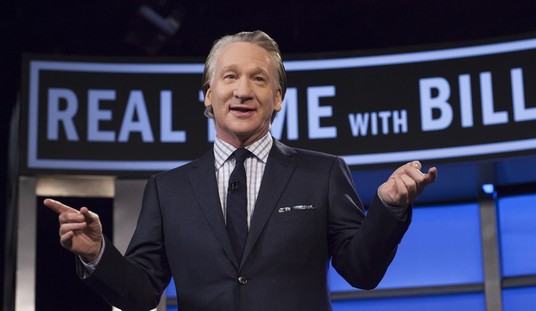
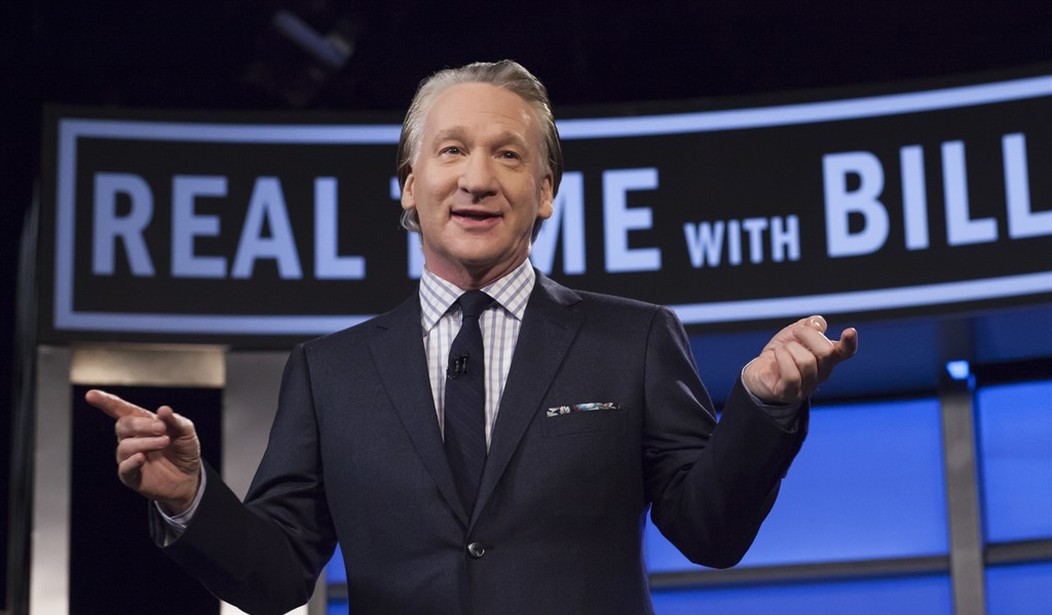
Maher got into it with Wesleyan University President Michael Roth during Friday’s episode of HBO’s “Real Time,” as a broader discussion about Israel, Western civilization and campus politics turned toward the ideological composition of American universities.
Maher argued that the problem is not simply that professors tend to vote Democratic. It is what happens to an institution when virtually everyone charged with hiring, promotion, curriculum and instruction approaches political questions from roughly the same direction.
Bill Maher confronts Wesleyan University President Michael Roth over left-wing political conformity on college campuses:
— Overton (@overton_news) August 29, 2026
"You couldn't get a job if you couldn't demonstrate what your politics were."
Maher pointed to one survey in which 77 out of 80 professors identified as… pic.twitter.com/Fv7UISeRFR
“When one party, when one point of view controls everything, they are not checked,” Maher said. “And that's what's happened on campus.”
Roth acknowledged that political bias exists but expressed confidence that academics could correct the problem themselves.
“I believe when we convince the faculty and show the faculty there is this bias, they will correct,” Roth said.
That was apparently a bridge too far for Maher.
“Do you think your professors are just saying to the kids, ‘I'm not going to put my thumb on the scale of who you should vote for?’” Maher responded. “I think that's ridiculous.”
Maher contrasted today's university culture with his own experience at Cornell University.
“When I went to Cornell, I could not tell you...I'm trying to think of any professor who I could tell you what their the politics was,” he said.
Then he identified what he believes has fundamentally changed.
“You couldn't even get a job if you couldn't demonstrate what your politics were, and it's very much in the classroom.”
The evidence that American academia suffers from an extraordinary amount of left-wing bias is indisputable.
A 2018 study by Brooklyn College professor Mitchell Langbert examined the voter registrations of 8,688 tenure-track, Ph.D.-holding professors at 51 highly ranked liberal-arts colleges.
Among professors registered as either Democrats or Republicans, Democrats outnumbered Republicans by 10.4 to one. Remove West Point and the Naval Academy from the calculation and the ratio jumped to 12.7 to one.
At 39 percent of the colleges studied, the proportion of Republican professors was statistically indistinguishable from zero. Across the institutions examined, 78.2 percent of academic departments employed no registered Republicans at all. The imbalance was particularly severe in humanities and interdisciplinary fields, while engineering and some STEM disciplines were considerably closer to the political composition of the general population.
Wesleyan — the university Roth runs — was hardly an exception. Langbert's data found an astounding Democratic-to-Republican faculty registration ratio of roughly 31-to-1 there.
This is not remotely close to a natural reflection of the American population. This is ipso facto evidence of an ideological "gatekeeping" system.
That makes Roth's faith in academic “self-policing” problematic. The problem with ideological conformity is precisely that people living inside the "group think" bubble may cease to recognize their ideological assumptions.
These left-wing assumptions simply become things that educated, respectable people supposedly "know." They generate "watch words" of a closed system meant to confer privileges.
Heterodox Academy published a major review this year examining roughly two dozen studies of faculty political diversity conducted between 2012 and 2025. The research consistently finds that left-leaning professors outnumber right-leaning professors.
Heterodox Academy identified the intellectual problem created by such homogeneity rather succinctly: without competing viewpoints, scholars become more vulnerable to “confirmation bias, motivated reasoning, and conformity.”
So, is there leftward pressure in Acadamia? The 2026 working paper, "Do Faculty Affect Student Partisanship?", suggests that there is.
The study links voter-registration data to faculty records across 33 state flagship universities. It finds that the average faculty is 41 percent Democratic and just 12 percent Republican, with the imbalance especially pronounced in the humanities and social sciences.
At the one flagship university where the authors could track students over time, 61 percent of students identified as liberal early in college, rising to 69 percent by later in college. That leftward shift appeared across every major and demographic group they examined.
The 2024 Inside Higher Ed/Hanover Research survey covered 1,133 faculty respondents from a broad range of public and private colleges. The partisan imbalance was enormous: Democrats, 22 percent as independents and just 7 percent as Republicans.
In the presidential race, 78 percent backed Kamala Harris and Tim Walz, compared with only 8 percent for Donald Trump and JD Vance. Democratic professors were also substantially more politically active: two-thirds planned to donate to a candidate, party or political organization, and 29 percent planned to campaign or organize.
This 2005 Klein–Stern study surveyed members of six major scholarly associations — anthropology, economics, history, legal/political philosophy, political science and sociology — and found overwhelming Democratic voting patterns among academic social scientists, with the Democratic advantage having grown substantially since 1970.
The voting numbers are the standout: the related analysis of the same 2003 survey found Democratic-to-Republican voting ratios of 30.2-to-1 in anthropology, 28-to-1 in sociology, 6.7-to-1 in political science and 3-to-1 even in economics. Averaged across the six disciplines, the ratio was roughly 15 Democrats for every Republican.
During the same discussion on Friday, Maher criticized the academic Left's increasingly hostile posture toward “Western civilization,” particularly in the context of Israel.
“Western civilization — they talk about it like it's a bad thing, instead of saying Western civilization is what gave everyone who's a progressive the things they should be most proud of,” Maher said. Roth acknowledged that many students at Wesleyan hold precisely that negative view.
Maher then jokingly asked whether he would even be welcome at Wesleyan.
“Welcome maybe not,” Roth replied, before adding that Maher certainly could appear.
That exchange drew laughs, particularly because Maher has hardly been a Republican partisan. He reminded Roth that he had twice donated $1 million to Democrats.
“Someone who twice gave the Democrats a million dollars — that's not enough credentials to come up?” Maher asked.
Roth joked that if Maher brought $1 million for Wesleyan, he would be welcomed “with open arms.”
The humor masks a major transformation. Maher's politics would once have placed him comfortably on the American cultural Left. He is an atheist, longtime Democrat donor, supporter of abortion rights, marijuana legalization and gay marriage, and spent years mercilessly attacking Republicans.
Yet he increasingly finds himself attacking institutions of the Left because the definition of acceptable progressive opinion has shifted underneath him.
College campuses may be the clearest example of this. Universities are becoming increasingly socialist — and for socialists, the ends justify the means. Intellectual dishonesty, cancel culture, and censorship necessarily follow whenever socialists dominate an institution.
That's not my personal opinion, that's what the track record of history says.
But scale matters. When an institution becomes politically homogeneous at ratios approaching 10, 20 or 30 to one, it becomes increasingly difficult to maintain that politics has no effect on its intellectual mission.
The sad truth is that most colleges have adopted missions to advance socialism, not to advance human learning.
And when colleges become ideologically corrupted, then the corruption spreads to all of the nation’s institutions.
If America is ever going to address the cultural rot at the heart of its constitutional republic, it starts and ends with the universities.