








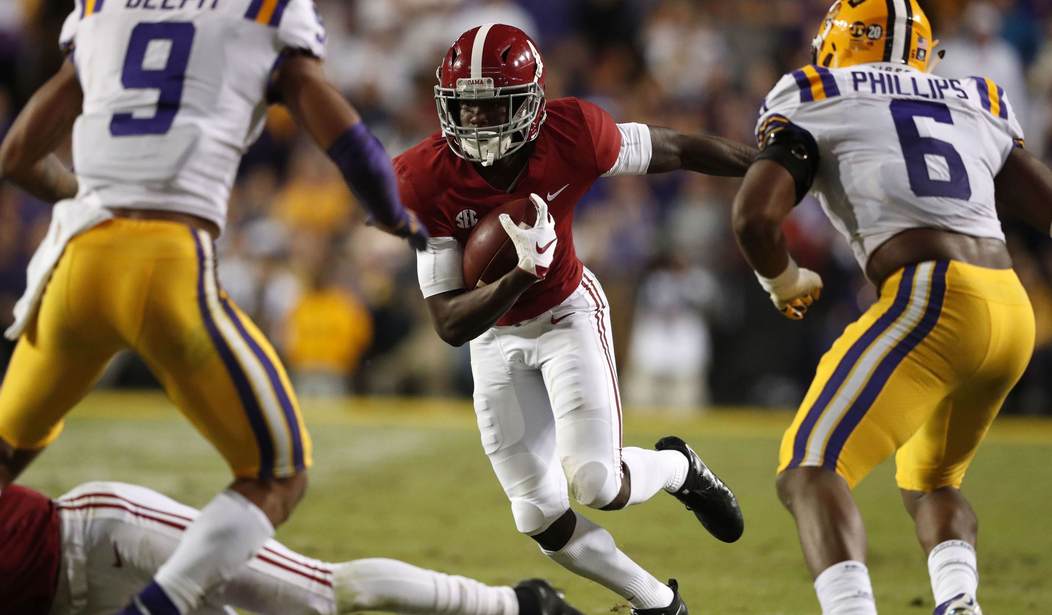
College sports have become so chaotic that apparently we now need an explicit rule saying you can't go to the NFL, sign a professional contract, get cut and then come back to college.
The Southeastern Conference (SEC) made that rule official Tuesday.
Following meetings with SEC presidents, chancellors and athletics directors, the conference announced that its 16 schools will be prohibited from rostering athletes who have crossed certain lines into professional sports.
Following meetings with the Presidents, Chancellors, and Athletics Directors of the Southeastern Conference, the SEC will enforce the following policy: pic.twitter.com/LohWnb7G1J
— Southeastern Conference (@SEC) August 25, 2026
The rule is simple. An athlete cannot appear on an SEC roster if he or she previously declared for the NFL, NBA or WNBA draft without properly withdrawing; signed a contract with an NFL or other professional football team, NBA/G League team or WNBA affiliate; or appeared on one of those professional rosters.
SEC Commissioner Greg Sankey will have authority to enforce the rule by imposing penalties against member institutions.
The SEC is trying to close a loophole that suddenly became very real after a series of court rulings threatened to turn the transfer portal into a two-way street between college and professional sports.
The immediate flashpoint came from a court ruling in Louisiana. A group of athletes went to state court challenging the NCAA's new eligibility system, arguing that members of the high school Class of 2022 should receive another season under the organization's newly adopted five-year framework.
A Louisiana judge granted temporary relief to a group that included 16 football players, creating the crazy possibility that athletes who had already moved into the NFL could come back and play another year of college football.
The judge’s order went beyond granting players another college season. It opened a pathway for some athletes who had signed professional contracts to terminate those agreements, return compensation and resume their college careers.
That once seemed absolutely unimaginable for some of us old-school football fans. Yet here we are.
READ MORE: NCAA Conference Issues Ruling on NFL Players Rejoining College Football
And LSU coach Lane Kiffin wasted no time figuring out what that could mean for his roster.
Former Ole Miss tight end Dae'Quan Wright went undrafted this spring before signing with the Philadelphia Eagles. He subsequently landed with the Cleveland Browns and was waived Sunday.
Instead of that necessarily ending his football season, Wright had an agreement lined up to return to college and play for Kiffin at LSU. His agent confirmed the arrangement, which would have made Wright one of the first players to sign an NFL contract and then return to major college football.
Then came former Ole Miss defensive tackle Zxavian Harris. Harris also went through an NFL training camp before pursuing a return to college. He entered the transfer portal after obtaining relief through the Louisiana litigation and was expected to reunite with Kiffin at LSU.
In other words, NFL training camps were suddenly becoming part of the college recruiting landscape. The Los Angeles Times described Kiffin as effectively turning NFL camps into his newest recruiting grounds as players from the Class of 2022 explored whether they could use the court rulings to get another collegiate season.
The SEC has seen enough. The conference's presidents and chancellors held a videoconference Monday and publicly opposed allowing athletes who had entered professional sports to return to college competition. One day later, the conference put teeth behind that position with its new roster rule.
And the SEC isn't alone. The Big Ten moved Tuesday to impose a similar prohibition in football, barring players who signed professional contracts, appeared on NFL rosters or declared for the NFL Draft without withdrawing from returning to play for a conference school.
The SEC went bigger. Its policy explicitly includes not only professional football but the NBA, G League, and WNBA, making this a conference-wide attempt to rebuild a wall between college and professional athletics. The Associated Press reported that the SEC rule extends beyond football into basketball, unlike the Big Ten's initial action.
And similar player eligibility issues have bubbled up in NCAA basketball.
Former St. John's star RJ Luis Jr. received relief from another Louisiana judge this week after previously declaring for the NBA Draft, going undrafted and signing professional contracts. His case created another route through which a player with professional experience could potentially return to the college game.
The old college model has been dismantled much faster than anyone could have anticipated. NIL payments, revenue sharing, unlimited transfers and repeated courtroom defeats have already transformed the relationship between schools and athletes.
But there has traditionally been one line that almost everyone understood: once you become a professional athlete, you don't come back and play college sports.
Apparently, even that needed to be spelled out, unlike the WNBA’s refusal to determine if only biological females should be able to play in a women’s professional basketball league.
For all of the unprecedented changes sweeping through college athletics, the SEC is drawing a red line: college sports are for college athletes. The pros are for the pros.
Once you've crossed the bridge to professional sports, the SEC says you're not coming back.
Editor's Note: The mainstream media continues to gaslight, spin, and lie about President Trump, his administration, and conservatives.
Help us continue to expose their left-wing bias by reading news you can trust. Join RedState VIP and use promo code FIGHT to receive 60% off your membership.

Join the Conversation
VIP members get the ability to comment on articles.