



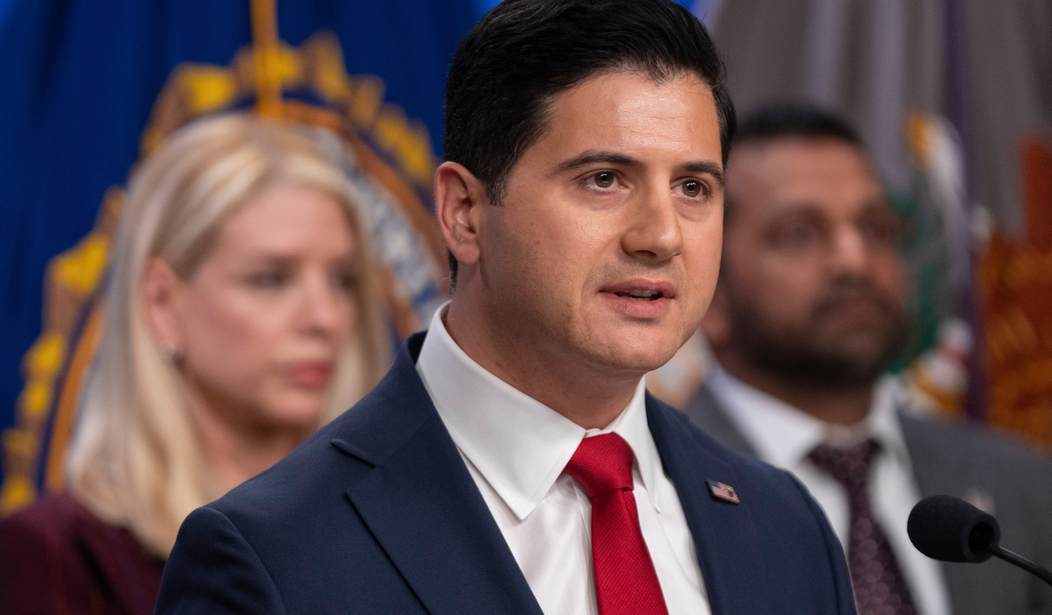
Attorneys for the U.S. Department of Justice, the State of California, and Los Angeles County were back in court Tuesday afternoon in Los Angeles as District Court Judge David Carter held a hearing on the DOJ's emergency motion requesting the court order both California and Los Angeles County to segregate vote-by-mail ballots returned by any of the 20,000 people on a list of people they'd determined are "likely noncitizens" who are registered to vote in the state. Much of the nearly three-hour hearing was consumed by attorneys for the defendants and intervenors arguing that they had no idea how the list was compiled and that it was riddled with errors, so they shouldn't have to verify the citizenship of anyone on it, and that segregating these ballots would be an impossible burden this close to election day. The Department of Justice had three witnesses available to testify on these issues and be subjected to cross-examination by attorneys for California and LA County and to questioning from the court, and despite First Assistant U.S. Attorney Bill Essayli offering those witnesses several times during the hearing, neither Carter or the defense attorneys requested witness testimony.
That's rather curious.
How the voter list was obtained and the methodology used in creating the list of 20,000 names has been described in increasing detail over the last week and a half, including in several sworn declarations from the federal employees involved in the process filed with the court. On October 19, the day the DOJ filed the emergency motion, Essayli posted this flowchart on social media.
This is the methodology behind our list of 20,000+ likely noncitizen registrants in California: data cleaning, identity matching, removal of citizens and deceased individuals, manual USCIS review, supervisory sign-off, and law-enforcement screening. Sworn declarations in today's TRO filing detail each step.
— F.A. United States Attorney Bill Essayli (@USAttyEssayli) October 19, 2026
Declarations from Nicolas Bartell, Associate Director of the Fraud Detection and National Security Directorate (FDNS) at U.S. Citizenship and Immigration Service (USCIS), and Eric McLoughlin, Assistant Director for the Cyber and Operational Technology section at Homeland Security Investigations (HSI) detailing the methodology used in creating the 20,000 person list were filed with the emergency motion, and the two filed supplemental declarations on Monday with additional information, including an email from the California Secretary of State's office that was transmitted to them along with the state's voter file.
In a declaration (sworn statement) filed today by Eric McLaughlin from HSI, we learned that the voter roll was obtained from the CA Secretary of State's office in March 2026 by DHS - and the email from Weber's office transmitting the voter roll. https://t.co/Kj01G9lAFh
— Jennifer Van Laar (@jenvanlaar) October 27, 2026
A small correction from my X post embedded above: March 2026 is when HSI received the voter roll from DHS along with the letter from the Secretary of State; one of the declarations states that the data was current as of August 2025, so it's not clear exactly when the list was transmitted from California to DHS. It's likely that the DOJ is being as vague as they can about that to protect whichever worker transmitted the data from retaliation.
We learned from Bartell's supplemental declaration that the "third party database" used to enhance the data is Lexis-Nexis' Accurint, which "pulls from thousands of sources, compiling over 65 to 92 billion records (including phone numbers, addresses, court filings, property deeds, and motor vehicle data)" and is used by thousands of law enforcement and other government agencies across the country.
Related to the accuracy of the list and the reliability of attestations to determine citizenship, Bartell and McLoughlin performed additional checks on 200 names LA County Registrar Dean Logan's office submitted as part of a random check. Logan's office contends that of the 20,000 names on the list, 7,035 are located in Los Angeles County. From that 7,035, they pulled a sample of 200 records and allege that 42.9 percent of those records were canceled registrations; 42.4 percent were active; and 4.6 percent were inactive, meaning that either their mail was returned as undeliverable or they hadn't voted in a number of years. They further state that of those 200, only 86 had ballots mailed to them for the November 2026 election. We don't know what the starting number is for this next data point, but Logan's office says that, "Among the records for which birthplace information was meaningfully reported, 38.9 percent indicated that they were born in the United States."
Bartell's team reviewed the county's list and, well, it didn't go well for the county's argument. From Bartell's supplementary declaration:
USCIS examined the DHS List and identified 51 individuals on the DHS List where California's voter roll indicates the person claimed to be born in the United States. After a thorough review of the immigration records of all the individuals on the County's Sample List, it was determined that none of the individuals USCIS matched to the County's Sample List were born in the United States according to USCIS records.
USCIS re-reviewed each match to re-confirm that 1) the voter subject is a match to the USCIS identity/holding, and 2) the USCIS identity/holding is likely a current alien. The re-review resulted in a determination that four subjects might have a claim to U.S. citizenship, three of which potentially derived citizenship through a parent but were not born in the United States. One person was determined to be deceased.
He was sitting right there in the courtroom, ready to testify to how this review and re-review was done and go through the data, but apparently neither the judge or the defendants were interested in that.
Shasta County Registrar of Voters Clinton Curtis also submitted a declaration on behalf of the DOJ, stating that "locating and segregating challenged ballots is entirely possible and not problematic." He explained:
"This system allows for a flag to be set on voters based on any number of circumstances relating to eligibility, including duplicate ballots, signature matches, and evidence challenging that voter's citizenship. Poll workers will see a flag on a particular voter when pulling up that voter's information, and sorting machines will flag those ballots before processing and automatically separate them into containers designed to capture segregated ballots."
And if they didn't want to do that, Curtis said:
"[T]he same results could be obtained by manually issuing a new ballot that is not sent to the voter and marking their old ballot as void. A 'void' ballot is not actually voided; it is simply sequestered from the ballots that are confirmed to be able to be counted without any additional investigation."
But instead of hearing from Curtis and questioning him directly, Judge Carter just let the defense attorneys claim ad nauseam that it wasn't possible and it would lead to disenfranchisement.
In the end, while Carter appointed a special master and didn't rule immediately on the temporary restraining order, from his comments he seemed inclined to let it be sorted out after the election, ignoring the injury suffered by those illegal votes being counted.
"I think there's always been a encouragement of people's right to vote, We The People, because when we exercise our right to vote, we exercise equality. It doesn't matter our station in life, whether rich or poor. There's been a struggle sometimes in this country to make certain that those eligible voters can vote. And of course, no one wants a non-citizen voting. Anybody taking that position, I think it's a ridiculous position.
"But don't you have the power historically in this balance of non-disenfranchisement of voters, indictments? And in fact, you just brought 28 indictments.
"And don't you have what I'm going to call a cure period, up to December 3rd? In other words, you may find others who have voted illegally. You have the right to bring an indictment against them, which is a traditional remedy, which has an absolute chilling effect. But you also have the ability to ferret out those people, from my understanding - and then I'm going to have you push back.
"Because while we cast a ballot and we want anonymity, we have an attestation, we have a ballot that comes into us showing that I voted or not. So it's not who I voted for. That should be nobody's business. It's the fact that we can retrieve that information up to December 3rd, is my understanding, the fact that this person voted. We have that ballot - not the ballot, but the envelope. It gives you what carte blanche to prosecute this person. Because it's not who they voted for; it's the fact that they voted.
"And so I don't see why in this cure period those people wouldn't be removed, giving us the safeguard of non-sequestration, non-disenfranchisement, but still the traditional remedy, as a good prosecutor, as you pursue 28 and maybe some more, to make sure that these people are prosecuted. I'd like you to respond why, in balancing those two interests, this court would cause disenfranchisement where voters would not be counted versus the ability to catch those few who are, as you've ably done. And I'm going to presume that they're innocent, of course, under the law. But 28 recently, you've demonstrated that. Why can't you bring those to me in two weeks?
"If it's this big, you've got a remedy, for goodness' sake; go out and indict."
Essayli ably pushed back against the judge's nonsensical reasoning, since what they're looking for isn't a cancellation of those votes but simply sequestration and verification of citizenship before tabulating the ballot. And since the judge thinks it's feasible for Essayli to do the work of ascertaining if those people voted by December 3, doesn't it stand to reason that it's feasible for the county to verify citizenship on those 7,000 voters on its voter roll?
Carter also mentioned several times having a full hearing in two weeks with experts and a special master, so it seems that he will deny the TRO but keep the case going, allowing U.S. citizens to have their votes diluted in this election.
At the end of Tuesday's hearing, Carter announced that he would rule sometime Wednesday. We're keeping an eye on the docket for any movement and will report it as soon as we have the order.
BONUS CONTENT:
My very long X live thread of the hearing can be read here (click through to X).
🗳️🧵Listening to the TRO hearing in the USA vs. State of CA case over the segregation of mail ballots returned 20k "likely noncitizens" for this midterm election and gratified that @USAttyEssayli is appearing for the DOJ, along w/Andrew Darlington, Robert Renner, and Julie Hamill. This is at the District Court after the 9th Circuit denied the DOJ's motion for preliminary injunction for lack of jurisdiction yesterday.
— Jennifer Van Laar (@jenvanlaar) October 27, 2026
Editor's Note: Unelected federal judges are obstructing President Trump's agenda and ignoring the will of the people.
Help us expose out-of-control judges determined to halt President Trump's mandate for change. Join RedState VIP and use promo code FIGHT to receive 60% off your membership.
Join the Conversation
VIP members get the ability to comment on articles.