






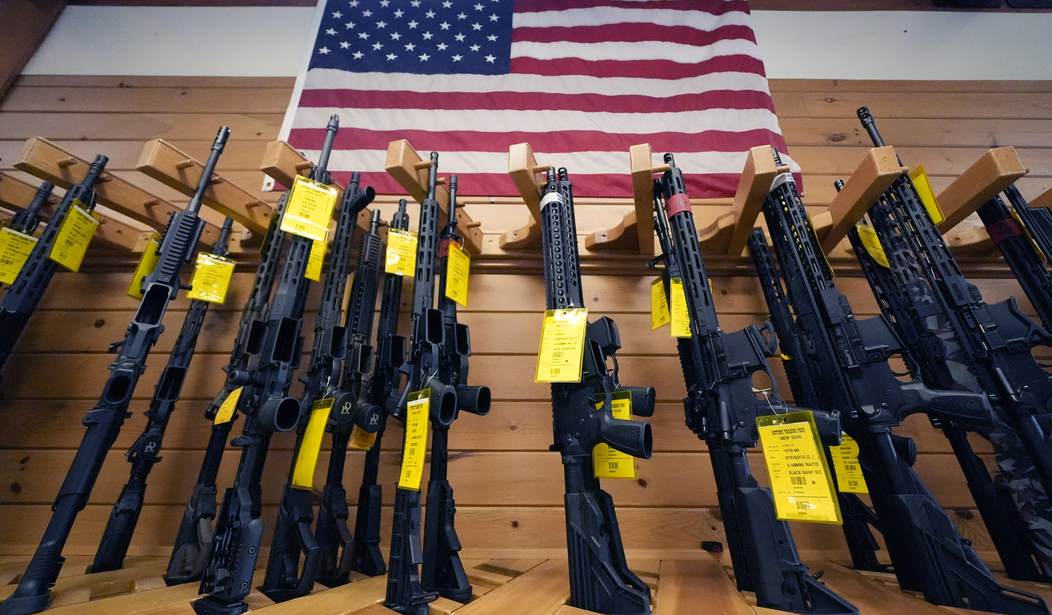
The federal government spent nine years trying to keep a Pennsylvania man disarmed over a decades-old DUI. A federal court just told the government it doesn't have that right.
The 3rd Circuit Court of Appeals issued two Second Amendment decisions Tuesday, limiting how the federal government can enforce its lifetime firearms prohibition against people with criminal convictions. The rulings distinguish violent offenders from those whose past crimes provide no evidence that they pose a danger with a firearm.
Edward Williams' trouble with federal gun law came from a 2005 Pennsylvania DUI conviction. Because it was his second offense, the maximum possible sentence was five years. He received a sentence of 90 days to two years, served at home. The longer potential sentence was enough for the feds to prohibit him from possessing a firearm.
He even worked at a gun store. But when an attorney informed him in 2015 that his conviction prohibited him from possessing firearms, Williams gave them up and went to court.
The lawsuit began in 2017. Williams had been at the same job for more than 30 years, and his record contained no evidence that he had ever threatened someone with a gun. The federal prohibition still applied, based on a DUI conviction from 12 years earlier.
Judge Paul Matey, appointed by Trump, wrote the opinion. Its opening paragraph offered little encouragement to the Justice Department's defense of the firearms restriction:
The Second Amendment is a primary protection against tyranny, a strong bulwark securing American liberty, and an indispensable means of defending the public good. So courts testing restrictions on these 'most sacred' and 'necessary' rights must consider the history and tradition of firearm regulations with care and rigor.
DOJ attorneys relied on laws governing habitual drunkenness, some dating to the nineteenth century. People could be committed to asylums, placed under guardianship, or confined for a period of time. But the Supreme Court had already addressed those laws in United States v. Hemani, noting that many were concerned with the financial damage alcoholism caused families. The Third Circuit found the government's comparison to Williams' permanent firearms prohibition lacking.
Williams' record offered plenty for the judges to consider. An expert found no addiction or violent tendencies. There were no subsequent convictions, and his employment had remained steady for decades. Despite his years of gun ownership and employment at a firearms retailer, the government identified no incident in which he had endangered anyone with a weapon.
Congress originally restricted firearm possession by violent offenders in 1938. That changed in 1961, when the law expanded to cover crimes punishable by more than a year in prison. Williams qualified because Pennsylvania assigned a five-year maximum to his second DUI offense. The federal government treated that statutory maximum as sufficient grounds to deny him firearms long after his sentence ended.
James Bost's case had a different set of facts. In 2002, he forced a woman to drive him to her mother's home after threatening to kill her unless she produced money. She escaped, and Bost eventually pleaded guilty to terroristic threats, conspiracy, false imprisonment, and assault. Years later, U.S. Marshals found a stolen .38 caliber pistol on a couch beside him. His challenge to the federal firearm prohibition reached the same appeals court.
Judge Stephanos Bibas, also appointed by Trump, had little trouble finding a constitutional basis for keeping Bost disarmed:
The right to keep and bear arms has limits, and this is one: Those who pose a risk of physical violence from misusing guns can be disarmed before that risk becomes a reality. Not every convict poses such a risk—but James Bost does.
The judges upheld Bost's conviction because his prior offense included a threat to commit violence. The same court affirmed relief for Williams, whose DUI offense contained no violent or threatening element and whose record showed no present danger involving firearms. Both judges were appointed by Trump. The line they drew was legal, not political: Violent convictions disarm; non-violent ones don't.
Under the Supreme Court's 2022 Bruen decision, the government must establish that any firearm restriction fits America's historical tradition, and it must do so with actual historical evidence, not just policy arguments. That standard has now handed the government another loss. The Third Circuit faced a similar question in Range v. Attorney General, involving a Pennsylvania man's food-stamp fraud conviction. He prevailed too. Williams' case is another vindication of the Bruen framework: When the government's historical evidence falls short, the gun ban falls with it.
The government pointed to an administrative relief process that Congress had effectively shut down for decades, and that still wasn't broadly open to the public, cold comfort for someone nine years into federal litigation.
Williams had already spent nine years in litigation by the time the appeals court ruled. His DUI conviction was more than two decades old.
He served his sentence. The federal government wanted the gun ban to last the rest of his life. The 3rd Circuit has now said no to that.
Editor’s Note: The radical Left will stop at nothing to enact their extreme gun control agenda and strip us of our Second Amendment rights.
Help us continue to report on and expose the Democrats’ gun-grabbing schemes. Join RedState VIP and use promo code FIGHT to receive 60% off your membership.


Join the Conversation
VIP members get the ability to comment on articles.